What should buyers in South Metro Denver know about ADUs, detached guest houses, and RV or boat garages that HOAs now allow?
Colorado law now prohibits HOAs from outright banning ADUs on single-family lots, which means buyers in Castle Rock, Parker, Highlands Ranch, and across Douglas County have options that simply did not exist two years ago.
Why This Matters Right Now in Douglas County
If you are relocating to Colorado or moving up from your current home in the South Metro area, the property landscape has fundamentally shifted. Colorado’s landmark ADU legislation, HB 24-1152, required municipalities to allow at least one accessory dwelling unit on single-family lots by June 30, 2025. That deadline has passed. The rules are live.
What makes this especially relevant for Douglas County buyers is the HOA factor. Under C.R.S. § 38-33.3-106.5(4), common interest communities located within a subject jurisdiction are prohibited from restricting the creation of an ADU as an accessory use to any single-unit detached dwelling. That is a direct quote from state statute, and it changes everything about how you should evaluate a property.
With 30 years of experience selling real estate in this corridor, I can tell you that the most common question I hear right now is not about interest rates. It is about flexibility: can I build a guest house for my parents, store my boat, or add a rental unit?
How Colorado’s ADU Law Reshapes HOA Rules in Castle Rock and Parker
You might be coming from a state where HOAs have the final word on everything. In South Metro Denver, that used to be the case too. Now, the dynamic is different.
What HOAs Can and Cannot Do
Here is the critical distinction. HOAs cannot outright ban ADUs on your single-family lot. However, a common interest community may implement “reasonable restrictions” on ADUs, according to the Colorado Bar Association’s analysis of the statute. So your HOA can still regulate:
- Exterior design, materials, and roof pitch to maintain neighborhood aesthetics
- Color matching with the primary dwelling
- Landscaping and screening requirements
What they cannot do is tell you “no” entirely. If your design meets objective standards under both the municipal code and the HOA’s reasonable aesthetic guidelines, approval must be processed administratively. No public hearing where neighbors vote against your project.
Why This Matters for Relocation Buyers
If you are relocating from Los Angeles, where median home prices range from approximately $944,000 to over $1,049,372 compared to Denver’s $616,000 to $635,000 range, you are already seeing significant purchasing power gains. Now add the ability to build an income-producing ADU or a guest suite for visiting family, and the value proposition in Castle Rock or Parker becomes even stronger.
Castle Rock ADU Regulations: Size Limits, Design Standards, and Approval Process
Castle Rock updated its code in 2025 to comply with the state ADU law. Here is what you need to know before you make an offer on a property with ADU potential.
- ADUs per lot: 1 allowed
- Formats: Internal, attached, or detached
- Detached ADU max footprint: 800 square feet
- Interior ADU max: 50% of the primary dwelling’s floor area
- Approval: Administrative, with no public hearing required
- Owner occupancy: Required at the time of permit application
- Dual rental: Prohibited, meaning you cannot rent out both the primary home and the ADU simultaneously
- Design: Must match the primary dwelling’s style, materials, roof pitch, siding, eaves, window treatment, and color
- Separate water and sewer taps: Not allowed
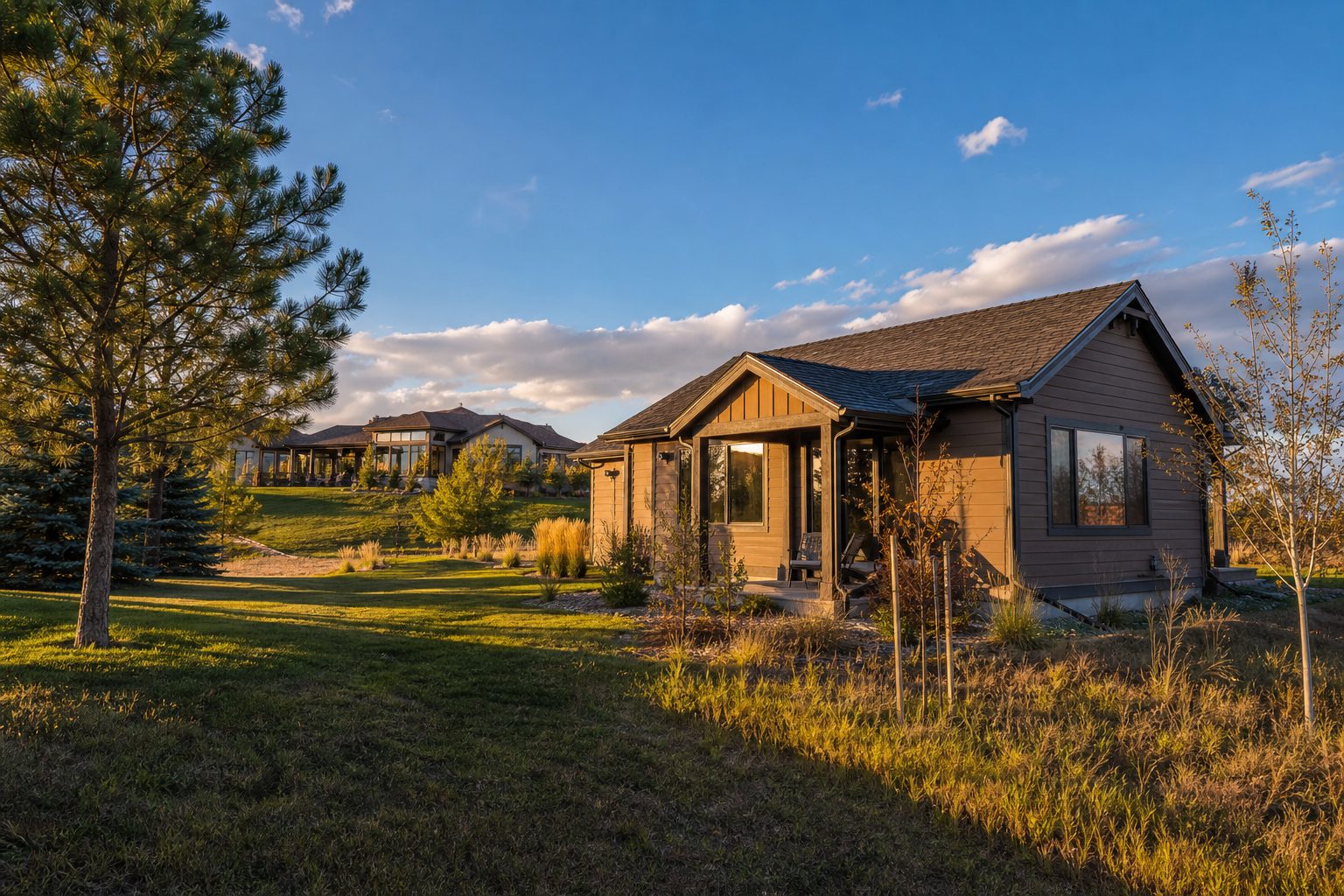
What does that actually mean for your day-to-day planning? It means if you find a home in Castle Rock with a large lot and good rear-yard access, you can build a detached guest house up to 800 square feet. That is enough for a comfortable one-bedroom unit for aging parents, a home office studio, or a rental generating income to offset your mortgage.
Having closed over 469 transactions in this market, I can tell you that buyers who understand these rules before they start looking are the ones who find the best properties. You are not just buying a house; you are buying the lot’s potential.
Detached Guest Houses and ADUs in Unincorporated Douglas County
If you are looking at properties in Franktown, Elizabeth, Larkspur, or other unincorporated areas of Douglas County, the rules differ from Castle Rock proper.
The Douglas County Board of County Commissioners approved amendments to the county zoning resolution to allow ADUs in multiple residential zone districts. Here are the key specifications:
- Attached ADUs allowed in: Suburban Residential (SR), Estate Residential (ER), Rural Residential (RR), Large Rural Residential (LRR), and Agricultural (A-1) zone districts
- Detached ADU minimum lot with central water and septic: 1 acre
- Detached ADU minimum lot with private well and septic: 2 acres
- Detached ADU in SR zone: Lots greater than 0.5 acre
- Max size (detached): Generally 900 square feet
- A-1 lots of 35 acres or more: Up to 2 ADUs, with the second subject to additional board review
- Setbacks in Estate Residential zones: Typically 15-foot side setbacks and 25-foot rear setbacks
So if you are eyeing a 2-acre parcel out near Franktown with well and septic, you have the green light for a detached ADU of up to 900 square feet. That is 100 square feet more than Castle Rock allows for detached units, which can be the difference between a tight studio and a proper one-bedroom with a small kitchen.
A Reality Check on Community Sentiment
I want to be upfront about something. Several homeowners associations in the county, including Burning Tree Ranch HOA, Deerfield Community, Grandview Estates HOA, Happy Canyon HOA, and Parker View Estates HOA, submitted letters urging the board to pause or discontinue the ADU amendment. Their concerns centered on density, rural character, groundwater, traffic, and enforcement of HOA covenants.
The amendment passed anyway, but this tells you something important: just because you have the legal right to build an ADU does not mean your neighbors will welcome it with open arms. Understanding the social landscape is just as important as understanding the zoning code.
RV and Boat Garages: What South Metro Denver Buyers Need to Know
This is where the conversation gets especially interesting for relocation buyers. Colorado’s outdoor lifestyle means RVs, boats, side-by-sides, and trailers are everywhere. But storing them? That is a different story depending on your community.
The HOA Factor for Oversized Garages
Colorado’s ADU law specifically addresses accessory dwelling units, not standalone RV or boat garages. That means your HOA’s covenants regarding oversized vehicle storage structures remain enforceable in most cases. Here is what I tell my clients:
- In master-planned communities like Highlands Ranch, Castle Pines, and Lone Tree, HOA rules on detached garages and RV storage are typically strict. Many prohibit visible RV or boat storage entirely.
- In unincorporated Douglas County and semi-rural communities, you will find much more flexibility. Properties on acreage in Elizabeth, Franktown, and Larkspur often allow detached garages sized for RV or boat storage, especially in A-1 and RR zoning.
- In Castle Rock, regulations depend on your specific subdivision. Some newer developments have dedicated RV storage lots within the community, which is a major selling point.
If RV or boat storage is non-negotiable for you, the property search needs to start with the lot size and zoning classification, not the kitchen finishes. Rated 5 out of 5 stars by 130 past clients, I have helped countless buyers work through exactly this kind of prioritization exercise to find the right property the first time.
How ADU Potential Affects Property Values in Highlands Ranch, Parker, and Beyond
You should think about ADU potential as an equity multiplier. The Denver metro median close price sat at $594,495 as of August 2026 per the Denver Metro Association of REALTORS. Single-family detached homes came in higher at a median of $649,500. In a market growing at a modest 0 to 3 percent annually, according to multiple analysts, adding a permitted ADU or guest house creates value that outpaces general appreciation.
For move-up sellers already in Douglas County, this cuts both ways. If you are selling, a property with ADU potential or an existing permitted ADU will command attention from a wider buyer pool, including multi-generational families and investors. If you are buying, look for lots that meet the minimum size requirements for a detached ADU, even if you do not plan to build one immediately.
The state law sets a minimum right to ADUs between 500 and 750 square feet, though jurisdictions may allow smaller or larger units. Between Castle Rock’s 800-square-foot cap and Douglas County’s 900-square-foot general limit for detached units, you have real livable space to work with.
Frequently Asked Questions
Can my HOA in Castle Rock still ban me from building an ADU?
No. Under C.R.S. § 38-33.3-106.5(4), common interest communities within subject jurisdictions are prohibited from restricting the creation of an ADU as an accessory use to a single-unit detached dwelling. Your HOA can impose reasonable design restrictions, such as matching materials and color, but it cannot issue an outright ban.
How large can a detached ADU be in Castle Rock?
Castle Rock allows a detached ADU with a maximum footprint of 800 square feet. An interior ADU can be up to 50 percent of the primary dwelling’s floor area. These limits were established when Castle Rock updated its code in 2025 to comply with the state law.
What is the minimum lot size for a detached ADU in unincorporated Douglas County?
You need at least 1 acre if your lot is served by central water and septic, or 2 acres if served by a private well and septic. In the Suburban Residential zone, detached ADUs are permitted on lots greater than 0.5 acre, per the Douglas County zoning amendment approved by the Board of County Commissioners.
Can I rent out both my main house and the ADU in Castle Rock?
No. Castle Rock prohibits dual rental. You cannot rent out both the primary dwelling and the ADU at the same time. Owner occupancy is also required at the time of the permit application.
Do I need a public hearing to get my ADU approved?
Under HB 24-1152, municipalities cannot subject a code-compliant ADU application to discretionary public hearings. If your design meets objective standards, approval is processed administratively. This applies in both Castle Rock and unincorporated Douglas County.
Can I build an RV garage on my lot if my HOA says no?
The state ADU law does not override HOA restrictions on standalone garages or vehicle storage structures. RV and boat garages are not classified as ADUs. Your HOA’s covenants on these structures remain enforceable. Properties in unincorporated areas with A-1 or RR zoning generally offer the most flexibility.
What setbacks apply to a detached ADU in Douglas County?
In Estate Residential zones, accessory structures typically require 15-foot side setbacks and 25-foot rear setbacks, per Douglas County regulations. Under state law, ADUs enjoy the same side-setback rules as the primary dwelling, with rear setbacks matching other accessory structures or five feet, whichever applies.
Does adding an ADU require a separate water and sewer connection in Castle Rock?
No. Castle Rock does not allow separate water and sewer taps for ADUs. Your ADU must connect through the primary dwelling’s existing service lines, which simplifies permitting but may limit placement options on your lot.
Can I have two ADUs on my property in Douglas County?
Only if your property is an A-1 (agricultural) lot of at least 35 acres. The Douglas County zoning amendment permits up to two ADUs on qualifying A-1 parcels, with the second ADU subject to additional board review and approval. All other zone districts allow one ADU per lot.
How does ADU potential affect my home’s resale value in South Metro Denver?
ADU potential expands your buyer pool to include multi-generational families, remote workers seeking separate offices, and investors looking for rental income. In a market where the single-family detached median is $649,500 as of August 2026 per DMAR, properties with built or buildable ADU space are commanding premium attention from serious buyers.
The Bottom Line
You are buying into a South Metro Denver market that offers something genuinely new: the legal right to build an ADU on your single-family lot, even in HOA-governed communities across Castle Rock, Parker, Highlands Ranch, and beyond. The rules vary by jurisdiction, lot size, and zoning classification, and the details matter enormously.
Whether you are relocating to Colorado and want multi-generational flexibility, or you are a current Douglas County homeowner weighing whether to add a guest house instead of trading up at higher interest rates, this is a conversation worth having with someone who knows the terrain.
With 30 years in this market and 469 closed transactions, I have helped buyers and sellers navigate exactly these decisions. Call me, David Richins, at 303-882-7706 or visit DavidRichins.com to talk through what is possible on the specific property you are considering. Getting the zoning, the HOA rules, and the lot requirements right before you close is the difference between a home and a missed opportunity.