How do you price a Douglas County home when you’ve invested $300,000 or more in custom upgrades that may not appeal to every buyer?
You price based on what comparable homes have actually sold for in your neighborhood, then add a modest premium for upgrades with broad appeal, not based on what you spent. Custom upgrades rarely return dollar-for-dollar at resale.
Why This Matters Right Now in South Metro Denver
If you own a heavily upgraded home in Douglas County, the current market is sending you a very specific signal. The median closed price in Douglas County was $715,000 as of April 2026 (per REcolorado data), down 1.4% year over year. Meanwhile, 32.1% of Denver metro listings carried a price cut in September 2026, the second highest share among the 50 largest U.S. metros, according to Colorado Association of REALTORS data.
That means overpriced homes, especially those with niche customizations baked into the asking price, are getting punished. Buyers in this market are watching comparable closings closely before writing an offer. With 30 years of experience and 469 closed transactions in South Metro Denver, what I consistently tell my clients is this: your home’s value is not determined by what you spent on it. It is determined by what a willing buyer will pay in today’s market.
Understanding Why Cost Does Not Equal Value in Douglas County
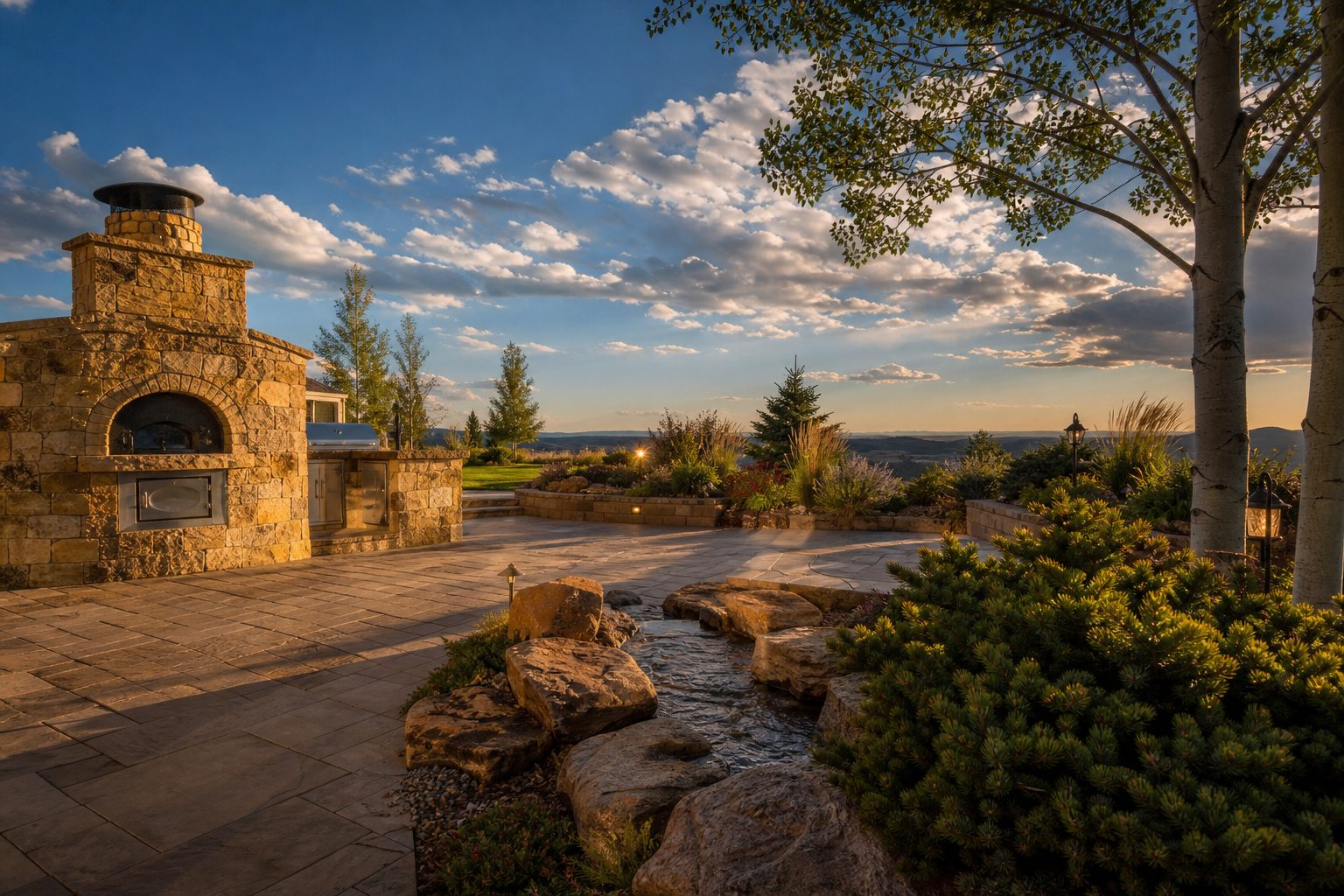
Here is the hardest conversation in luxury real estate. You spent $80,000 on a home theater. You invested $50,000 in a wine cellar. You put $120,000 into an outdoor living space with a built-in pizza oven, fire features, and a custom water wall. Those projects brought you years of enjoyment, and that matters. But the next buyer is doing math based on comparable sales, not your receipts.
The Universal vs. Personal Upgrade Divide
Not all upgrades are created equal. Think of your improvements in two categories:
- Universal upgrades (broad buyer appeal): Updated kitchen with quality countertops, modern primary bathroom, finished basement with flexible space, energy-efficient HVAC, new roof, professional landscaping
- Personal upgrades (narrow buyer appeal): Themed rooms, elaborate built-ins for specific hobbies, ultra-high-end audio/visual systems, indoor pools, exotic tile or stone reflecting very specific taste, sport courts
The National Association of REALTORS’ annual Remodeling Impact Report consistently shows that most projects return 50% to 75% of cost at resale. Highly personalized projects may return even less. So what does that mean for your bottom line? If you invested $300,000 in a mix of universal and personal upgrades, you might realistically add $150,000 to $200,000 to your home’s value, not $300,000.
How Overpricing Narrows Your Buyer Pool in South Metro Denver
This is where niche buyer appeal pricing becomes a real strategic decision. A $750,000 home with $300,000 in custom upgrades priced at $1,050,000 now competes in a completely different buyer pool than the $750,000 to $850,000 range.
At $1 million and above, buyers in Douglas County expect certain standards: premium location, generous lot size, architectural distinction, and a coherent design vision. If your home delivers an incredible home theater but sits on a standard lot in a neighborhood where comps are running $780,000, you have a problem.
The Days on Market Penalty
Douglas County’s median days in MLS was 40 as of April 2026 (per REcolorado data). But homes at higher price points with niche customizations tend to sit longer. Every week your home sits without offers, buyer perception shifts. Agents start describing it as “stale.” Price reductions follow, and you end up netting less than if you had priced it correctly from day one.
What I always tell sellers in this situation is that the goal is not to “get back” every dollar you spent. The goal is to attract the right buyer quickly, at the strongest possible price, while your listing still has momentum.
The Strategic Pricing Framework for Heavily Upgraded Homes
So how do you actually arrive at the right number? Here is the approach that has worked across 469 transactions and earned 130 five-star reviews from past clients.
Step 1: Start with Clean Comparable Sales
Pull recent closed sales in your immediate area. Focus on homes with similar square footage, lot size, age, and bedroom/bathroom count. Ignore the upgrades for now.
Step 2: Categorize Your Upgrades
Separate your $300,000 in improvements into universal and personal categories. Be honest with yourself. That gorgeous but very specific Tuscan wine cellar? Personal. The new energy-efficient windows and completely rebuilt kitchen? Universal.
Step 3: Add a Modest Premium for Universal Upgrades Only
For universal upgrades, you can reasonably add 60% to 75% of cost. For personal upgrades, add 25% to 40%, if the upgrade is in good condition and current in style.
Step 4: Validate Against the Market Ceiling
Check whether your final number exceeds the highest recent sale in your neighborhood. If it does, you are likely overpriced, regardless of what you spent. Douglas County’s market is strong relative to the broader Denver metro, but it is not immune to pricing ceilings within specific communities.
Marketing Strategy Matters as Much as Price in Douglas County
Pricing is only half the equation. How you present a heavily customized home determines whether the right buyer even finds it. This is where your South Metro Denver luxury seller strategy needs to be especially sharp.
- Professional staging that highlights the lifestyle your upgrades create, not just the features themselves
- Targeted photography and video that tells the story of how the spaces are used, not just how they look
- Strategic exposure to the niche buyer who actually wants what you have built
What many sellers do not realize is that a home with a $50,000 sport court or a professional-grade home gym has a very specific buyer out there. The challenge is reaching that buyer before the listing goes stale. With Douglas County’s population now estimated at 405,741 (per World Population Review, 2026) and growing at 1.6% annually, driven primarily by people relocating from other states, there is a real pool of incoming buyers who may value exactly what you have built.
Relocation buyers moving to Colorado from higher-cost markets on the coasts may see your upgrades as a bargain compared to what similar improvements cost in their previous market. That is a positioning advantage, but only if your agent knows how to reach those buyers effectively.
What Relocation Buyers Need to Understand About Custom Homes
If you are moving to Douglas County from out of state, you will encounter homes with significant custom work. Here is what to keep in mind: do not pay for someone else’s taste at full cost. Evaluate whether upgrades match your lifestyle and whether they were executed with quality materials and proper permits.
In communities like Castle Rock, Parker, Highlands Ranch, and Lone Tree, you will find a wide spectrum of customization levels. Some are brilliantly done and add genuine value. Others reflect very specific personal preferences that may require rework to suit your family.
Frequently Asked Questions
How much of my $300K in upgrades can I expect to recoup?
Most homeowners recoup 50% to 75% of upgrade costs, according to the National Association of REALTORS’ Remodeling Impact Report. Universal upgrades like kitchen and bathroom remodels return the highest percentage. Highly personalized projects like themed rooms or elaborate hobby spaces tend to return significantly less, sometimes as low as 25% to 40%.
Should I get an appraisal before listing my upgraded home in Douglas County?
A pre-listing appraisal can help set realistic expectations, but appraisers are also bound by comparable sales. Your appraisal may not reflect your full investment. A better approach is working with an agent who has deep local pricing expertise to position your home strategically within the market.
Will my sport court or home theater scare off buyers?
Not necessarily, but these features narrow your buyer pool. A sport court appeals to athletic families. A home theater appeals to entertainment enthusiasts. Pricing your home as though every buyer wants these features is where problems start. Price for the base home and treat these as bonuses.
How long do heavily upgraded homes take to sell in South Metro Denver?
The median days in MLS for Douglas County was 40 as of April 2026, per REcolorado data. Homes with niche customizations priced above neighborhood comps frequently take longer. Proper pricing from day one is the single best way to avoid extended market time.
Can I price my home higher if I have receipts for all upgrades?
Receipts prove what you spent, not what the market will pay. Buyers and their agents base offers on comparable closed sales. Your receipts are useful for demonstrating quality and scope of work, but they do not dictate market value.
What upgrades give the best return in Douglas County’s market?
Kitchen remodels, primary bathroom updates, energy-efficient systems, and finished basements with flexible layouts consistently return the highest percentage. These are improvements nearly every buyer values and can immediately enjoy.
Should I remove or undo any upgrades before selling?
Rarely. Removing a feature like a built-in home theater can leave damage that costs more to repair than leaving it. However, if a room was converted to a very niche use (a reptile habitat, for example), restoring it to a neutral bedroom or office can dramatically broaden appeal.
How do I find the right buyer for a unique, heavily customized home?
Targeted digital marketing, professional video content, and exposure to relocation buyer networks are essential. With about 3,300 more people moving into Douglas County from other U.S. counties than leaving between 2024 and 2025 (per USAFacts data), incoming buyers represent a strong opportunity.
Does the current interest rate environment affect how I should price my upgraded home?
Absolutely. With 30-year fixed rates around 6.67% as of August 2026 (per Freddie Mac data), buyers are more payment-sensitive than they were two years ago. Overpricing pushes your home into a monthly payment range that eliminates qualified buyers.
Should I offer a rate buydown instead of reducing my price?
A seller-paid rate buydown can be an effective strategy because it directly reduces the buyer’s monthly payment, making your home more affordable without lowering the sale price. In a market where rates are near 6.67%, a 2-1 buydown can be a powerful incentive.
The Bottom Line
Pricing a home with $300,000 or more in custom upgrades requires discipline, market knowledge, and a willingness to separate emotional investment from market value. In Douglas County’s current market, where the median closed price sits around $715,000 and buyers are comparing every listing against recent comps, precision matters.
Your upgrades have value, but that value is determined by the market, not your investment receipts. As a Top Realtor in Colorado with 30 years of experience and 130 five-star reviews from past clients, I work with sellers in Castle Rock and throughout South Metro Denver to position heavily customized homes for the strongest possible outcome. If you are preparing to sell a home with significant custom work and want an honest pricing strategy, call me at 303-882-7706 or visit DavidRichins.com. Let’s build a plan that gets your home sold at the right price, to the right buyer.