Buying Acreage in Parker: Horse Properties, Outbuildings, and HOA Rules
Where can you keep horses, build a pole barn, and park an RV in Parker, Colorado, without HOA restrictions?
Your best options are Douglas County A-1 Agricultural-zoned parcels east of Parker Road, primarily along Hess Road, Delbert Road, and in neighborhoods like Hidden Village, where livestock, outbuildings, and RV parking are typically permitted by right.
Why Buying Acreage in Parker Matters Right Now
Parker is one of those rare Denver South Metro communities where you can sip craft coffee on Mainstreet and then drive ten minutes east to find five-acre parcels with fenced pastures, pole barns, and zero HOA oversight. That dual identity is drawing serious attention in 2026. The market has seen a 12% increase in buyers specifically seeking wooded rural acreages, and the demand for equestrian-ready properties continues to outpace supply.
But here is what catches people off guard. Not all acreage in Parker is created equal. A three-acre parcel inside a residential subdivision may look rural, but the HOA covenants could prohibit horses entirely. Meanwhile, a neighboring parcel under Douglas County A-1 zoning might let you keep livestock, build a barn, and park your horse trailer right in the driveway. With 30 years of experience helping buyers navigate Douglas County real estate and over 469 closed transactions, I have watched more deals get complicated by zoning confusion than by any other single issue. So let me walk you through exactly what you need to know.
Understanding Parker’s Zoning: Douglas County A-1 vs. Residential
This is the single most important distinction you need to grasp before writing an offer on acreage in Parker. Get this wrong, and you could end up owning land you cannot use the way you planned.
Douglas County A-1 Agricultural Zoning
A-1 zoned parcels are found predominantly east of Parker Road along Hess Road, Delbert Road, and portions north of Twenty Mile Road. Under this zoning designation, you typically have the right to:
- Keep horses at a density of roughly one horse per acre minimum
- Build pole barns, loafing sheds, and arenas (subject to county building permits and setbacks)
- Park RVs, horse trailers, and farm equipment on your property
- Potentially construct accessory dwelling units (ADUs), depending on the specific parcel and county review
Residential and HOA-Governed Zoning
By contrast, neighborhoods like Canterberry Crossing and certain filings within The Pinery operate under strict HOA covenants that may restrict or entirely prohibit livestock, limit outbuilding dimensions and materials, dictate fencing types, and ban visible trailer or RV storage.
What I tell my clients is this: if a listing says “horses allowed,” you need to ask a very specific follow-up question. Is that because of the underlying zoning, or because the HOA currently permits it? HOA rules can be amended by a board vote. Zoning rights are far more durable. Before you go under contract, request a Douglas County zoning verification letter and cross-reference it with the Douglas County zoning regulations. That ten-minute step can save you from a six-figure mistake.
Parker Neighborhoods Where You Can Actually Keep Horses
So where specifically should you be looking? Let me break down the key Parker-area communities by what they actually allow.
Hidden Village and the A-1 Corridor
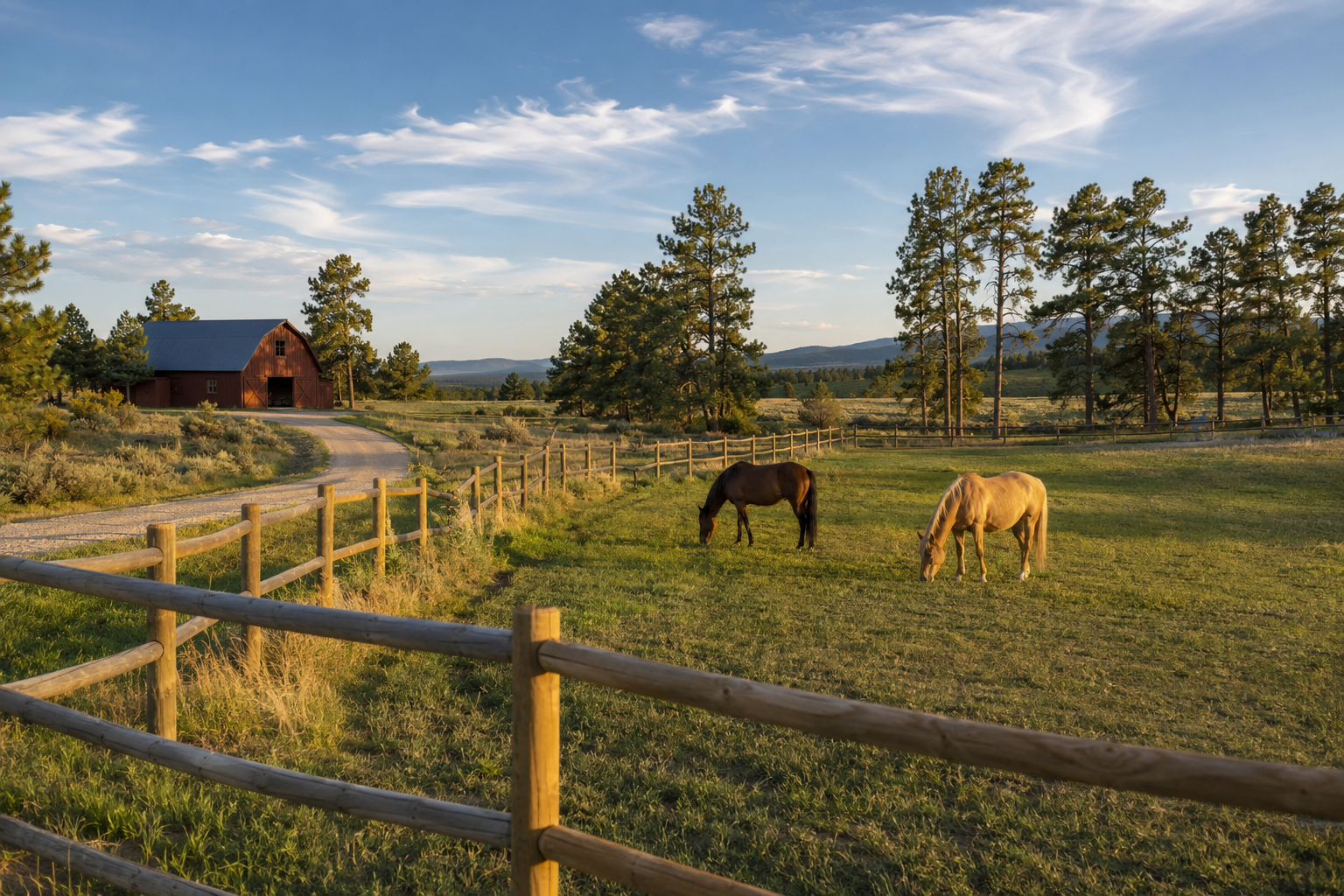
Pull off Hess Road east of Parker Road and the density drops immediately. Five-acre parcels with fenced pastures, hay fields, and gravel driveways are the norm. There are no streetlights. Neighbors wave from tractors. A-1 zoned properties in the Parker and Franktown corridor on five to ten acres typically run $850,000 to $1.4 million, depending on improvements, barn structures, well and septic systems, and views.
One buyer I worked with last year had been searching Parker listings for months, drawn to a beautiful three-acre property near Canterberry Crossing. Everything looked perfect until we dug into the HOA covenants and discovered horses were prohibited outright. We redirected to a five-acre A-1 parcel off Hess Road with existing fencing and a two-stall barn. That buyer now boards her own horses on her own land, twenty minutes from the Denver Tech Center.
The Pinery: Equestrian Filings Only
The Pinery is famous for its equestrian atmosphere, with mature ponderosa pines, spacious lots, and direct access to the Cherry Creek Trail system. The median home price here hit $875,000 as of mid-2025, with the average sale price reaching $1,040,319. But horses are only permitted in specific sections known as equestrian filings. You must verify the specific rules for any property address with the Pinery Architectural Review Committee before purchasing. What is allowed on one lot may be completely prohibited on the next street over.
Spirit Ridge, Bayou Gulch, and Ponderosa Hills
These communities, stretching east and south of Parker toward Franktown and Elizabeth, offer five to thirty-five-plus-acre parcels that are generally horse-friendly. Spirit Ridge and Bayou Gulch properties often have no HOA at all, giving you maximum flexibility for outbuildings and livestock.
Outbuildings in Parker: Barns, Arenas, and What You Can Build
Outbuildings are a major value driver on acreage properties, and they are also where HOA rules and county regulations intersect in ways that surprise buyers.
On A-1 zoned land, your primary constraints are Douglas County building codes, not HOA architectural committees. You will need permits for structures, and setback requirements apply, but you generally have broad latitude to build barns, covered arenas, equipment storage buildings, and hay sheds.
Inside HOA communities, the rules get specific. Common restrictions include:
- Architectural review requirements for materials, colors, roof pitch, and placement
- Maximum square footage caps on accessory structures
- Fencing standards specifying type, height, and material (some communities prohibit barbed wire entirely)
- Manure management setbacks, with recent 2026 zoning amendments introducing a 100-foot setback rule for manure management
A couple relocating from Highlands Ranch contacted me after inheriting a property in an HOA-governed Parker subdivision. They assumed the 2.5-acre lot would let them build a barn for their daughter’s riding program. The HOA covenants limited outbuildings to a single storage shed under 200 square feet. We helped them sell the inherited property and purchase a ten-acre parcel in the Bayou Gulch area with no HOA, where they built a four-stall barn with a tack room and covered arena. The moral: always read the covenants before you fall in love with the land.
What Probate and Inherited-Property Sellers Need to Know About Parker Acreage
If you have inherited a horse property or acreage in Parker, you face a unique set of challenges beyond the typical probate process. During the estate settlement period, you are responsible for:
- Maintaining fencing, outbuildings, wells, and septic systems to prevent property deterioration and liability
- Managing any livestock that may still be on the property, or arranging for their relocation
- Complying with HOA maintenance requirements, which do not pause during probate
- Properly transferring or valuing water rights (adjudicated or permitted) attached to the property
Colorado follows the Uniform Probate Code, and a Personal Representative must be appointed by the court before any property can be sold. The creditor claims period typically runs four months. In the current Douglas County market, where home values in the Denver South Metro remain strong, acreage properties with existing equestrian infrastructure often command substantial premiums. With 130 five-star reviews from past clients, I have guided dozens of families through the intersection of probate complexity and rural property sales.
Commute, Schools, and Daily Life on Parker Acreage
You might wonder whether choosing acreage means sacrificing convenience. The answer is mostly no, with one important caveat.
From Hess Road, you are approximately 15 to 20 minutes from I-25. The commute to the Denver Tech Center runs about 25 to 30 minutes via E-470. Downtown Denver is 40 to 45 minutes. However, rural east Parker has no RTD service, so a personal vehicle is non-negotiable.
Schools fall under the Douglas County RE-1 School District. Frontier Valley Elementary and Sagewood Middle School serve many rural Parker addresses, while Legend High School (rated 8 out of 10 on GreatSchools) is one of the area’s top comprehensive high schools. Parker Core Knowledge Charter School remains one of Colorado’s most sought-after K through 8 charters. Rural attendance boundaries can vary, so confirm your assignment directly with the district.
For daily errands, Mainstreet Parker offers everything from The Rusty Rail Brewing Company to Whiskey Biscuit BBQ, all within a short drive from most acreage properties.
Frequently Asked Questions About Buying Acreage in Parker
Can I keep horses on any large lot in Parker, Colorado?
No. Horse-keeping rights depend on the specific zoning and HOA covenants for your parcel, not just the lot size. A three-acre lot inside a residential subdivision with an HOA may prohibit livestock entirely. You need to verify whether the property falls under Douglas County A-1 Agricultural zoning or a residential classification before assuming you can keep horses.
Where can I park an RV and keep horses in Parker with no HOA?
Your best bet is Douglas County A-1 zoned parcels east of Parker Road, particularly along Hess Road, Delbert Road, and in the Hidden Village area. These properties typically permit horses, RV parking on-property, and outbuildings without HOA oversight, though county building codes still apply.
How much does horse property cost in Parker in 2026?
A-1 zoned acreage properties on five to ten acres in the Parker and Franktown corridor typically range from $850,000 to $1.4 million, depending on improvements, barn structures, and water systems. In The Pinery, the median home price is approximately $875,000, though equestrian-filing properties with infrastructure often command a premium above that.
What is the difference between A-1 and residential zoning in Douglas County?
A-1 Agricultural zoning generally permits livestock, pole barns, equipment storage, RV parking, and potentially ADUs. Residential zoning, especially within HOA-governed subdivisions, often restricts or prohibits these uses. The distinction is critical for anyone buying land with plans to keep animals or build agricultural structures.
Can I build a pole barn on my Parker acreage?
On A-1 zoned land, yes, subject to Douglas County building permits and setback requirements. Inside HOA communities, you will likely face architectural review requirements covering materials, colors, placement, and maximum square footage. Some HOAs limit accessory buildings to small storage sheds only.
Are there manure management rules for Parker horse properties?
Yes. Recent 2026 zoning amendments introduced a 100-foot setback rule for manure management, and many HOAs have additional specific requirements. Even on A-1 land, you should plan for proper manure composting or removal to stay in compliance with county regulations.
How do I verify zoning before buying acreage in Parker?
Request a Douglas County zoning verification letter for the specific parcel and cross-reference it with the Douglas County Assessor parcel map. Do not rely solely on listing descriptions. Your Douglas County real estate agent should handle this verification as part of due diligence.
Can I run a commercial horse boarding operation on Parker acreage?
Most HOA communities prohibit commercial boarding or training operations. On A-1 zoned land, limited agricultural commercial use may be permitted, but you should confirm with Douglas County Planning and Zoning before assuming commercial rights.
What happens if I inherit a horse property in Parker during probate?
You are responsible for maintaining the property, including fencing, outbuildings, wells, and septic systems. If livestock are on-site, you must arrange for their care or relocation. HOA maintenance requirements do not pause during probate. A Personal Representative must be appointed before the property can be sold.
How far is Parker acreage from the Denver Tech Center?
Most Parker acreage areas are approximately 25 to 30 minutes from the Denver Tech Center via E-470. Rural east Parker along Hess Road is closer to 15 to 20 minutes from I-25, though no RTD transit service is available in these areas.
The Bottom Line on Buying Acreage in Parker
Parker gives you something rare in the Denver South Metro: genuine acreage with equestrian infrastructure, all within commuting distance of major employment centers. But the gap between what you think you can do with a property and what the zoning and HOA covenants actually allow can be enormous. Neighborhoods like Pinery Glen, Canterberry Crossing, and Hidden Village operate under vastly different rules for livestock, pole barns, RV parking, and ADUs.
Your first step is always zoning verification. Your second is working with someone who has walked these properties and knows which parcels deliver the rural lifestyle you are after and which ones just look the part. With 30 years in this market and 469 closed transactions across the Denver South Metro, I am here to make sure you buy the right land for how you actually want to live. Call me, David Richins, at 303-882-7706 or visit DavidRichins.com to start the conversation.