If you’re selling your Castle Pines or Castle Pines Village home and considering Castle Rock or Lone Tree, what should you expect to change?
You’ll find meaningful shifts in home prices, neighborhood feel, commute options, and daily lifestyle, but all three communities share Douglas County schools and the South Denver Metro quality of life that brought you here in the first place.
Why This Matters for Castle Pines Homeowners Right Now
If you own a home in Castle Pines, you’re sitting on significant equity. The median sale price in Castle Pines hit $999K over the three months ending May 2026, up 12.8% compared to the same period last year. Inside Castle Pines Village, that figure climbs to $1.6M. That equity position gives you options.
But “options” without context leads to paralysis. Having closed over 469 transactions across the South Denver Metro over my 30 years in this market, I can tell you that Castle Pines sellers who move to Castle Rock or Lone Tree aren’t making lateral moves. They’re making intentional lifestyle shifts. The key is understanding exactly what changes so the transition feels like an upgrade rather than a compromise. With mortgage rates hovering in the low 6s in 2026, more homeowners are finally making the move they’ve been planning.
How Castle Pines Home Prices Compare to Castle Rock and Lone Tree
Let’s start where every seller starts: the numbers. The price differential between these three communities is real, and it shapes everything from your monthly payment to the equity you carry forward.
- Castle Pines (citywide): $999K median sale price, up 12.8% year over year
- Castle Pines Village: $1.6M median sale price; $1.85M median list price
- Castle Rock: $636K median sale price for single-family homes; condos averaging around $338,500
- Lone Tree: Falls within the broader Douglas County median of $715K, though specific neighborhoods like RidgeGate push higher
What does that actually mean for your wallet? If you’re selling a $1.2M Castle Pines home with 40% equity and moving to a $700K home in Castle Rock’s Meadows neighborhood, you could potentially walk away from the transaction with hundreds of thousands in freed-up capital. One couple I worked with did exactly this. They sold their home near Castle Pines Drive North, purchased a beautifully updated home in The Meadows along Meadows Boulevard, and used the equity difference to eliminate their mortgage entirely.
The flip side applies to Lone Tree. If you’re moving north for RTD light rail access or proximity to the Park Meadows corridor, expect your dollar to buy less square footage than Castle Pines, particularly in newer RidgeGate communities.
The Lifestyle Shift: Trails and Open Space vs. Urban Convenience
This is where Castle Pines, Castle Pines Village, and these destination communities diverge most dramatically.
What You’re Leaving Behind in Castle Pines
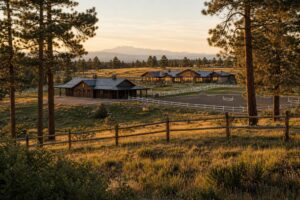
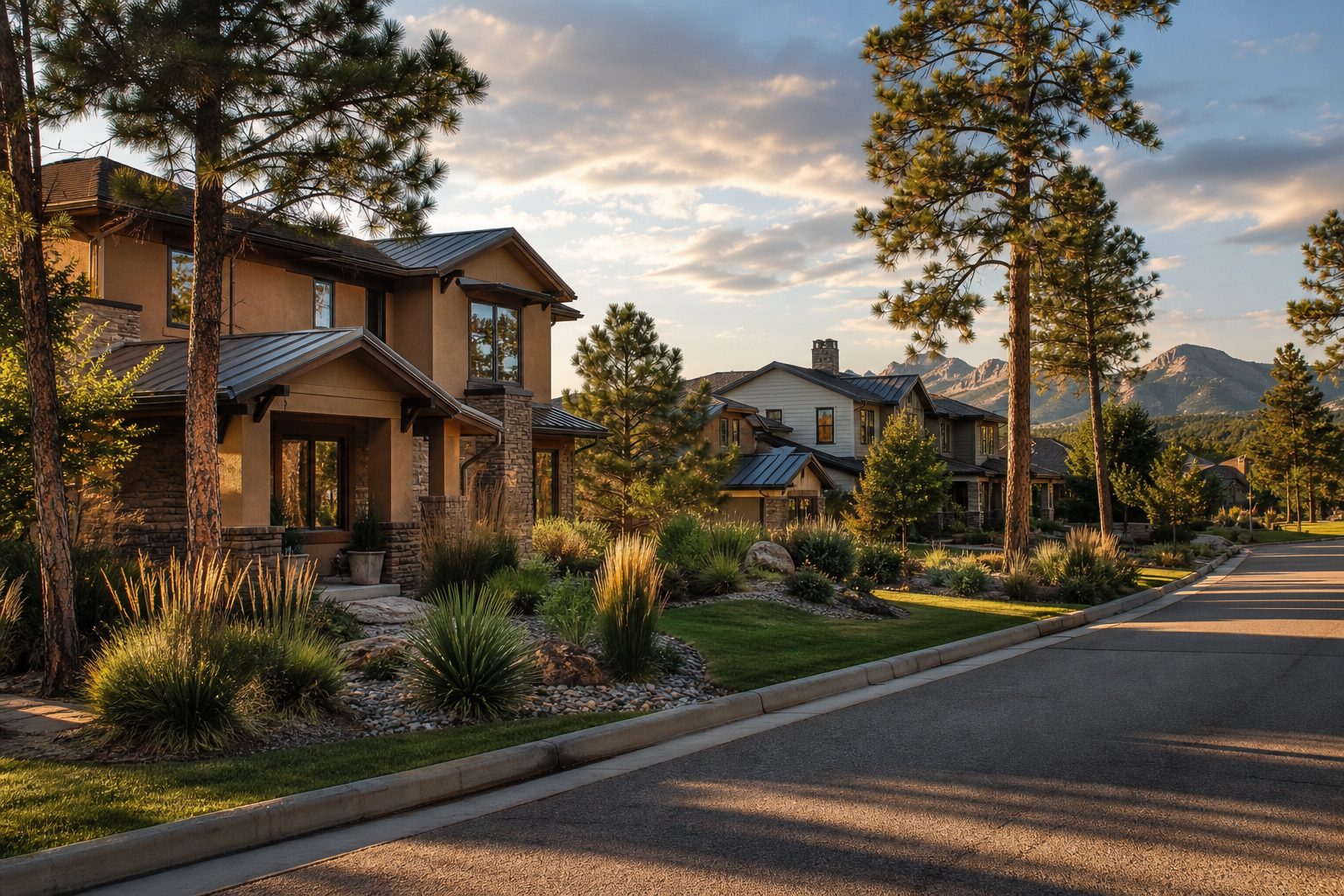
Castle Pines offers nearly 60 miles of trails and more than 1,850 acres of open space woven directly into the residential fabric. The Happy Canyon Trail system, the connections into Daniels Park, the ponderosa pine canopy visible from Castle Pines Parkway, these aren’t amenities you drive to. They’re part of your backyard. The Country Club at Castle Pines, currently undergoing a $17 million upgrade adding a heated pool, cabanas, and expanded dining and racquet sports facilities, is the social centerpiece with its exclusive 395-member cap. For morning coffee, Miyo Café on Castle Pines Parkway anchors the daily routine.
What Castle Rock Offers Instead
Castle Rock trades that wooded seclusion for a vibrant downtown along Perry Street and Elbert Street, complete with locally owned restaurants, the Outlets at Castle Rock, and an expanding brewery scene. The Meadows provides its own community ecosystem through The MAC recreation center. Crystal Valley Ranch offers newer construction at more accessible price points. Castle Rock is projecting 300 single-family permits and 110 multifamily permits in 2026, so the growth energy is palpable. What I tell my clients is that Castle Rock feels like a town that’s becoming a city, while Castle Pines feels like a retreat that wants to stay exactly as it is.
What Lone Tree Offers Instead
Lone Tree gives you something neither Castle Pines nor Castle Rock can match: RTD light rail access. Lincoln Station puts you on a direct line to downtown Denver without touching I-25. The Park Meadows retail and dining corridor, the Charles Schwab campus, and Sky Ridge Medical Center create an employment and lifestyle hub that makes Lone Tree feel more urban-suburban than the other two.
Schools, Commute, and Daily Life in Each Community
Douglas County Schools Across All Three
Here’s the good news: all three communities sit within Douglas County School District RE-1, which holds an A-minus rating on Niche. In Castle Pines, your pipeline runs through Buffalo Ridge Elementary and Rock Canyon High School, which has received the High School Academic Award. Castle Rock feeds into different schools within the same district. Lone Tree families typically attend schools in the Highlands Ranch feeder system. The school quality itself is not a reason to choose one over another; it’s the specific school assignments that matter, and those shift by neighborhood.
The Commute Reality
Castle Pines sits 23 miles south of Denver. On I-25 during morning rush, plan for 35 to 50 minutes to downtown. Moving to Castle Rock adds roughly 10 to 15 minutes to that commute. Moving to Lone Tree shaves about 10 minutes off, and the RTD option at Lincoln Station changes the equation entirely for downtown workers.
A recent client of mine, a tech executive working hybrid in the Denver Tech Center, sold her Castle Pines Village home and moved to Lone Tree specifically to cut her three-day-per-week commute from 40 minutes to 12. She traded the trail system and pine trees for walkability to restaurants on Lincoln Avenue, and she told me it was the best quality-of-life decision she’d made in a decade.
HOA and Tax Considerations
Do not assume that moving from Castle Pines automatically lowers your monthly costs. The financial trade-off between locations comes down to balancing municipal taxes against neighborhood association costs. Master-planned communities in Castle Rock, particularly The Meadows and Crystal Valley Ranch, carry HOA fees that can consume the savings you expected from a lower purchase price. Colorado’s 2026 residential assessment rate sits at 6.8%, which applies equally across all three communities.
Selling Your Castle Pines Home in the 2026 Market
With 130 five-star reviews and 30 years navigating this exact corridor, what I consistently see is that Castle Pines homes attract buyers who value what makes this community unique. That means your marketing strategy should emphasize the trail access, the ponderosa setting, the Country Club proximity, and the low-density character rather than generic “Douglas County” features.
Castle Pines homes currently receive about 2 offers on average and sell in around 31 days. Homes throughout the Denver metro are selling at 99.1% of asking price when priced correctly. The key phrase there is “priced correctly.” In Douglas County overall, homes are sitting for a median of 40 days in MLS, and 47.95% of Castle Rock listings have dropped their price. That tells you the market rewards precision and punishes optimism.
The best strategy for Castle Pines sellers in 2026 is to prepare your home as turnkey, price it based on comparable sales within your specific micro-neighborhood (Village vs. Canyons vs. general Castle Pines matters enormously), and coordinate your sale with your purchase so neither transaction puts you under pressure.
Frequently Asked Questions
Is Castle Rock more affordable than Castle Pines?
Yes, significantly. Castle Rock’s median sale price of approximately $636K for single-family homes runs well below Castle Pines’ $999K citywide median. The gap widens further compared to Castle Pines Village at $1.6M. However, factor in HOA fees and community amenities when calculating total monthly costs, as master-planned Castle Rock neighborhoods carry their own recurring expenses.
Will I lose money selling my Castle Pines home in 2026?
Most Castle Pines homeowners have substantial equity. Home prices there are up 12.8% year over year. If you purchased before 2022, you’re likely sitting on significant gains. The key is pricing correctly from day one, as overpriced homes across Douglas County are sitting while well-priced properties sell within 31 days.
How far is Castle Rock from Castle Pines?
Castle Rock sits roughly 12 to 15 miles south of Castle Pines along I-25. In normal traffic, the drive takes about 15 minutes. During rush hour, expect 20 to 25 minutes via the interstate or Highway 85.
Does Lone Tree have RTD light rail access?
Yes. Lincoln Station in Lone Tree connects directly to Denver’s light rail system, providing access to downtown Denver, the Denver Tech Center, and Denver International Airport. This is one of Lone Tree’s strongest differentiators compared to both Castle Pines and Castle Rock.
Are the schools different between Castle Rock, Castle Pines, and Lone Tree?
All three communities are served by Douglas County School District RE-1, which holds an A-minus rating. The specific school assignments differ by neighborhood, so your children may attend different campuses, but the overall district quality remains consistent.
What’s the commute to Denver from Castle Rock vs. Castle Pines?
Castle Pines averages 35 to 50 minutes to downtown Denver via I-25. Castle Rock adds roughly 10 to 15 minutes. Lone Tree reduces the drive by about 10 minutes and offers the light rail alternative, which many commuters prefer.
Is Castle Rock still growing?
Yes. The Town of Castle Rock projects 300 single-family permits and 110 multifamily permits in 2026. The US 85 Corridor Improvements project, an $84 million initiative in CDOT’s 2026 to 2036 plan, will further shape the area’s infrastructure.
Should I sell my Castle Pines home before buying in Castle Rock or Lone Tree?
In most cases, coordinating both transactions simultaneously produces the best outcome. Selling first gives you negotiating power as a cash or non-contingent buyer. With 30 years of experience managing these transitions, I recommend building a sell, buy, and move plan before either transaction creates pressure.
What kind of home can I buy in Castle Rock with my Castle Pines equity?
It depends on your current home’s value and equity position, but many Castle Pines sellers can purchase a comparable or larger home in Castle Rock and reduce or eliminate their mortgage. The Meadows, with a typical value around $639K, is a popular landing spot for Castle Pines sellers looking for community amenities at a lower price point.
Will I miss the trail system if I leave Castle Pines?
Possibly. Castle Pines’ nearly 60 miles of trails and 1,850 acres of open space are unmatched in the South Denver Metro. Castle Rock and Lone Tree offer trail systems and parks, but the density and integration of Castle Pines’ outdoor network is genuinely unique. This is the single factor I see Castle Pines sellers weigh most heavily.
The Bottom Line
Moving from Castle Pines or Castle Pines Village to Castle Rock or Lone Tree isn’t about upgrading or downgrading. It’s about choosing the lifestyle, commute, and financial position that fits where you are right now. Castle Rock gives you downtown energy, newer construction options, and significant equity relief. Lone Tree gives you urban convenience, light rail access, and proximity to major employment corridors. Castle Pines gives you something neither can replicate: that quiet, pine-covered, trail-rich character that drew you there in the first place.
If you’re weighing this move, the first step is understanding exactly what your Castle Pines home is worth in today’s market and how that equity translates into your next chapter. As a top-rated Douglas County real estate agent with 469 closed transactions, I help Castle Pines homeowners build a clear plan before either the sale or the purchase creates unnecessary pressure. Reach out to David Richins at 303-882-7706 or visit GoColoradoRealEstate.com to start mapping your move across the South Denver Metro.