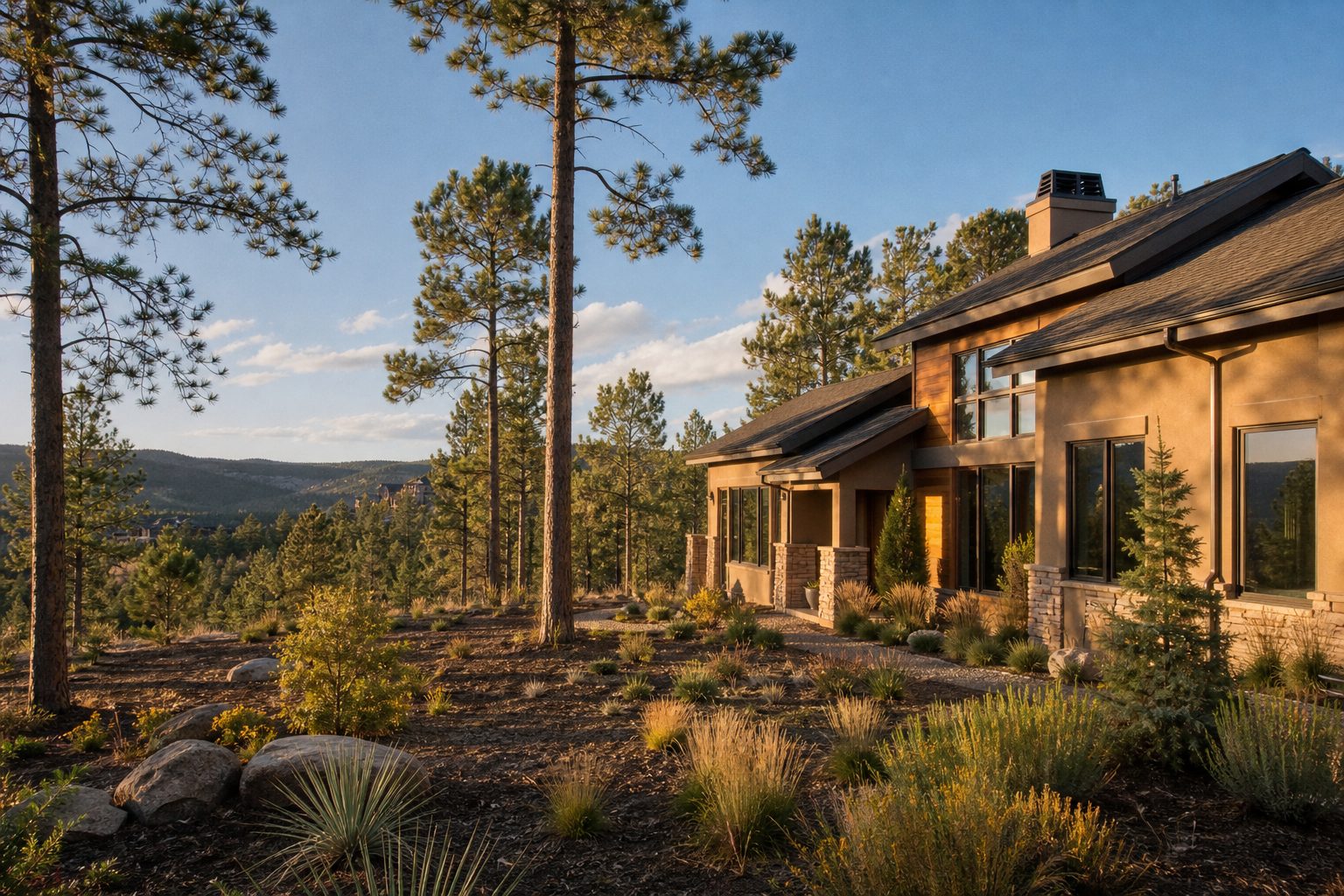
What does Wildland Urban Interface zoning mean for insurance on luxury homes in Douglas County?
If you own or are considering buying a luxury home in Douglas County, WUI zoning directly affects your ability to get homeowners insurance, what you pay for it, and what fire mitigation steps your property must meet to stay insured.
Why This Matters Right Now in Douglas County
Here is a number that should stop you in your tracks: over 84 percent of Douglas County’s population, an estimated 282,267 people, lives within the Wildland Urban Interface, according to the Douglas County Community Wildfire Protection Plan. That means the overwhelming majority of homes in Castle Rock, Castle Pines, Parker, Highlands Ranch, Larkspur, and Franktown sit in zones where development meets wildland vegetation.
For luxury homeowners, this is not an abstract land-use concept. It is a financial reality that shapes your insurance options, your annual carrying costs, and ultimately your home’s resale value. With the Douglas County single-family median closed price at $715,000 as of April 2026, down 1.4 percent year over year per REcolorado, and luxury properties in Castle Pines and similar enclaves pushing well past $1 million, the stakes are enormous. Having closed over 469 transactions across 30 years in this market, I can tell you that WUI awareness has shifted from a footnote in disclosures to a front-and-center negotiation factor.
How Douglas County Defines and Regulates the WUI
So what exactly qualifies as WUI? The Douglas County government defines it as “an area where development and wildland fuels meet at a well-defined boundary, the line, area, or zone where structures and other human development meet or intermingle with undeveloped wildland or vegetative fuels.”
The Wildfire Hazard Overlay District
Douglas County enforces this through Section 17 of the Douglas County Zoning Resolution, formally called the Wildfire Hazard Overlay District. New buildings within this overlay must meet several fire-resistant construction standards, emergency access requirements, defensible space investments, and vegetation management requirements based on zones around the structure.
What does that mean for you? If you are buying a newly built luxury home in a designated WUI area, the builder has already had to clear these hurdles. But if you are purchasing a resale home that predates the overlay requirements, you could face significant upgrade costs to meet current standards, and those same standards are increasingly what insurers require before they will write or renew a policy.
Colorado reinforced this in May 2023 by establishing a wildfire resiliency code board tasked with defining designated WUI areas statewide. The regulatory framework is tightening, not loosening.
What WUI Zoning Does to Your Insurance Premiums and Availability
This is where the conversation gets very real for luxury homeowners. The combination of high replacement cost and elevated wildfire risk in Douglas County’s WUI zones creates a compounding problem.
The Insurability Challenge
National carriers have been pulling back from high-risk WUI areas across the Western United States. If your Douglas County luxury home sits in a zone rated “high” or “extreme” wildfire hazard, you may find standard homeowners insurance difficult or impossible to obtain through traditional channels. That can force you into surplus lines or state-backed programs that carry significantly higher premiums and less favorable terms.
Premium Math on a Million-Dollar Home
Consider this: when you are insuring a home with a replacement cost north of $1 million, even a modest premium multiplier translates to thousands of additional dollars per year. One thing I consistently tell my clients who are relocating to Colorado from states like California, Texas, or New York is that wildfire insurance costs in Douglas County can be a genuine surprise. They are drawn here for the mountain views, the privacy, the mature vegetation on large lots. Those are the same features Douglas County’s own wildfire awareness materials flag as risk factors, noting that “many homes in Douglas County have significant wildfire risks for the same reasons they are appealing: lots of vegetation and private settings.”
That tension between desirability and risk is exactly what drives insurance pricing in the WUI.
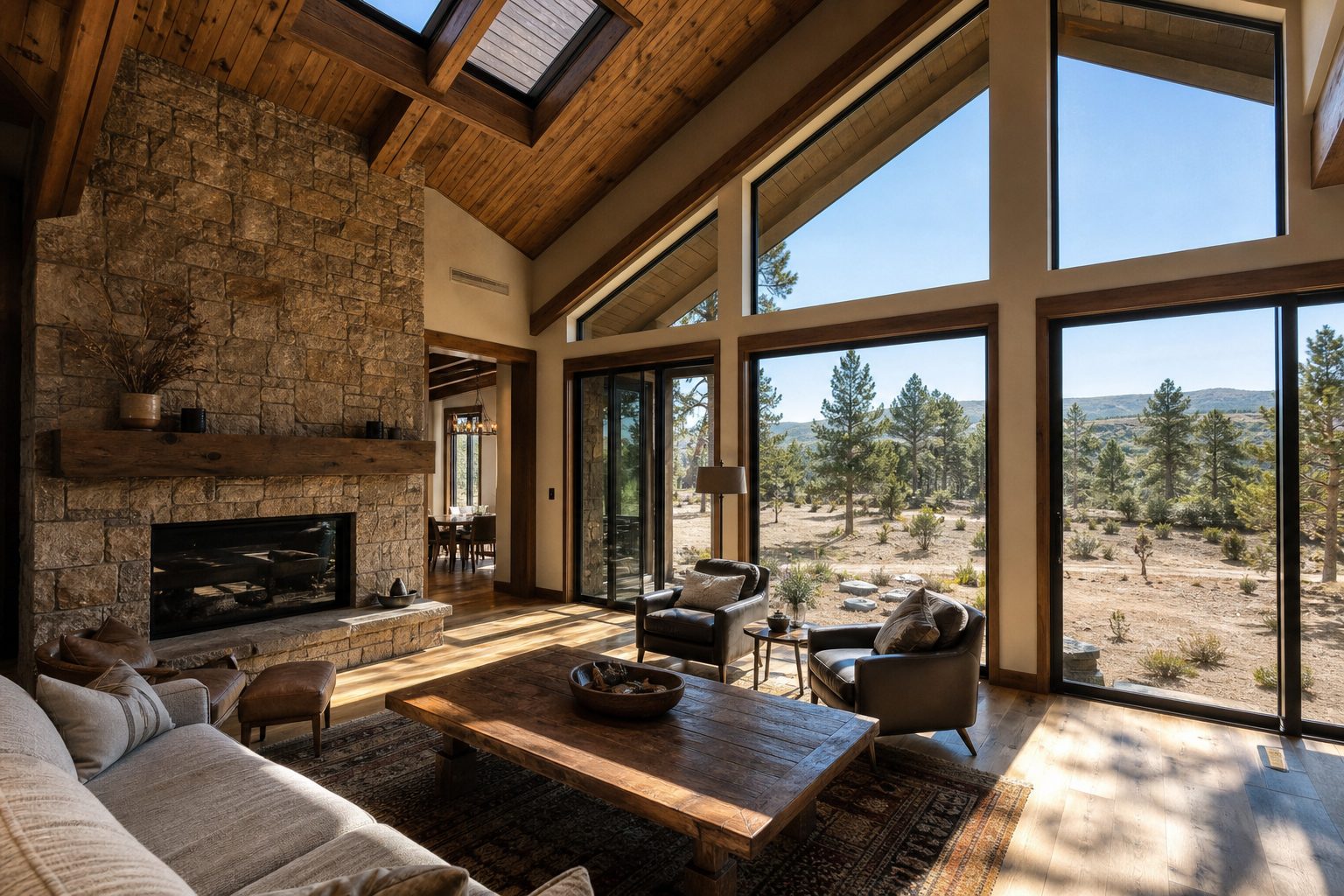
Defensible Space and the Home Ignition Zone: Your Insurance Lifeline
If WUI zoning is the problem, defensible space is the solution, or at least your best tool for managing it. Douglas County defines the Home Ignition Zone as “the structure and the first 100 feet immediately around the structure,” and the CWPP identifies two primary factors that determine whether a home survives a wildfire: the quality of defensible space and structural ignitability.
What Insurers Want to See
Increasingly, insurance companies require documentation of defensible space compliance before issuing or renewing policies. Here is what that looks like on a practical level for your Douglas County luxury property:
- Roofing: Class-A fire-rated materials are essential, not optional
- Vents: All vents screened with 1/8th-inch mesh to prevent ember intrusion
- Eaves: Soffited-eave construction using non-combustible materials
- Decking: Class A decking materials throughout
- Siding: Ignition-resistant or noncombustible siding
- Windows: Tempered glass, which fractures at approximately 630°F compared to plate glass at around 180°F
These are straight from Douglas County’s recommended building materials guidelines. When you can hand your insurer a checklist showing compliance with each of these items plus a documented vegetation management plan for the full 100-foot Home Ignition Zone, you dramatically improve both your insurability and your premium position.
What I tell my clients is simple: every dollar you spend on fire mitigation and defensible space is money that comes back to you through lower insurance premiums, stronger negotiating position when selling, and genuine safety for your family.
What Move-Up Sellers in Douglas County Need to Know
If you are selling a luxury home in the South Metro area, WUI zoning and insurance are now part of your disclosure conversation. With 130 five-star reviews from past clients, rated 5 out of 5, I have watched this issue evolve from something buyers barely noticed to something that can derail a closing.
How WUI Status Affects Your Sale
Here is the practical reality. When a buyer’s lender or insurance agent flags your property as high-risk WUI, the buyer suddenly faces premium quotes that change their monthly cost calculations. At the current Douglas County median listing price of $775,000 as of April 2026 per FRED data, and with luxury homes far exceeding that, even small insurance cost surprises can push a buyer’s total monthly PITI past their comfort zone. At a $616,000 median price with a 20 percent down payment and a 6.5 percent mortgage rate, monthly principal and interest alone runs approximately $3,127, per current market analysis. Add elevated insurance premiums, property taxes, and HOA fees, and total monthly costs can climb to $3,900 or higher, and that is before WUI-driven premium surcharges.
As a seller, proactive fire mitigation work before listing is not just good safety practice. It is a strategic investment that removes objections, smooths the insurance process for your buyer, and protects your sale price. 62.9 percent of all closings in Q2 2026 included a seller concession, with a median of $10,000. You do not want WUI-related insurance complications adding to concession pressure on top of an already buyer-favorable negotiating environment.
What Relocation Buyers Moving to Colorado Should Understand
If you are relocating to the Denver South Metro area from out of state, WUI zoning may be an entirely new concept for you. Douglas County’s CWPP describes the area as characterized by “human development within fire-adapted ecosystems, uneven topography, frequent natural and human-caused ignitions, presence of hazardous fuels, prolonged drought, and dry, windy weather conditions.”
The CWPP, updated in 2022, covers all 539,520 acres of Douglas County. Priority WUI areas identified include Jarre Canyon Corridor, Roxborough Park, Jackson Creek, Perry Park, the Dawson Butte area, and several other neighborhoods and open space zones.
Before you fall in love with a property, get an insurance quote early in the process, not after you are under contract. That is advice I give every relocation buyer, and with 30 years of Castle Rock real estate experience, I have seen too many deals stumble because insurance was treated as an afterthought.
Frequently Asked Questions
What is Wildland Urban Interface zoning in Douglas County?
WUI zoning identifies areas where human development meets wildland vegetation. Douglas County enforces this through its Wildfire Hazard Overlay District under Section 17 of the zoning resolution, which requires wildfire hazard evaluations and mitigation plans for new development. Over 84 percent of the county’s population lives within the WUI, per the Douglas County CWPP.
Does WUI zoning make it harder to insure my luxury home?
Yes. Homes in high or extreme wildfire hazard zones within the WUI face increasing difficulty obtaining standard homeowners insurance. National carriers have reduced coverage in high-risk WUI areas across the West, and luxury homes with high replacement costs face compounding premium impacts.
How much more does insurance cost in a WUI zone?
Premiums vary based on your specific wildfire hazard rating, home replacement cost, defensible space compliance, and building materials. Luxury homes valued above $1 million in areas like Castle Pines, Larkspur, or Franktown can see annual premiums that are multiples of what comparable non-WUI properties pay.
What is defensible space, and why do insurers care about it?
Defensible space is the managed zone within 100 feet of your home where vegetation and combustible materials are reduced or eliminated. The Douglas County CWPP identifies defensible space quality and structural ignitability as the two primary factors determining whether a home survives a wildfire. Insurers increasingly require documentation of defensible space compliance.
What building materials help with WUI insurance requirements?
Douglas County recommends Class-A fire-rated roofing, 1/8th-inch mesh vent screening, non-combustible soffited eaves, Class A decking, ignition-resistant siding, and tempered glass windows. Compliance with these standards improves both your insurability and your premium position.
Should I get a fire mitigation assessment before listing my Douglas County home?
Absolutely. Proactive mitigation removes buyer objections, simplifies the insurance process for purchasers, and protects your sale price. In a market where 62.9 percent of Q2 2026 closings included seller concessions, reducing friction points is strategic.
Does Douglas County have a Community Wildfire Protection Plan?
Yes. The CWPP, updated in 2022, covers all 539,520 acres of the county and identifies priority WUI areas including Jarre Canyon Corridor, Roxborough Park, Jackson Creek, Perry Park, and Dawson Butte, among others.
Are HOAs in Douglas County involved in wildfire mitigation?
Many HOAs in WUI areas have vegetation management rules and participate in community mitigation programs. The CWPP specifically names HOAs like Woodmoor Mountain and Perry Pines as priority target areas for mitigation work.
If I am relocating to Colorado, when should I start researching insurance?
Before you go under contract. Get quotes during your home search, not after. WUI-related insurance challenges can materially change your monthly costs, and discovering them late can delay or derail a closing.
Does WUI zoning affect home values in Douglas County?
Indirectly, yes. Homes with documented fire mitigation, compliant building materials, and strong defensible space are more attractive to both buyers and insurers. In a real estate market where Douglas County’s median closed price was $715,000 as of April 2026, with the luxury segment showing six months of supply, anything that narrows your buyer pool affects value.
The Bottom Line
WUI zoning is not just a line on a map. In Douglas County, where the vast majority of the population lives within the Wildland Urban Interface, it directly shapes what you pay for insurance, whether you can get insurance at all, and how smoothly your transaction closes. Whether you are selling a luxury property in Castle Pines, moving up from a starter home in Castle Rock, or relocating to the South Metro area from out of state, understanding WUI implications is now essential to making smart real estate decisions.
If you want guidance from a Castle Rock real estate agent who has navigated 469 transactions and 30 years of this market’s evolution, I am here to help. Call David at 303-882-7706 or visit DavidRichins.com. Let’s make sure your next move accounts for every factor that matters, including the ones most people do not think about until it is too late.