How do appraisers value custom luxury features like wine cellars, home theaters, and smart home systems in the Denver South Metro market?
Appraisers use comparable sales data first, then fall back on the cost approach when no direct comparisons exist, evaluating craftsmanship quality, integration with the home, and whether the feature matches the price tier of the property.
Why This Matters Right Now in Douglas County
If you own a home in Castle Rock, Parker, Lone Tree, or Castle Pines, there is a strong chance your property includes at least one custom luxury feature. With the Douglas County market data showing a median listing price sitting at $775,000 as of April 2026 (per FRED data), you are already in a price tier where wine cellars, dedicated theater rooms, and whole-home automation are common.
Here is the challenge. According to REcolorado market data, active listings across the Denver metro reached 12,744 at the end of June 2026, a 64.9% year-over-year increase. That means your home is competing against more listings than at any point in recent memory. Understanding how an appraiser will treat the $40,000 wine cellar or the $25,000 home theater you installed is no longer optional knowledge. It directly affects your pricing strategy, your negotiating leverage, and ultimately the number on your closing statement.
With 30 years of experience helping South Metro homeowners navigate exactly these situations and over 469 closed transactions, I can tell you this: the gap between what sellers believe a custom feature is worth and what an appraiser credits for it is one of the most common sources of frustration in the luxury segment.
The Comparable Sales Problem for Castle Rock Luxury Homes
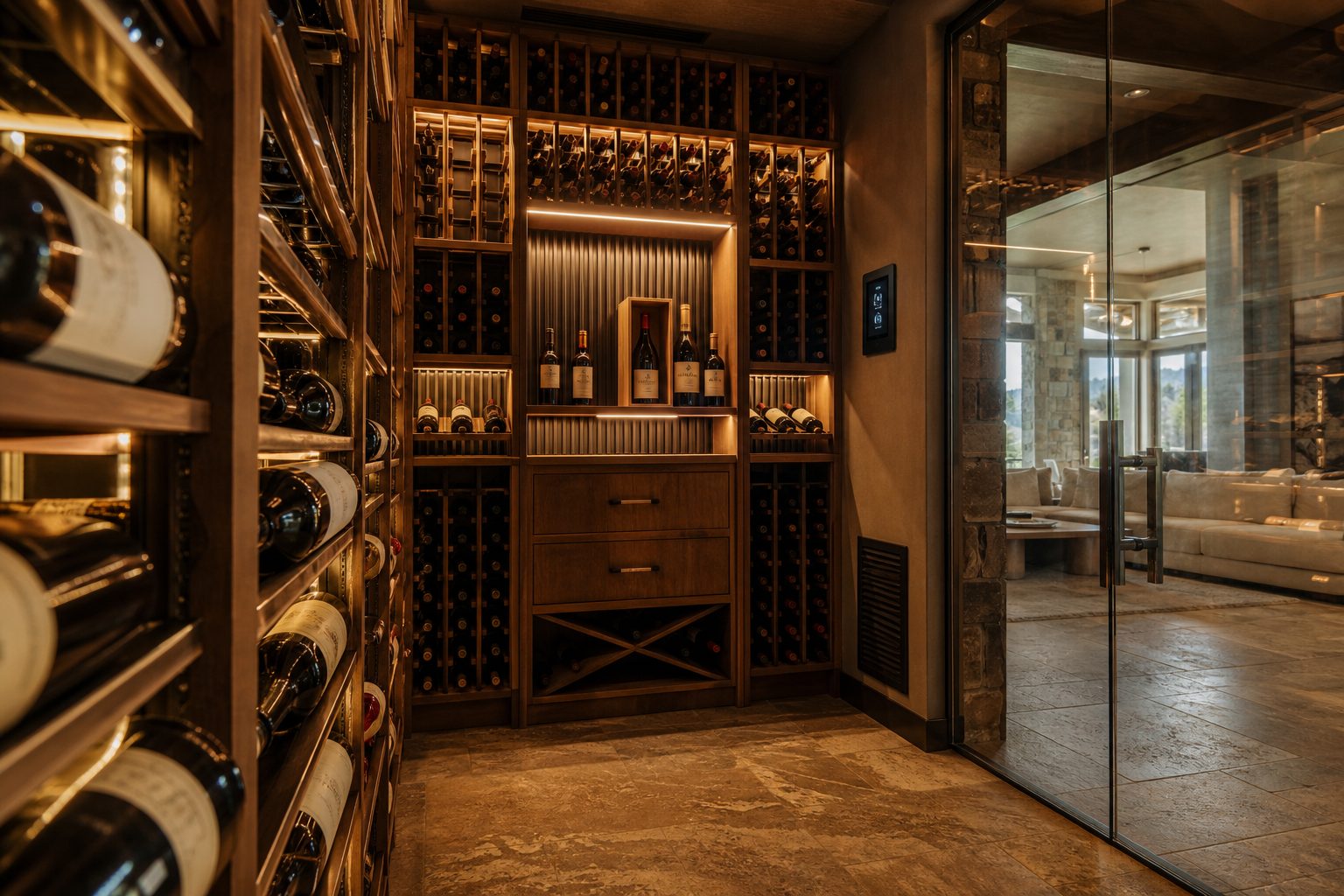
The foundation of every residential appraisal is the sales comparison approach. An appraiser finds recently sold properties with similar characteristics in your area and adjusts for differences. Simple enough for a four-bedroom Colonial with a standard kitchen remodel. Not so simple for a Castle Rock home with a climate-controlled, 500-bottle wine cellar behind a custom glass wall.
Why Custom Features Break the Standard Model
The core issue is scarcity. According to appraisal industry reporting, standard appraisal methodology relies on comparable sales, but elaborate wine cellars, hidden rooms, and bespoke wellness spaces rarely have direct market matches. When an appraiser cannot find a recently sold comp with a similar feature, they cannot extract a reliable market-based adjustment.
So what happens next? The appraiser pivots to the cost approach, which considers the expense of recreating the feature plus the quality of integration and craftsmanship. But here is the catch: the cost approach tells you what it would cost to build the feature, not necessarily what a buyer would pay for it. Those are two very different numbers.
What I tell my clients is this: your custom feature is only worth what the next buyer in your specific price range is willing to pay for it. A $200,000 custom cellar in a $600,000 home is an outlier, and the appraisal will reflect that disconnect. But that same cellar in a $1.2 million Castle Pines estate? That is a different conversation entirely.
How Wine Cellars Are Appraised in the South Metro Market
Wine cellars are one of the most frequently installed luxury features in Douglas County homes, and they are also one of the most misunderstood when it comes to valuation.
What Drives Higher Appraisal Value
According to industry data from Custom Wine Cellar resources, a high-end residential cellar can represent a 6 to 7% improvement in appraised home value in luxury markets where buyers expect this level of finish. Well-designed wine cellars and experiential spaces can increase home values by 5 to 15% in luxury markets overall.
But appraisers are not just checking a box that says “wine cellar: yes.” They evaluate specific elements:
- Climate control quality. A cellar with professional cooling systems and smart home integration appraises higher than one with a basic through-wall unit
- Material quality. Spanish cedar racking, glass enclosures, custom cabinetry, and professional lighting all contribute to appraised value
- Proportionality. The feature must make sense relative to the home’s total value
- Integration. Does it feel like a natural part of the home, or a bolt-on afterthought?
In mid-range homes, a wine cellar typically delivers an ROI of 50 to 75%, according to industry analysis. In high-end residential properties, that figure climbs to 70 to 90%. For Douglas County sellers in the $740,000 single-family median range (per year-to-date data through August 2026 from NFM Lending), you are right on the border where cellar quality starts mattering significantly to both buyers and appraisers.
Home Theaters and the Appraisal Equation in Denver South Metro
A dedicated screening room with acoustic panels, tiered seating, and professional-grade audio creates an emotional response that translates into willingness to pay, according to luxury market analysis. But emotion and appraisal methodology do not always align.
What Appraisers Actually Credit
Per appraisal industry guidance from Cade Appraisals, features like a custom-built home theater are considered specialized improvements that can increase the value of the home. However, appraisers adjust for the fact that not all buyers will value these features equally.
This is where your South Metro market position matters. In Castle Rock and surrounding communities, the buyer profile skews toward families and professionals who genuinely use these spaces. The experiential layer signals that spaces were designed for specific lifestyles rather than general function, which is exactly the kind of intentional design that attracts move-up buyers in this market.
What separates a theater that appraises well from one that does not? Permanence. Built-in acoustic treatments, structural modifications for sound isolation, and integrated wiring are permanent improvements an appraiser can credit. A projector on a shelf and a pull-down screen? That is personal property, not a fixture, and it will not appear on the appraisal report.
Smart Home Systems: The Fastest-Depreciating Luxury Feature
Here is something that surprises many of my clients. Smart home technology presents a unique appraisal challenge because it depreciates faster than any structural improvement in your home.
Why Technology Ages Out Quickly
A whole-home automation system you installed in 2020 using the best platform available at the time may already feel dated. Appraisers recognize this reality. Unlike a wine cellar built with Spanish cedar (which ages gracefully) or a theater with structural acoustic treatments (which remain functional for decades), smart home systems face obsolescence risk.
That said, modern systems that integrate with widely adopted platforms are increasingly recognized as premium features in luxury home appraisals, according to industry reporting. The key distinction is between a system that adds convenience (smart thermostats, connected locks) and one that represents genuine infrastructure investment (whole-home networking, integrated HVAC zoning, automated lighting scenes, and security).
For your Douglas County home, I recommend focusing on these appraisal-friendly smart features:
- Whole-home structured wiring that supports current and future systems
- Integrated security and surveillance with professional monitoring
- Energy management systems with documented utility savings
- Climate control integration tied to wine storage or other specialty spaces
With 130 five-star reviews from past clients, rated 5 out of 5, I have walked through this exact analysis with dozens of South Metro homeowners preparing to sell. The consistent feedback is that understanding these distinctions before listing saves significant frustration during the appraisal process.
Positioning Your Castle Rock Home for the Strongest Appraisal
In a market where 48% of $1M-plus closings in the Denver metro included a seller concession averaging $15,326 (as of June 2026, per DMAR data), every dollar of appraised value matters. You cannot afford to leave money on the table because you did not properly document or present your custom features.
Your Pre-Listing Appraisal Strategy
- Document everything. Gather receipts, contractor invoices, and permits for every custom installation. Appraisers use the cost approach when comps are unavailable, and your documentation gives them the numbers they need
- Provide a feature brief. A one-page summary of each custom feature, its specifications, installation cost, and condition saves the appraiser research time and ensures nothing is overlooked
- Stage for function. Your wine cellar should be stocked and lit. Your theater should be set up for viewing. Your smart home should be demonstrably operational. Appraisers are human, and seeing a feature in use helps them understand its value to future buyers
- Know your price tier. If your Castle Rock home is near the $639,205 estimated value level (per RealtyTrac data), a modest wine wall makes more sense than a 1,000-bottle vault. Proportionality is everything
Frequently Asked Questions
Do appraisers always give full credit for custom wine cellars in Douglas County homes?
No. Appraisers credit wine cellars based on comparable sales data, craftsmanship quality, climate control sophistication, and proportionality to the home’s overall value. In the Douglas County luxury segment, well-executed cellars can contribute a 6 to 7% value improvement, but overcapitalized cellars in mid-range homes receive significantly less credit relative to their installation cost.
How much ROI can you expect from a home theater at appraisal time?
Your return depends on whether the theater includes permanent improvements. Structural acoustic treatments, built-in wiring, and dedicated ventilation are appraised as fixtures. Removable equipment is personal property and is excluded. In the South Metro luxury market, theaters with permanent improvements consistently appraise better than those relying on portable equipment.
Why do smart home systems depreciate faster than other luxury features?
Technology evolves rapidly. A system installed five years ago may use outdated protocols or unsupported platforms. Appraisers account for this functional obsolescence. Structured wiring and infrastructure hold value better than the specific devices or software running on them, because the wiring supports future upgrades.
Can a luxury feature actually hurt your appraisal?
Yes, if it is disproportionate to the home’s price tier. A $200,000 wine cellar in a $600,000 home creates a valuation mismatch. The appraiser must reflect what buyers at that price point would actually pay, not what the feature cost to build.
How do appraisers handle features with no comparable sales in the area?
They use the cost approach, estimating reproduction or replacement expense minus depreciation. They also consider market demand for the feature in your specific submarket. In Castle Rock and surrounding communities, buyer demand for these features is stronger than in lower-priced Denver metro neighborhoods.
Should you get a pre-listing appraisal for a home with custom features?
It can be a smart investment. A pre-listing appraisal identifies how your features will be valued before you set your list price. This prevents the surprise of a buyer’s appraisal coming in below contract price, which is especially important in a market with 13,080 active listings (as of August 2026, per DMAR data).
What documentation should you prepare for the appraiser?
Gather original invoices, contractor details, permits, material specifications, and photos from the installation process. For smart home systems, include system architecture diagrams and a list of integrated components. This documentation directly supports the cost approach methodology.
Do relocation buyers to Colorado value these features differently?
South Metro relocation buyers, particularly those arriving from coastal markets, often expect custom features at this price tier. Their willingness to pay for wine cellars, theaters, and automation tends to be higher than the general buyer pool, which can work in your favor during negotiations even if the appraisal is conservative.
How does the current Douglas County market affect custom feature valuations?
With the Douglas County single-family median at $740,000 (year-to-date through August 2026, per NFM Lending data) and sales volume easing slightly, buyers have more choices. This means your custom features need to stand out as genuine quality, not just expensive additions. Appraisers reflect this buyer selectivity in their adjustments.
Is it worth adding a wine cellar or theater before selling your Castle Rock home?
Generally, no. Adding these features specifically for resale rarely produces a positive return. The strongest appraisal outcomes come from features that were installed for the homeowner’s use, maintained properly, and naturally integrated into the home’s design over time.
The Bottom Line
Your custom luxury features have real value, but that value depends entirely on how an appraiser can justify it through comparable sales or the cost approach. In the Denver South Metro market, where Douglas County homes command a median listing price of $775,000 (as of April 2026, per FRED data), wine cellars, home theaters, and smart home systems are expected amenities rather than outliers. That works in your favor, but only if you approach the appraisal process strategically.
If you are preparing to sell a Castle Rock or Douglas County home with custom features and want to understand exactly how those features will affect your bottom line, I would welcome the conversation. With 30 years specializing in luxury homes across the South Metro market and 469 closed transactions behind me, I can help you price, position, and present your home so the appraisal reflects what your property is truly worth. Reach out to David at 303-882-7706 or visit DavidRichins.com to start planning your next move.