

If Denver home sales dropped 17%, does that mean your $1.5M South Metro Denver home has lost significant value?
No. The 17% decline measures how many homes sold, not what they sold for. South Metro Denver luxury home prices have held far steadier than the transaction headlines suggest, and the data does not support panic discounting.
Why This Matters Right Now for South Metro Denver Homeowners
You have probably seen the headlines. Metro Denver sales fell 17.3% year over year as of August 2026, per the Denver Post. That number looks alarming, especially if you own a home in the $1.5M range in Castle Rock, Castle Pines, or Lone Tree and you are considering your next move.
But here is what those headlines leave out: the decline is about transaction volume, not home values. Broad Denver-area price indexes declined only modestly, roughly 0.64% to 1.7% depending on the source. The DMAR detached-home median slipped just 0.64% year over year, while the Colorado Association of Realtors seven-county median dipped 1.7%, per their September 2026 Market Trends Report.
Those are two very different stories. And confusing one for the other could cost you tens of thousands of dollars, either by panic-pricing your home too low or by sitting on the sidelines while your window narrows. With 30 years in this market and over 469 closed transactions, I can tell you that understanding the difference between volume and price is the single most important thing a seller in your position can do right now.
Volume vs. Value: The Distinction That Changes Everything in South Metro Denver
Let me explain this in plain terms, because it is the crucial difference that separates smart sellers from anxious ones.
What the 17% Actually Measures
When the data says Denver home sales fell 17%, it means fewer buyers closed on homes compared to last year. According to REcolorado, a total of 2,849 homes closed in September 2026, down 18% from 3,523 in September 2025. That was the fewest for any September since records began in 2008.
Why are fewer homes selling? The primary driver is mortgage rates. The 30-year rate climbed from 5.98% in February 2026 to 7.03% by September 2026, per DMAR data. Higher rates shrink the buyer pool. They do not, by themselves, shrink home values.
What Prices Actually Did
While sales volume cratered, prices barely budged. The Denver metro median closed price slipped just 2% year over year to $575,000 in September 2026, per REcolorado. And the single-family segment actually posted gains earlier in the year: the DMAR single-family median hit $675,000 in June 2026, up 1.5% year over year, with five consecutive months of gains through mid-2026.
So what does “17% fewer sales” mean for your $1.5M home? It means fewer people are looking, but the ones who are looking are serious. Demand has thinned, so pricing precision matters more. But the data simply does not support steep discounting on a well-positioned luxury home.
How the $1.5M Price Band Performs Differently in South Metro Denver
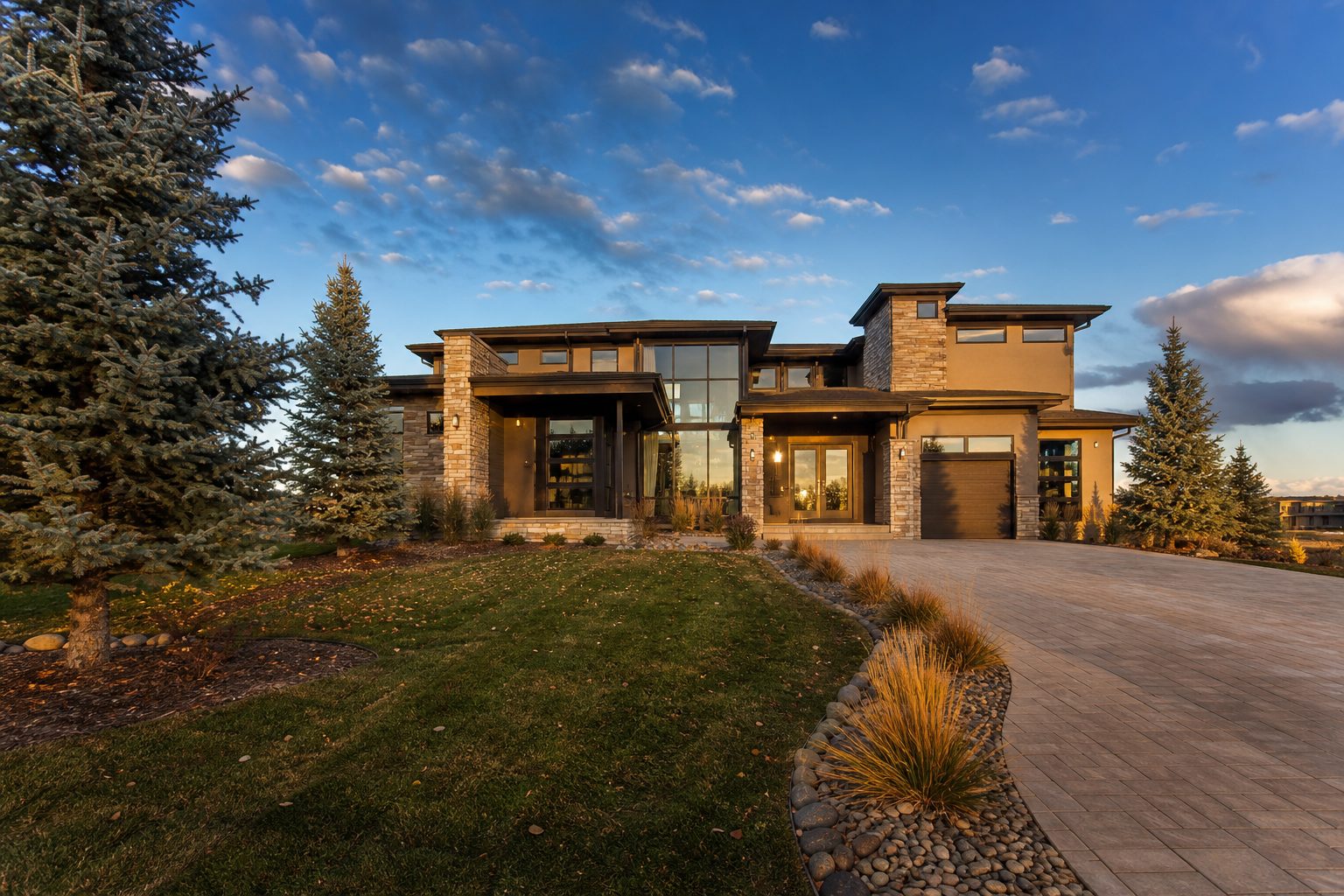
Here is something most sellers in your position do not realize: your price point is partially insulated from the forces dragging down the broader market.
Cash Buyers Change the Equation
The rate-driven hesitation hitting the $400,000 to $800,000 range does not hit your segment the same way. Cash buyers dominate the luxury market, and a cash buyer at $1.5M does not care whether rates are 6% or 7%. According to house price index data, there were 4,449 home sales at $1 million or more from January through September 2026 year to date, representing $7.30 billion in dollar volume.
Castle Pines and Lone Tree Tell a Different Story
If your $1.5M home sits in Castle Pines, the spring 2026 data showed prices up 12.8% year over year at a median of $999,000, with homes selling in about 31 days. That is not a collapsing market. Lone Tree listings hovered around $845,000 median and spent roughly 33 days on market, per MLS data from October 2026.
The $750,000 to $999,000 band, which many South Metro Denver move-up sellers are selling out of, has actually been squeezed harder. Year-over-year sales volume in that segment fell 19.68% in August, with 113 fewer closings than August 2025. So if anything, the move-up market below you is feeling more pressure than your price tier.
What Pricing Precision Looks Like for a South Metro Denver Luxury Home
In a market where demand has thinned but values have held, your pricing strategy becomes everything. What I tell my clients is this: you do not have the margin for error you had in 2021. But you also do not need to leave $100,000 on the table.
The Three Pricing Traps to Avoid
- Panic discounting: Cutting your price 10% because you saw a scary headline costs you $150,000 on a $1.5M home. The data does not justify that.
- 2021 nostalgia pricing: Listing at what your neighbor got three years ago, when the Douglas County median listing price peaked at $849,000 in April 2023 per FRED data, ignores where the market sits today.
- Ignoring concessions: As 2026 unfolds, sellers may need to recalibrate expectations while buyers benefit from increased leverage and longer decision timelines, per the Colorado Association of Realtors. Budget 1% to 2% in concessions rather than dropping your list price.
Having helped close 469 transactions across South Metro Denver over three decades, I have seen multiple cycles where sellers who priced with precision, rather than emotion, consistently netted more than those who either panicked or overreached.
Should You Sell Now or Wait in South Metro Denver?
This is the question I hear most from move-up and move-out sellers in Douglas County right now. And honestly, it depends on what you are selling into.
If You Are Moving Out of State
Your South Metro Denver equity is a superpower in lower-cost markets. Even with a modest 1% to 2% price softening, a $1.5M home purchased before 2021 likely carries 30% to 50% equity or more. Waiting for a “better” market may not improve your net position, especially if your destination market is also appreciating.
If You Are Moving Up Locally
Here is where it gets interesting. DMAR Market Trends Committee Chair Amanda Snitker noted that it is a good opportunity right now because home prices have been relatively flat for the last three years and interest rates have been relatively the same, per CBS Colorado. If you are selling a $700,000 home to buy a $1.2M home, the flat-price environment actually helps you on the purchase side.
The Rate Lock-In Dilemma
Many South Metro Denver homeowners hold sub-4% mortgages and feel stuck. But consider this: if you are sitting in a home you have outgrown, paying a low rate on a property that no longer serves your life is not a financial win. It is an emotional anchor. Your cost of staying includes opportunity cost, not just interest cost.
The Inventory Picture and What It Means for Your Timeline
Supply tells an important part of the story. Active listings across the Denver metro reached 13,522 in September, up only 2% from a year earlier per REcolorado. But because fewer homes are selling, that supply would take about 20 weeks to absorb at the current pace, four weeks more than last September.
In Douglas County specifically, the median listing price sat at $739,900 as of August 2026, per FRED. Homes in Castle Rock listed around $735,000 and spent about 34 days on market, while Parker listings came in around $690,000 with roughly 32 days on market, per MLS data from October 2026.
For your $1.5M home, the takeaway is clear: you face more competition for fewer buyers. But homes with desirable qualities are still moving, as multiple market analysts have confirmed. Your preparation, presentation, and pricing will determine whether you are one of the homes that sells or one that lingers.
Frequently Asked Questions
Did Denver home prices actually drop 17% in 2026?
No. The 17% decline refers to the number of homes sold, not home prices. Denver metro median closed prices slipped only about 2% year over year to $575,000 in September 2026, per REcolorado. The DMAR detached-home median declined just 0.64% year over year. These are very different numbers from the transaction volume decline.
How is the South Metro Denver luxury market performing in 2026?
The luxury segment has shown relative resilience. There were 4,449 Denver metro home sales at $1 million or more from January through September 2026, per market data. Cash buyers dominate this segment, insulating it from the rate-driven hesitation that is suppressing demand in lower price brackets.
Are homes in Castle Pines and Castle Rock losing value?
Castle Pines saw prices rise 12.8% year over year at a median of $999,000 as of spring 2026, per MLS data. Castle Rock median listing prices hovered near $735,000 with homes spending about 34 days on market. Values have not collapsed, though demand has slowed.
Why are fewer homes selling in Denver if prices have not crashed?
Mortgage rates rose from 5.98% in February 2026 to 7.03% in September 2026, per DMAR data. Higher rates eliminate would-be buyers from the pool, reducing transaction volume without necessarily reducing the value of individual properties.
Should I sell my South Metro Denver home now or wait for rates to drop?
That depends on your destination. If you are moving to a lower-cost market, your current equity position is strong. If you are moving up locally, relatively flat prices over the past three years mean you benefit on both the sell side and the buy side. Waiting introduces uncertainty without a guaranteed upside.
How long are homes taking to sell in Douglas County in 2026?
Days on market vary by submarket. Highlands Ranch homes sold in about 13 days in spring 2026, while Castle Pines homes averaged 31 days, per MLS data. Higher-priced homes generally take longer because the buyer pool is smaller.
What concessions should I expect to offer on a $1.5M home?
The Colorado Association of Realtors notes that sellers may need to recalibrate expectations as buyers gain leverage in 2026. Budgeting 1% to 2% in concessions, such as rate buydowns or closing cost assistance, is reasonable and often more effective than reducing your list price.
How much equity do most Douglas County sellers have right now?
Owners who purchased before 2021 likely hold 30% to 50% or more in equity. Denver home prices increased 138% from a $260,600 baseline to approximately $619,500 over the past decade, per market analysis. Even with modest softening, long-term owners retain substantial gains.
Is the condo market dragging down single-family values in South Metro Denver?
The two segments are diverging. Denver single-family home prices rose 1.5% year over year in June 2026, per DMAR, while attached home (condo and townhome) median prices fell roughly 4% to $390,000, per REcolorado. If you own a detached single-family home, the condo softening does not directly affect your value.
What makes the $750K to $999K price band different from the $1.5M range?
The $750,000 to $999,000 segment saw sales volume decline 19.68% year over year in August 2026, worse than the overall market decline of 15.9%. This band relies more heavily on financed buyers who are rate-sensitive. The $1.5M range draws more cash and jumbo-loan buyers, creating a different demand dynamic.
The Bottom Line for South Metro Denver Sellers
The 17% sales decline is a volume story, not a value story. Your $1.5M South Metro Denver home has not lost 17% of its value. Prices across the metro have softened modestly, between 0.64% and 1.7% depending on the data source, and the luxury segment remains partially insulated by cash buyers.
What has changed is the margin for error. Demand has thinned, so pricing precision matters more than it has in years. That is where working with someone who has navigated 30 years of market cycles and closed 469 transactions in this area makes a real difference. With 130 five-star reviews from past clients, I have seen exactly this kind of market before, and the sellers who win are the ones who price with data, not fear.
If you are considering a move in South Metro Denver, whether up, out, or into something that fits your life better, call me at 303-882-7706 or visit DavidRichins.com. Let’s look at your specific home, your specific neighborhood, and build a plan grounded in what the numbers actually say.