If you have $1 million to spend on a luxury home in South Metro Denver, should you choose Castle Rock or Parker?
Castle Rock generally attracts buyers seeking dramatic terrain, newer master-planned communities, and I-25 corridor access, while Parker appeals to buyers prioritizing E-470, the Denver Tech Center, and established luxury neighborhoods with mature landscaping.
Why This Comparison Matters for South Metro Denver Buyers Right Now
The Denver South Metro luxury market is in a unique position heading into late 2026. Active inventory across the metro has climbed significantly year over year, giving you more options than you have had in half a decade. Meanwhile, both Castle Rock and Parker continue to outperform the broader Denver market in value retention and demand.
Here is what makes this moment different: at the $1M price point, you are shopping well above the median in both towns. Castle Rock’s median sits around $665K, and Parker’s hovers near $700K to $717K. That means your budget puts you squarely into the premium tier of either market, accessing the best communities, the largest lots, and the most distinctive architecture. But the experience of daily life in a $1M Castle Rock home versus a $1M Parker home could not be more different.
Having closed over 469 transactions across Douglas County over the past 30 years, I can tell you this decision comes down to six or seven factors that have nothing to do with square footage. Let me walk you through each one.
What $1 Million Actually Buys You in Castle Rock vs. Parker
Your dollar stretches differently in each town, and understanding the distinction is critical before you start touring homes.
Castle Rock at $1M
In Castle Rock, a million-dollar budget puts you into the town’s most sought-after master-planned communities. You are looking at neighborhoods like Macanta (off Crowfoot Valley Road near I-25 and Plum Creek Parkway), where mountain-modern architecture sits on dramatic ridgeline homesites with Front Range views. Homes here run from $850K well past $1.5M. Montaine, located off Chambers Drive south of Founders Parkway, offers sweeping canyon and mesa views with semi-custom finishes in the $850K to $1.4M range. Terrain and Escavera round out the options, with resort-style amenity centers and trail connections to open space.
What I tell my clients is this: Castle Rock at $1M means newer construction, more dramatic topography, and a community designed deliberately around the natural landscape. You are not looking at your neighbor’s garage door. You are looking at open Colorado sky.
Parker at $1M
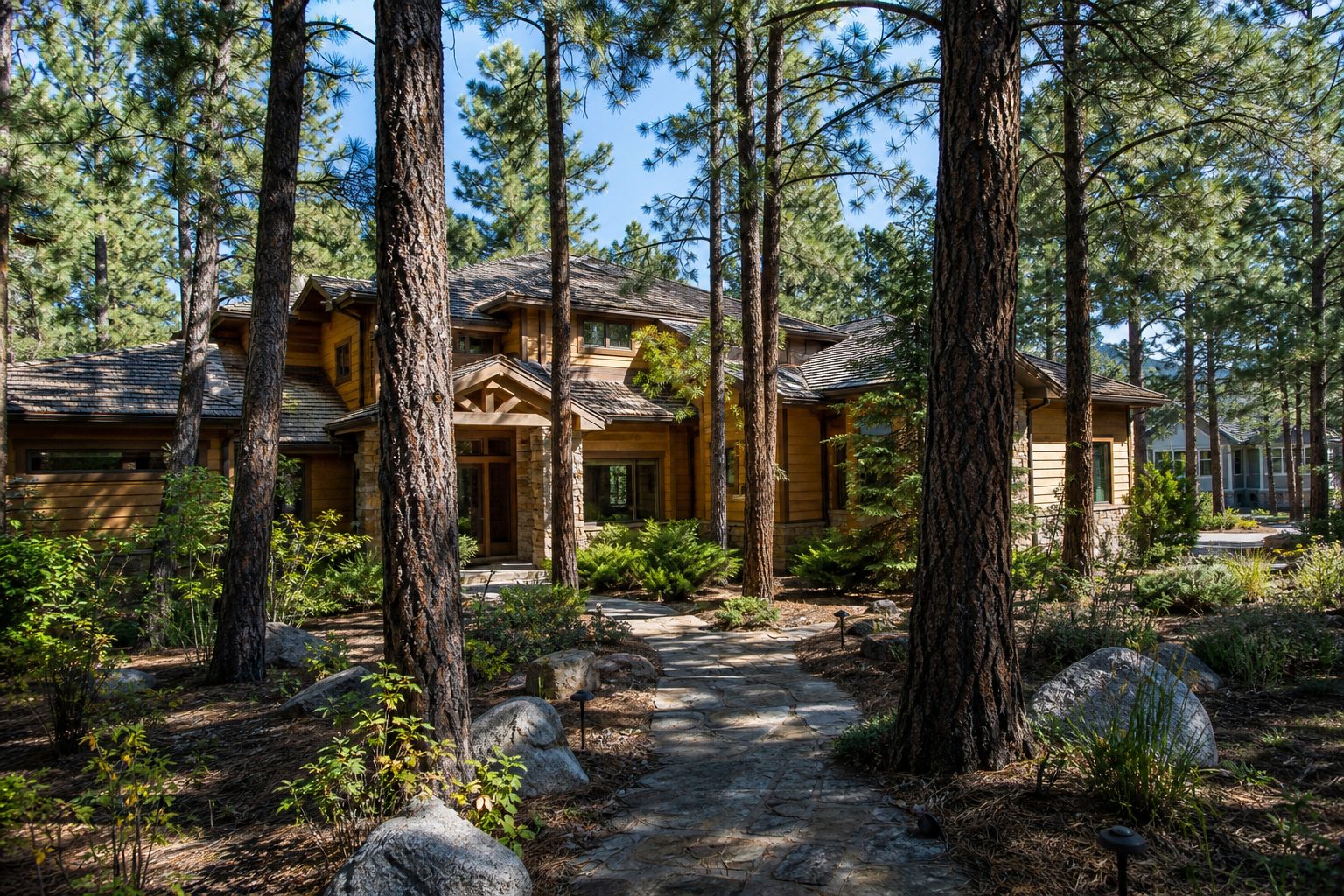
Parker’s luxury inventory looks and feels different. Your million dollars accesses established communities like The Pinery (a golf-course community along Pinery Parkway), Pradera (centered around its own golf club), and Colorado Golf Club, which hosted the Solheim Cup and offers some of the most exclusive homesites in the region. The Timbers and Spirit Ridge offer large lots with mature ponderosa pine canopy, and High Prairie Farms delivers a more rural, acreage-oriented luxury experience.
One couple I worked with relocated from out of state and initially toured both towns. They expected the homes to feel interchangeable. After seeing Macanta’s ridgeline views versus The Timbers’ towering pine corridors, they realized these are fundamentally different lifestyle propositions. They chose Parker because the wooded, established feel of the Pinery corridor reminded them of where they had grown up.
So here is the clearest way to think about it: Castle Rock at $1M gives you newer construction on more dramatic terrain. Parker at $1M gives you established neighborhoods with mature trees, golf-course access, and a more settled sense of community.
Commute and Corridor Access: I-25 vs. E-470 and Parker Road
This is where the decision often gets made. Your daily drive will shape how you feel about your home purchase more than almost any other factor.
Castle Rock is an I-25 town. Your commute north to the Denver Tech Center runs approximately 28 to 35 minutes in off-peak traffic and 45 to 55 minutes during the morning rush. If your office sits along the Inverness, Meridian, or DTC corridor, this drive is very manageable. Castle Rock also gives you a roughly 30-minute drive south to Colorado Springs, making it a genuine bi-directional commuter town.
Parker is an E-470 and Parker Road town. If you work in the Denver Tech Center, you are significantly closer, often shaving 10 to 15 minutes off the Castle Rock commute. E-470 also connects you to DIA without touching I-25. However, Parker Road congestion during peak hours is its own frustration, and 75.3% of Parker commuters drive to work.
What I would tell you to do before choosing: drive the actual commute on a Tuesday and a Thursday morning. Do it from the specific neighborhood you are considering. The difference between a Macanta-to-DTC commute and a Pradera-to-DTC commute can be the deciding factor.
Downtown Character: Castle Rock’s Historic Core vs. Parker’s Mainstreet Scene
Both towns offer walkable downtown experiences, but they feel quite different at street level.
Downtown Castle Rock is anchored by Wilcox Street and the iconic Castle Rock butte that gives the town its name. The historic stone buildings, many built from locally quarried rhyolite, house independent boutiques, wine bars, and restaurants. The Barricade Brewing Company on Wilcox Street has become a community gathering point, and Mi Casa Mexican Restaurant’s patio overlooking the historic streetscape is the kind of place locals take visiting friends to explain why they chose Castle Rock. Philip S. Miller Park, with its famous 200-step Challenge Hill staircase, sits just minutes from downtown and connects to the Ridgeline Open Space trail system.
Downtown Parker centers on Mainstreet, a purpose-designed gathering district with restaurants, craft breweries, and seasonal events. Parker’s parks and trails network covers 1,900 acres of open space and 30-plus miles of soft-surface trails. The Cherry Creek Regional Trail connects directly into downtown Denver. The H2O’Brien Recreation Complex, Parker Fieldhouse, and PACE Center for performing arts provide year-round programming for families.
A recent buyer I worked with, someone downsizing from a larger property in Highlands Ranch, initially leaned toward Castle Rock for the terrain. But after spending a Saturday afternoon walking Parker’s Mainstreet and discovering the trail connectivity, she shifted her search entirely. The walkable recreation infrastructure won her over.
Property Taxes, Metro Districts, and Total Ownership Costs in Douglas County
Both Castle Rock and Parker sit within Douglas County, which means you share the same county-level tax framework. But your total ownership cost at the $1M level depends heavily on the specific community.
- Metro districts in Castle Rock’s newer communities (Macanta, Montaine, Crystal Valley) can add meaningful mill-levy assessments on top of base property taxes. These fund the infrastructure, trails, and amenity centers that make these neighborhoods attractive, but you need to understand the total annual cost before you commit.
- Parker’s established communities like The Pinery and Pradera tend to have more traditional HOA structures with lower metro-district overlays, though HOA dues for golf-course communities can be substantial.
- Insurance considerations matter in both towns. Castle Rock’s terrain, particularly in communities near wildfire interface zones, can carry higher wildfire insurance premiums. Parker’s more established tree canopy creates its own insurance considerations.
With 130 five-star reviews from past clients, one consistent piece of feedback I receive is that buyers appreciate having these numbers laid out in advance. Nobody wants to discover an unexpected $3,000 annual metro-district assessment after closing. I run a full cost comparison for every buyer I work with before they make an offer.
Schools, Families, and Long-Term Livability in Castle Rock and Parker
Both towns are served by Douglas County School District RE-1, one of the primary reasons out-of-state families target these ZIP codes. However, the specific schools serving each luxury community differ.
- Castle Rock luxury neighborhoods feed into Rock Canyon High School (GreatSchools rating 9/10), one of the top-ranked high schools in Colorado. Dual enrollment, IB programming, and strong AP pass rates make it a significant draw for families in Terrain, Macanta, and surrounding areas.
- Parker families in luxury communities typically feed into Chaparral or Ponderosa high schools, both well-regarded within the district. Douglas County’s school-choice options also allow families to apply across boundaries.
The median household income in Parker sits at $139,826, well above the national median, reflecting the professional demographics that drive demand in both towns.
Future Resale: Who Buys Your $1M Home Next?
This is a question I encourage every buyer to ask before they purchase. Your future resale audience differs by town.
Castle Rock’s growth trajectory, with the Town projecting 300 single-family permits and 110 multifamily permits in 2026, means the community is still actively expanding. Newer master-planned communities appeal strongly to relocating professionals and families moving south from more expensive Denver neighborhoods. The US 85 Corridor Improvements, an $84 million CDOT project planned for widening between Sedalia and Meadows Parkway, will further improve access.
Parker, with its population of approximately 65,765 and more built-out footprint, attracts a resale audience that values establishment and stability. Golf-community buyers, in particular, tend to be repeat luxury purchasers who know exactly what they want.
Frequently Asked Questions
Is Castle Rock or Parker closer to the Denver Tech Center?
Parker is closer to the DTC by roughly 10 to 15 minutes depending on your starting neighborhood. Castle Rock’s commute to the DTC runs approximately 28 to 35 minutes off-peak via I-25, while Parker’s E-470 and Parker Road access typically delivers a shorter drive.
What are the best $1M neighborhoods in Castle Rock?
Macanta, Montaine, Escavera, and Diamond Ridge represent Castle Rock’s primary luxury tier. Macanta off Crowfoot Valley Road offers ridgeline homesites with Front Range views, while Montaine provides canyon and mesa views with semi-custom finishes in the $850K to $1.4M range.
What are the best $1M neighborhoods in Parker?
The Pinery, Pradera, Colorado Golf Club, The Timbers, Spirit Ridge, and High Prairie Farms are Parker’s top luxury communities. Colorado Golf Club offers some of the most exclusive homesites in the South Metro region, and The Pinery delivers a mature, wooded golf-course lifestyle.
Are property taxes the same in Castle Rock and Parker?
Both towns sit within Douglas County, so the base county tax framework is the same. However, metro-district mill levies in Castle Rock’s newer communities can add significant costs. Parker’s established neighborhoods typically carry more traditional HOA structures.
Which town has better schools for families?
Both are served by Douglas County School District RE-1. Castle Rock’s luxury communities largely feed into Rock Canyon High School (rated 9/10 by GreatSchools), while Parker’s luxury areas are served by well-regarded schools like Chaparral and Ponderosa.
Does Castle Rock have more new construction than Parker?
Yes. Castle Rock is still actively building with communities like Macanta and Montaine adding new inventory. Parker’s luxury market is more established, with resale homes dominating the $1M segment.
Is wildfire insurance more expensive in Castle Rock?
It can be. Castle Rock’s terrain, particularly in communities near wildfire interface zones, may carry higher premiums. Parker’s established tree canopy creates its own considerations. A thorough insurance comparison before purchase is essential.
Which town offers better golf-course living?
Parker has a stronger concentration of golf-centered luxury communities, including Pradera and Colorado Golf Club. Castle Rock offers golf access through Castle Pines Village nearby, but the golf-community density in Parker is higher.
How do lot sizes compare at the $1M level?
Castle Rock’s newer communities typically offer quarter-acre or larger homesites designed around natural topography. Parker’s established communities like High Prairie Farms and Spirit Ridge can offer larger acreage lots with mature landscaping.
Which town has better long-term appreciation?
Castle Rock’s median home price has risen from $308,000 to approximately $693,000 over the past decade, representing strong long-term appreciation. Parker’s median has remained steady near $700K to $717K with consistent demand. Both towns benefit from Douglas County’s reputation and the South Metro corridor’s resilience.
The Bottom Line on Choosing Between Castle Rock and Parker
Neither town is universally better. Castle Rock is the right choice if you want dramatic terrain, newer construction, I-25 corridor access, and the energy of a still-growing community. Parker is the right choice if you prioritize E-470 and DTC proximity, established luxury neighborhoods with mature landscaping, and golf-course living among towering pines.
The right decision depends on your commute, your preferred property style, your total ownership cost tolerance, and how you expect to live Monday through Friday. After 30 years and 469 closed transactions across the South Metro Denver market, I can tell you that the buyers who are happiest five years later are the ones who matched their daily lifestyle to the community, not just the house.
If you are trying to decide between Castle Rock and Parker, I can help you compare the homes, communities, ownership costs, and daily lifestyle before you narrow your search. Call David Richins at 303-882-7706 or visit DavidRichins.com to start the conversation.