How do you know whether a $1.5 million home in the Denver south metro is actually overpriced, or whether it’s worth every dollar?
You start with comparable closed sales inside the smallest relevant micro-market, not a metro-wide price-per-square-foot average. A valid comparison accounts for neighborhood, lot size, views, renovation quality, basement finish, and garage capacity. Active listings reveal buyer alternatives; closed sales reveal what the market has actually accepted.
Why This Matters Right Now in the Denver South Metro
The Denver metro housing market has shifted into a more balanced environment, and that shift hits the luxury segment differently than you might expect. Median home prices across the metro sit around $614,000 as of June 2026, with single-family prices rising 1.5% while condos have declined roughly 2.85% year over year. But at the $1.5 million price point in communities like Castle Pines, Highlands Ranch, Lone Tree, and Parker, the dynamics are entirely different.
In Castle Rock, 47.95% of listed homes have dropped their price, up 13.3 percentage points from last year. The median sale-to-list ratio sits at 97.85%. What does that tell you? The market is punishing overpriced listings and rewarding honest pricing. Having closed over 469 transactions across 30 years in this market, I can tell you that the gap between “expensive” and “overpriced” has never been more important to understand. The best, most distinctive properties still trade briskly. Generic high-end homes sit until they are priced honestly.
Define Your Micro-Market Before Comparing Anything in Castle Pines or Highlands Ranch
Here is the single biggest mistake you can make when evaluating a $1.5 million home: comparing it to the Denver metro as a whole. A home in Castle Pines Village, where the median sale price recently hit $1.6 million with a price per square foot of $386, lives in a completely different universe than a similarly priced home in Parker or Castle Rock.
You need to shrink your comparison zone to the tightest relevant boundary. That means comparing a Castle Pines Village home on Buffalo Ridge Road to other gated-community properties on similar wooded lots, not to a new-build in Crystal Valley Ranch or a remodeled ranch in Founders Village.
What I tell my clients is this: price per square foot is a reference point, not a luxury-home valuation. A 4,000 square foot home at $1.5 million works out to $375 per square foot. In Castle Pines Village, that is actually below the neighborhood median of $386 per square foot, which might suggest fair value. But in Castle Rock, where the median runs around $274 to $304 per square foot, that same calculation could signal a significant overprice. Context is everything.
One family I worked with was evaluating a $1.55 million property off Happy Canyon Road in Castle Pines. On paper, the price per square foot looked reasonable. But when we pulled the three closest closed sales within the Village gates, every one of them had a superior lot position with better mountain views. The home they were considering backed to the cart path with limited privacy. We adjusted our offer accordingly, and the sellers accepted $85,000 below list.
Select and Scrutinize Relevant Closed Sales Across Douglas County
You need three to five closed sales from the last six months, ideally within the same subdivision or neighborhood. Here is what to look for in each comp:
- Lot size and topography. A walkout lot backing to open space in The Canyons at Castle Pines commands a premium over a flat, interior lot every time
- Home age and construction quality. A 2005-built custom home and a 2018 production luxury home may sit at the same price, but they are not the same product
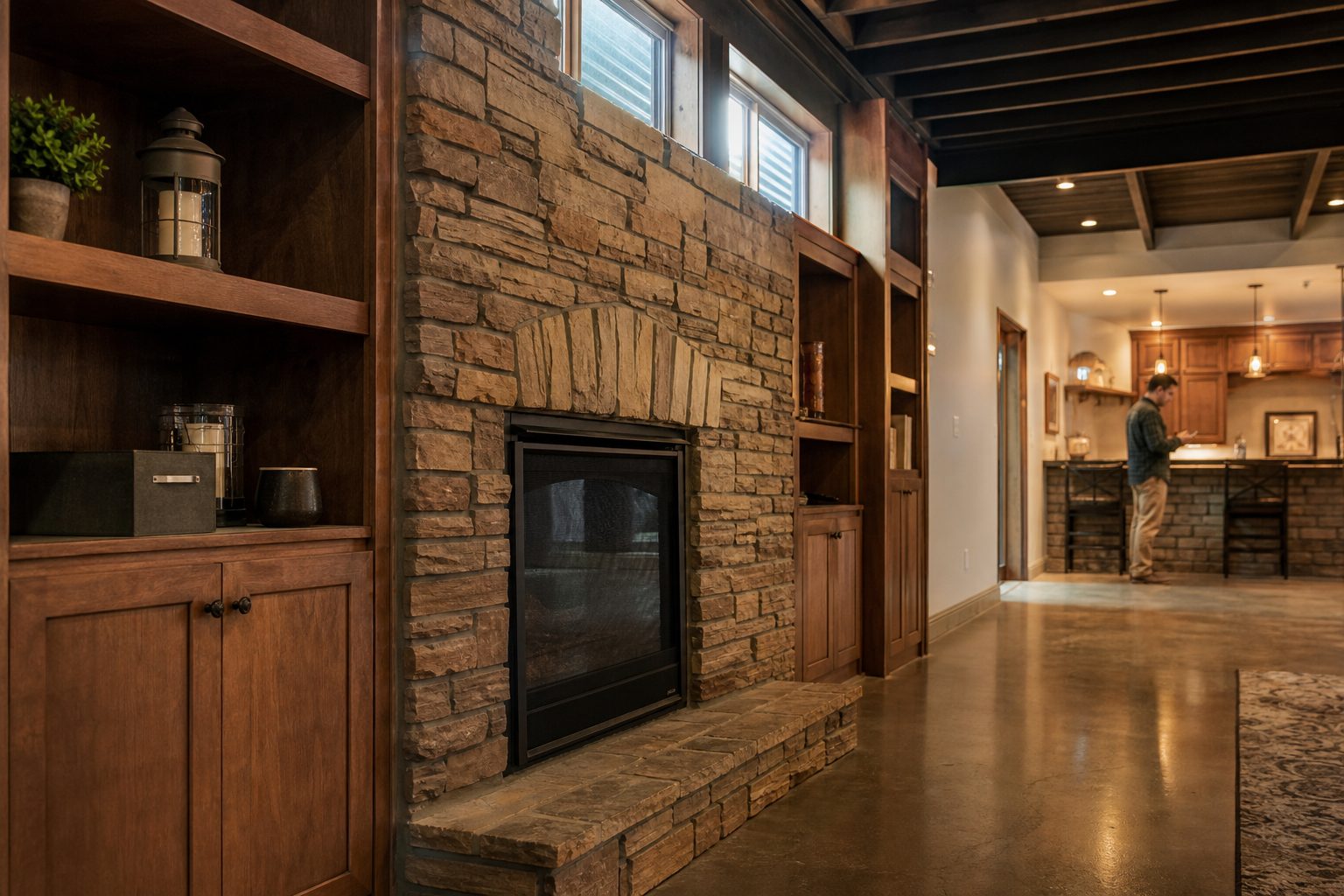
- Renovation recency and quality. Was the kitchen updated with commercial-grade appliances and custom cabinetry, or is it builder-grade with cosmetic updates?
- Basement finish. A fully finished walkout basement with a wet bar, home theater, and guest suite can add $100,000 to $200,000 in value at this price tier
- Garage capacity. In communities like Highlands Ranch and Lone Tree, a three-car garage is standard at $1.5 million. A two-car garage is a discount factor
What most buyers overlook is that closed sales tell you what the market has accepted. Active listings tell you what sellers wish the market would accept. You need both data sets, but closed sales carry the authority.
Review Active and Pending Listings to See Your Alternatives in Parker, Lone Tree, and Highlands Ranch
Before you commit to any $1.5 million home, you should know exactly what else you could buy for the same money. Your alternatives define whether a home is overpriced more reliably than any formula.
In Highlands Ranch, where the median price sits around $650,000, a $1.5 million listing puts you in the top tier of the community. You should be getting a premium lot, upgraded finishes, and a home that stands out from its neighbors. If the home feels like a $900,000 property with aspirational pricing, you are looking at an overpriced listing.
A couple I recently worked with was torn between a $1.48 million listing in Lone Tree near the RidgeGate area and a $1.52 million home in Castle Pines North. The Lone Tree property had a finished walkout, a three-car garage, and backed to open space. The Castle Pines home had a larger main floor but an unfinished basement and a standard two-car garage. When we estimated the cost to finish the Castle Pines basement at $80,000 to $120,000, the true cost of that home climbed well above $1.6 million. The Lone Tree property was the better value by a wide margin.
So how do you systematically evaluate what is actually sitting on the market right now?
Analyze Price History and Days on Market as Warning Signals
A home’s listing history tells a story that the glossy photography cannot. Here are the red flags you should watch for:
- Multiple price reductions. If a $1.5 million listing started at $1.7 million three months ago, the seller was testing the market. Two or more reductions suggest the price still may not have landed
- Extended days on market. Well-priced homes in the Denver south metro move within about 15 to 19 days. If a luxury listing has been sitting for 45 or 60 days, the market is telling you something
- Relisted after expiration. Some sellers let a listing expire and relist to reset the days-on-market counter. Check whether the home has prior listing history under a different brokerage
- Seasonal timing. Luxury homes listed in November or December in Castle Rock or Franktown face a smaller buyer pool. A home that sat through the winter may carry stale pricing into spring
With 130 five-star reviews from past clients, my reputation is built on helping buyers avoid exactly these pitfalls. The data does not lie, but you need to know where to look and how to interpret what you find.
Evaluate Renovation Quality and Estimate Your True Capital Costs
At the $1.5 million level in communities like Castle Pines Village, Parker, and Highlands Ranch, you are not just buying square footage. You are buying the quality of what is inside that square footage.
Here is a quick litmus test. Walk through the home and ask yourself: what will you need to spend in the first two years? Replacement costs matter enormously at this price tier. Consider these factors:
- Roof age. A roof replacement on a 4,000+ square foot home with architectural shingles runs $25,000 to $45,000 in Douglas County
- HVAC systems. Dual-zone systems in luxury homes cost $15,000 to $30,000 to replace
- Landscaping and hardscaping. Mature landscaping on a half-acre lot in Franktown or Castle Pines can cost $30,000 to $60,000 to replicate if neglected
- Window age. Full window replacement on a 20-year-old luxury home can run $40,000 to $70,000
Add those estimates to the asking price. If the total pushes you to $1.65 million or $1.7 million, and comparable move-in-ready homes are selling at $1.5 million, the home is overpriced for its current condition.
Consider Replacement Cost and Appraisal Risk Before You Offer
Could you build this home new for less? That is not always a practical question in established communities like Castle Pines Village, where lot availability is nearly nonexistent. But in newer areas of Castle Rock or Parker, new construction at the $1.5 million level may offer more home, modern floor plans, and builder warranties.
Appraisal risk is real at this price point. Luxury homes have fewer comps, and appraisers often pull from a wider geographic area, which can dilute accuracy. If you are financing the purchase and the appraisal comes in at $1.38 million on a $1.5 million contract, you either renegotiate, cover the gap with cash, or walk away. Understanding this risk before you write an offer gives you negotiating leverage.
Frequently Asked Questions
How do I find comparable sales for a $1.5 million home in Castle Pines?
You pull closed sales from the last six months within the same gated community or subdivision. Focus on homes with similar lot size, basement finish level, garage count, and view orientation. Your agent should provide a detailed comparative market analysis rather than relying on automated estimates, which often miss critical luxury-home variables.
What is the average price per square foot in Castle Pines Village?
The median sale price per square foot in Castle Pines Village is $386 as of recent data, up 2.4% year over year. However, this number varies significantly based on lot position, views, and whether the home sits within the gated Village community or in Castle Pines North, where pricing structures differ.
How long should a $1.5 million Denver home sit before I consider it overpriced?
Well-priced homes in the Denver south metro sell within 15 to 19 days. If a luxury listing has been active for 45 days or more without going under contract, the pricing likely needs adjustment. Look at the listing history to see if price reductions have already occurred.
Does price per square foot work for evaluating luxury homes in Highlands Ranch?
Price per square foot is a starting reference, not a final valuation tool. In Highlands Ranch, the median price sits around $650,000, so a $1.5 million home should offer significantly premium features. Compare basement finish, outdoor living space, lot backing, and overall quality, not just total square footage.
What is the sale-to-list ratio in Castle Rock right now?
Castle Rock’s median sale-to-list ratio is 97.85%, meaning homes are selling roughly 2% below their asking price on average. Nearly 48% of listed homes have reduced their price, which signals that initial pricing discipline matters more than ever in this market.
Should I worry about appraisal gaps on a $1.5 million home in Parker or Lone Tree?
Yes. Luxury homes have fewer comparable sales, which makes appraisals less predictable. If you are financing, discuss appraisal gap strategies with your lender before making an offer. Cash buyers have more flexibility here, but even cash buyers should know the appraised value for future resale planning.
What renovation red flags should I look for at the $1.5 million price point?
Watch for cosmetic-only updates that mask deferred maintenance. Fresh paint and new fixtures are inexpensive. Aging HVAC systems, original windows, and old roofing are not. Estimate the capital costs you will face in years one and two, and add those to the asking price for a true cost comparison.
How does lot position affect value in Castle Pines or Franktown?
Lot position is one of the most significant value drivers at the luxury level. A walkout lot backing to open space or mature ponderosa pines can command a $100,000 to $200,000 premium over an interior lot with cart-path frontage. Always compare lot quality when reviewing comparable sales.
What percentage of Denver metro homes are dropping their asking price in 2026?
Across the Denver metro, a significant share of listings are reducing prices. In Castle Rock specifically, 47.95% of homes have experienced at least one price drop, up 13.3 percentage points from the prior year. This trend is even more pronounced in the luxury segment where buyer pools are smaller.
How can a Castle Rock real estate agent help me evaluate a $1.5 million home?
A Douglas County real estate agent with deep local experience can pull neighborhood-specific closed sales, identify off-market activity, estimate capital expenditure needs, and build a negotiation strategy grounded in data rather than emotion. This level of analysis is not something automated tools can replicate at the luxury price tier.
The Bottom Line
Determining whether a $1.5 million home in the Denver south metro is overpriced comes down to one discipline: comparing the property against its closest substitutes inside the smallest relevant market. You look at closed sales in Castle Pines Village, Highlands Ranch, Parker, Lone Tree, or Franktown, not across the entire metro. You account for lot, views, renovation quality, basement finish, and the capital you will need to spend after closing. And you study what is sitting on the market unsold, because that tells you what buyers have already rejected.
With 30 years of experience, 469 closed transactions, and a track record as a top-rated South Metro Denver real estate agent, I help buyers and sellers navigate exactly these decisions every week. If you are evaluating a luxury home anywhere in Douglas County or the Denver south metro, call me at 303-882-7706 or visit my website to explore communities across Castle Rock, Castle Pines, Highlands Ranch, Parker, Lone Tree, and beyond. Getting the pricing right is not a guess. It is a process, and it is one I have refined over three decades.