
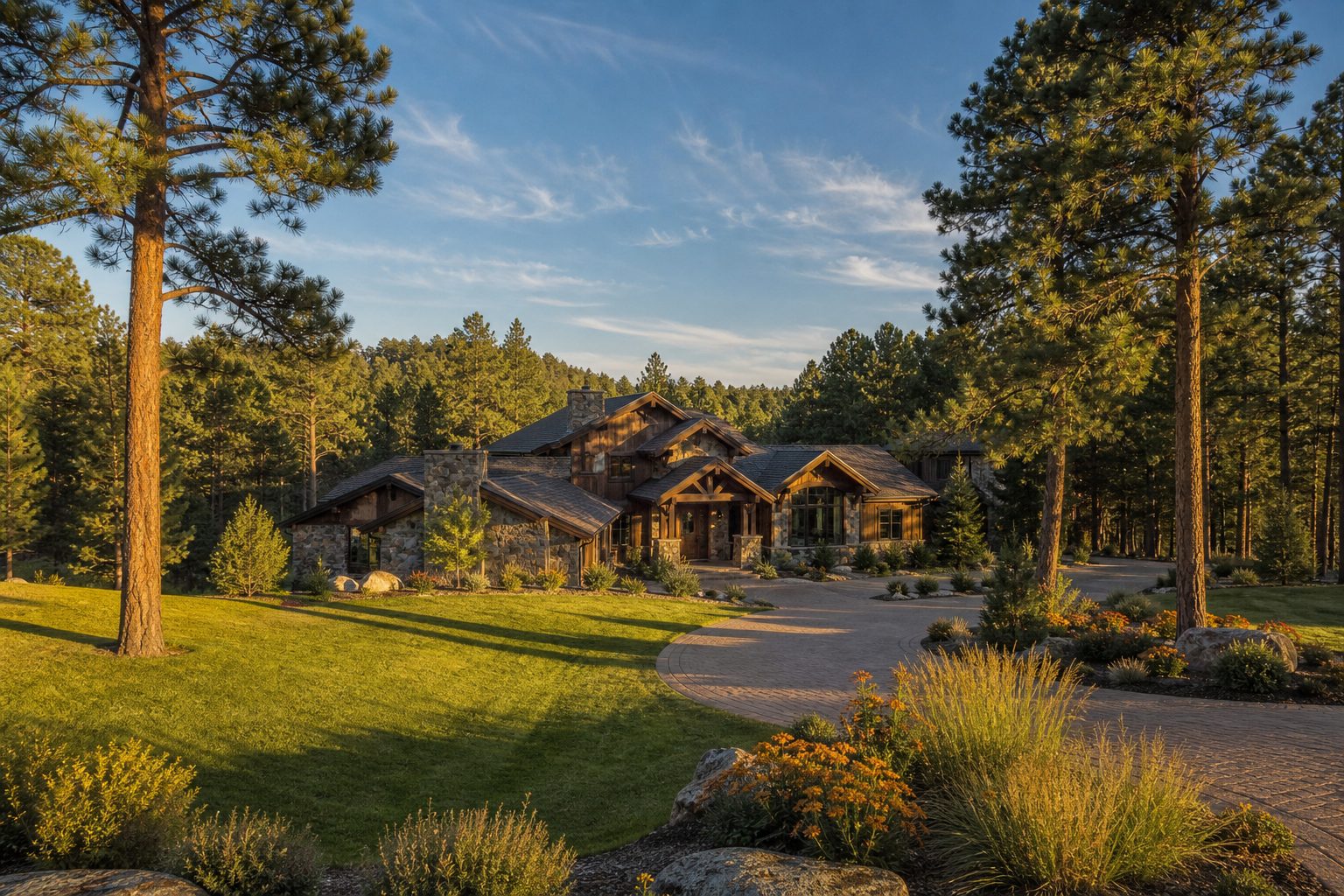
What are the real differences in property taxes and HOA fees between Castle Pines Village and Backcountry in Highlands Ranch?
A $2M home in Castle Pines Village and a $2M home in Backcountry look identical on paper, but your December property tax statement tells a very different story. The gap can run into five figures per year.
Why This Matters Right Now in Douglas County
You are shopping in the $1.5M to $3M range in Douglas County, and two communities keep landing at the top of your list: The Village at Castle Pines and Backcountry in Highlands Ranch. Both offer gated luxury living, world-class amenities, and stunning Colorado landscapes. Both sit in the same county. Both feel like they should cost roughly the same to own.
They don’t. And the difference is not small.
With 30 years of experience selling luxury real estate across the Denver South Metro, including Castle Pines, Highlands Ranch, and Littleton, I can tell you that the operational cost gap between these two communities surprises nearly every buyer I work with. Having closed over 469 transactions in this market, I have walked clients through this exact comparison hundreds of times. The numbers matter more than the curb appeal when you are writing checks every single month for the next decade.
So where does your money actually go? Let me break it down line by line.
The Mill Levy Trap: Why Castle Pines Village Pays Less in Property Taxes
This is the single most misunderstood cost in Douglas County luxury real estate, and it is where the conversation needs to start.
Metropolitan districts are special districts formed under Colorado law to finance and maintain a development’s public infrastructure, including streets, water, sewer lines, parks, and drainage. Unlike an HOA, a metro district is a unit of local government. It is governed by an elected board, holds public meetings, issues bonds, and levies a mill levy on your property tax bill.
Here is the critical difference. The Village at Castle Pines was built in the early 1980s. Its infrastructure bonds are largely retired. That translates to total mill levies in the 70 to 85 range, which is among the lowest in the South Denver luxury market.
Backcountry, by contrast, was platted much more recently. Newer master-planned developments can carry 60 or more additional mills just to service infrastructure bonds. When you layer that on top of the base Douglas County levy, you are looking at a significantly higher annual property tax bill on the exact same assessed value.
What does that look like in real dollars? One couple I worked with last year was comparing a $2.1M home in Castle Pines Village against a similarly priced estate in Backcountry. When we ran the actual property tax projections side by side, the Backcountry home carried roughly $8,000 to $12,000 more per year in property taxes. That is not a rounding error. That is a car payment.
For a $950,000 home in Castle Pines Village, estimated annual property taxes can range from approximately $4,500 to $7,500 depending on the specific metro district overlay and current mill levy rates. Scale that up to $2M and the savings compound dramatically compared to a newer community still servicing bond debt.
Castle Pines Village HOA Fees: The Layered Structure You Need to Understand
The Village at Castle Pines operates one of the most complex HOA structures in the Denver South Metro. Your monthly obligation has multiple layers, and understanding each one is essential before you make an offer.
Master HOA (CPHA) Dues
The main Village at Castle Pines dues run $300 per month for 2025. This covers security services across five staffed gates, recreation facilities and amenities, maintenance of open space and 13 miles of trails, snowplowing on common roads, and access to three playground areas at Equinox Park, Summit Park, and the Canyon Club Playground. The community also employs 40 full-time Emergency Services professionals.
Sub-Association Dues: The Second Layer
Here is where it gets interesting. The Village at Castle Pines layers 19 sub-associations under one master HOA. Two homes on the same street may not carry the same dues structure.
For example, the Starbuck sub-association charges $1,650 semi-annually for 2026, which is $3,300 per year on top of the master HOA. That means a Starbuck homeowner pays $300 per month in master dues plus $275 per month in sub-association dues.
What I tell my clients is this: always ask which sub-association a specific listing falls under before you assume what the monthly number will be. Village HOA fees typically land between $300 and $600 per month depending on the sub-association. That variance matters when you are building a monthly budget.
What You Get for Those Dues
Your HOA dollars fund 24/7 manned security gates, three pools, a fitness center, private road maintenance, trail upkeep, emergency response services, and community gathering spaces like Wildcat Corner, which accommodates events for up to 100 people with a catering kitchen and full technology setup. You are paying for a staffed, gated, resort-level living experience.
Backcountry Highlands Ranch: A Different Cost Model Entirely
Backcountry uses a metro district model where property taxes are higher due to the district mill levy, but the HOA structure itself is different from the Village’s layered system. Your amenity access centers around the Sundial House and an extensive trail network rather than the multi-gate security apparatus of Castle Pines Village.
The key distinction is where your dollars land each month. In Backcountry, a larger share of your total cost sits on your property tax bill (funding the metro district’s bond obligations), while in Castle Pines Village, more of your cost flows through HOA invoices (funding security, amenities, and private road maintenance).
A buyer I recently worked with in Highlands Ranch assumed the two communities were essentially interchangeable at the $1.8M price point. When we laid out the total cost of ownership side by side, including property taxes, HOA dues, metro district obligations, and insurance, the annual difference exceeded $10,000. She ultimately chose Castle Pines Village because the lower mill levy offset the slightly higher HOA, and she valued the gated security for her family. But another buyer in the same price range chose Backcountry because the newer construction and amenity style fit their lifestyle better, and they accepted the higher tax burden as the cost of modern design.
Neither answer is wrong. But you need the real numbers to make the right call for your situation.
Golf Membership Realities: Optional vs. Mandatory Costs in Castle Pines
This is a critical distinction that trips up buyers who assume golf is bundled into the purchase price. It is not.
The Country Club at Castle Pines is private and member-owned. Castle Pines Golf Club, which hosted the former PGA Tour’s International tournament, is invitation-only. Both memberships are completely separate from your HOA dues and your home purchase. Golf club initiation fees have historically ranged from $25,000 to $75,000 or more depending on the membership category, plus annual dues.
Your HOA covers gates, roads, trails, pools, fitness, and emergency services. Golf is an elective add-on. When you are calculating your true monthly cost of living in the Village, include golf membership only if you plan to join. Do not let a listing agent fold it into the conversation as though it is a standard cost of ownership.
In Backcountry, the amenity model centers on the Sundial House, trails, and outdoor recreation rather than private golf. If golf is not part of your lifestyle, that changes the comparison significantly.
Insurance and Wildfire Considerations for Castle Pines and Highlands Ranch
Here is something that rarely makes the marketing brochure but absolutely belongs in your cost analysis. The wooded Ponderosa terrain that makes Castle Pines visually stunning also places portions of the community in wildland-urban interface zoning. Insurance premiums reflect that classification.
Defensible-space maintenance is an ongoing responsibility, and some carriers have tightened underwriting for WUI properties across Colorado in recent years. Before you finalize any offer in Castle Pines Village, get an insurance quote. Do not assume the seller’s policy terms will transfer.
Backcountry’s terrain profile is different, generally sitting in more open grassland that may carry different risk classifications. Compare quotes for both communities as part of your due diligence, not after closing.
Total Cost of Ownership: A Side-by-Side Comparison for Castle Pines and Backcountry
Here is how I frame this for my clients. At the $2M price point, your approximate monthly ownership costs break down like this:
Castle Pines Village (Estimated Monthly, Excluding Mortgage)
- Master HOA (CPHA): ~$300
- Sub-Association Dues: $138 to $275+ (varies by sub-association)
- Metro District: Lower mill levy due to retired bonds
- Property Taxes: Lower end of Douglas County range for luxury homes
- Golf Membership: Optional, separate
- Estimated Total: $500 to $700+ per month in HOA alone, with lower property tax burden
Backcountry Highlands Ranch (Estimated Monthly, Excluding Mortgage)
- HOA Dues: Generally lower individual HOA payment
- Metro District: Higher mill levy to service newer infrastructure bonds
- Property Taxes: Significantly higher annual bill due to metro district overlay
- Golf Membership: Not applicable (different amenity model)
- Estimated Total: Lower HOA, but higher property taxes that can offset or exceed the difference
The net result? When you add everything together, Castle Pines Village often comes out comparable or even lower in total annual cost of ownership despite the perception that its layered HOA structure is more expensive. The retired bond debt is the equalizer.
Rated 5 out of 5 stars by 130 past clients, I walk every buyer through this exact analysis before they write an offer. The numbers tell a story that the listing photos never will.
Frequently Asked Questions
What are The Village at Castle Pines HOA fees for 2025 and 2026?
The master HOA (CPHA) dues are $300 per month for 2025. On top of that, you pay sub-association dues that vary by neighborhood within the Village. For example, the Starbuck sub-association charges $1,650 semi-annually for 2026. Total monthly HOA costs typically range from $300 to $600 depending on your specific sub-association.
Why are Backcountry Highlands Ranch property taxes higher than Castle Pines Village?
Backcountry is a newer master-planned development that is still servicing infrastructure bonds through its metro district. Newer communities can carry 60 or more additional mills on top of the base county levy. Castle Pines Village property taxes, built in the 1980s, has largely retired its bond debt, resulting in total mill levies in the 70 to 85 range.
What does the Castle Pines Metro District tax cover in 2026?
The Castle Pines Village Metropolitan District funds core infrastructure including water supply, wastewater collection, storm drainage management, roadway maintenance and repair, signage, street lights, snow plowing on metro roads, and stormwater management. According to the 2025 mill levy certification and budget documents, this is separate from your HOA dues and appears on your property tax bill.
Is golf membership included in Castle Pines Village HOA fees?
No. Golf membership at both the Country Club at Castle Pines and Castle Pines Golf Club is completely separate from HOA dues. These are optional, private memberships with their own initiation fees and annual dues. Your HOA covers security, roads, trails, pools, and emergency services only.
How many sub-associations exist within The Village at Castle Pines?
There are 19 sub-associations layered under the master HOA. Each carries its own dues structure, covenant requirements, and board. Two homes in the same gated community may have different monthly obligations. Always confirm which sub-association a specific listing belongs to before making assumptions about cost.
What amenities does Backcountry offer compared to Castle Pines Village?
Backcountry centers its amenity package around the Sundial House and an extensive trail network. Castle Pines Village offers five staffed security gates, three pools, 13 miles of trails, three playgrounds, a fitness center, Wildcat Corner event space, and 40 full-time Emergency Services professionals. The amenity models serve different lifestyles.
What schools serve Castle Pines Village and Backcountry?
Both communities fall within the Douglas County School Districts. Castle Pines Village feeds into Buffalo Ridge Elementary (rated 8/10), Rocky Heights Middle School (8/10), and Rock Canyon High School (9/10, National Blue Ribbon recipient). Backcountry in Highlands Ranch has its own feeder pattern within the same high-performing district.
How long are homes sitting on the market in Castle Pines in 2026?
Days on market in Castle Pines averaged 93 days in June 2026, up from 70 days the prior year. The median sale-to-list ratio was 97.67%, with 26% of homes selling above list price and nearly 48% experiencing at least one price reduction. Pricing strategy matters more than ever.
Does Castle Pines Village have wildfire insurance concerns?
Yes. The Ponderosa pine terrain places portions of the community in wildland-urban interface zoning. Homeowners insurance in Colorado reflects this classification, and some carriers have tightened underwriting for WUI properties across Colorado. Get an insurance quote before finalizing any purchase in the Village.
What is the median home price in Castle Pines in 2026?
The median closed price in Castle Pines reached $999,000 in June 2026. Inside the Village gates, homes typically start in the high $800,000s and run past $2 million, with estate lots on golf course frontage closing between $2.5M and $4.5M. The broader Castle Pines market, including The Canyons and Castle Pines North, offers a wider range.
The Bottom Line
The decision between Castle Pines Village and Backcountry is not about which community looks better in photos. At the $1.5M to $2M+ price point, both deliver luxury living in Douglas County with strong schools and convenient access to the Denver Tech Center. The real question is where your money goes every month and every December when that property tax statement arrives.
Castle Pines Village’s retired bond debt and lower mill levies can save you thousands per year, even though the layered HOA structure looks more complex on the surface. Backcountry’s newer construction and different amenity model appeal to buyers who want a modern lifestyle and accept the higher tax burden that comes with newer infrastructure bonds.
With 30 years helping luxury buyers navigate these exact decisions across Castle Pines, Highlands Ranch, and Littleton, I am happy to run the numbers specific to any property you are considering. Call me at 303-882-7706 or visit DavidRichins.com to start the conversation. The right answer depends on your priorities, and I will make sure you have every number you need to choose with confidence.