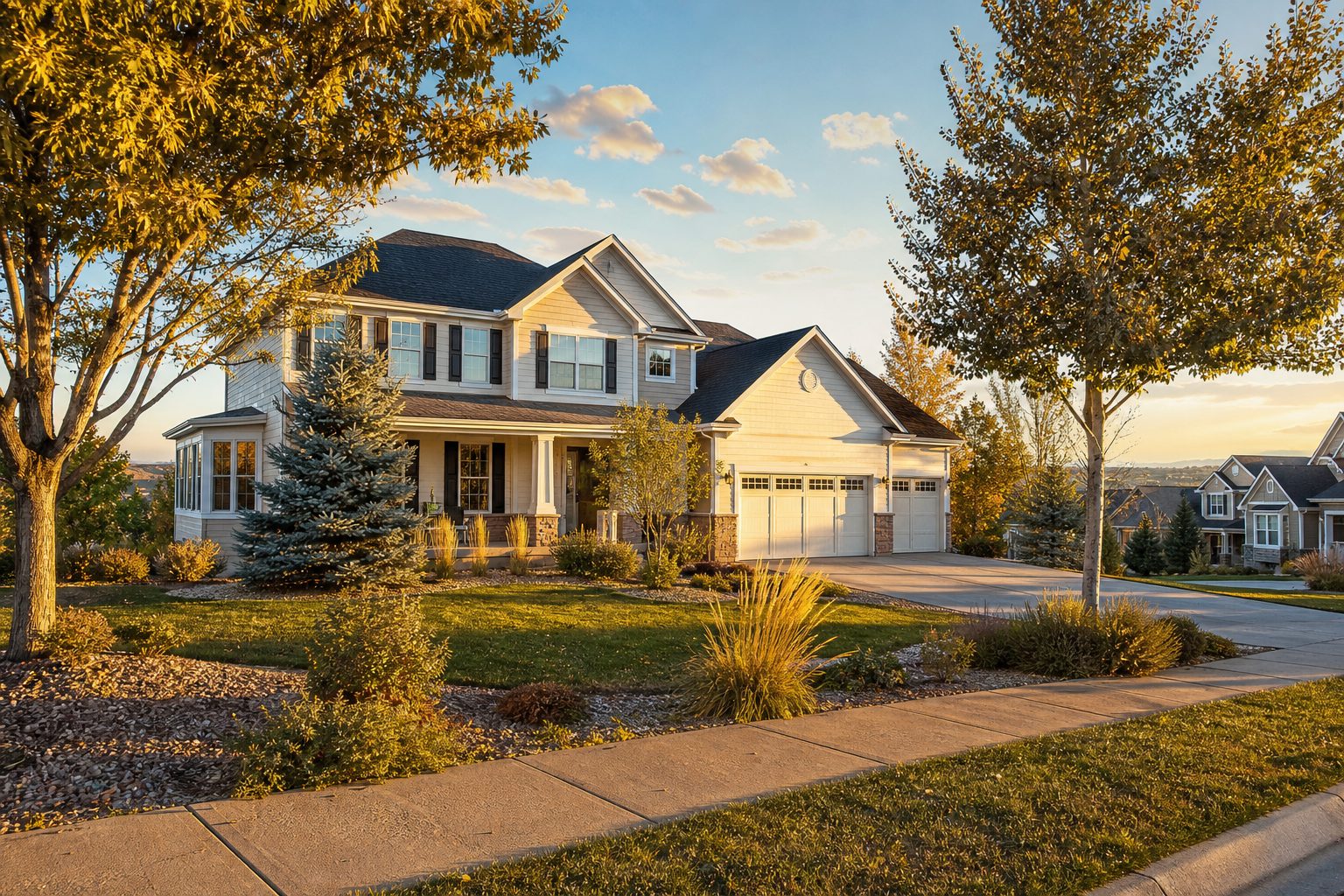
Why is Castle Rock seeing more homes on the market while fewer buyers are actually signing contracts this fall?
Active inventory across the Denver metro climbed 6.7% year over year even as new listings fell 5.9%, according to Realtor.com’s September 30, 2026 research. Nationally, pending listings dropped 4.1%. For Castle Rock sellers and buyers, this disconnect changes your playbook.
Why This Matters Right Now for Castle Rock Homeowners
You are watching two forces pull in opposite directions, and it is reshaping what the Castle Rock market looks like heading into the final quarter of 2026. More homes are sitting available for buyers to browse, yet the actual contracts being signed are declining. Nationally, pending listings fell 4.1% in September following August’s 0.2% decline, per Realtor.com’s September 30 data.
What does that mean on the ground here? Homes in Castle Rock are selling after an average of 26 days on market, compared to 22 days last year, according to local MLS data. Inventory sits at 3.1 months of supply. That is still competitive by historical standards, but the direction of travel matters. If you are planning a move up, a move out, or a relocation into Douglas County, understanding this inventory-versus-contract gap is the difference between a smart decision and a costly miscalculation.
How Denver Metro Inventory Growth Looks Different in Castle Rock
The metro-wide headline, active inventory up 6.7% year over year, does not land evenly across every community. According to DMAR data from August 2026, the metro held 13,080 active listings. But that number hides dramatic variation by city. Parker saw active listings jump 19% year over year. Highlands Ranch, by contrast, saw active listings drop roughly 41%.
Castle Rock sits in between, and the nuance matters. The median sale price in Castle Rock was $650,000 over the last three months, down 1.4% year over year, per REcolorado data. Properties are still selling for 99.1% of asking price. So while inventory is building, it is not a collapse. It is a slow accumulation driven by one key factor: homes are staying on the market longer, not because a flood of new listings is hitting the MLS.
Here is the critical distinction. New listings across the Denver metro actually fell 5.9% year over year in September. Fewer homeowners are choosing to list. The inventory growth is coming from existing homes taking longer to sell. That stockpile effect is the defining feature of this market. With 30 years of experience in South Denver Metro real estate and over 469 closed transactions, I can tell you this pattern is different from a traditional supply surge, and it demands a different strategy.
What Weaker Contract Activity Means for Douglas County Sellers
If you are a move-up or move-out seller in Castle Rock, Highlands Ranch, or Parker, weaker contract activity is the number you need to watch most closely. Across the Denver metro, DMAR reported 3,332 pending sales in August 2026, down 7.52% year over year. Closed sales came in at 3,068, falling 17.35% from the same month in 2025.
Douglas County specifically saw home sales decrease 5.8% between Q2 2025 and Q2 2026, according to the Douglas County Economic Development Report. Within that, single-family detached home sales in Douglas County fell 6.7% over the year, a decrease of 119 homes sold during the period. Castle Rock was actually a bright spot, with detached home sales up 4.7% during Q2, but nearby Lone Tree dropped 31.3% and Castle Pines fell 11.0%.
So what does this mean for your listing strategy? Pricing discipline is everything. The Colorado Association of REALTORS notes that after concessions, single-family homes across the metro are closing at 96.8% of list price. You need to build that gap into your expectations from day one. The days of listing high and letting the market chase you up are not the reality of fall 2026.
The Concession Conversation You Need to Have
Rate buydowns, closing cost credits, and inspection repairs are now standard negotiation items. If you are selling in The Meadows, where homes go pending in about 12 days at a 99.3% sale-to-list ratio, you have more leverage. If you are in Founders Village, where the median sale price was $512,500 in March 2026 with homes averaging 52 days on market, you should plan for meaningful concessions. These are two neighborhoods within the same town telling two very different stories.

Why Relocation Buyers Should Pay Attention to This Castle Rock Data
If you are relocating to Colorado and targeting Douglas County for its top-rated schools and proximity to the Denver Tech Center, this inventory-contract gap is actually working in your favor. More options on the shelf, less competition at the offer table.
The Douglas County median listing price was $775,000 as of April 2026, per FRED data. That narrows the buyer pool significantly. As the Denver Gazette reported, with a median listing price of $757,810 as of February, the county’s elevated housing costs significantly narrow the pool of potential buyers. But Castle Rock offers a more accessible entry point. The middle half of sold prices in the core 80109 zip code range from $540,000 to $800,000, with 315 closed sales tracked over the last six months.
You also have leverage that did not exist two years ago. Mortgage rates holding near 6.5% mean every buyer is running the same monthly payment math, and sellers know it. If you are coming from a higher-cost market like the Bay Area or Seattle, Castle Rock’s combination of Douglas County School District quality, Philip S. Miller Park’s 150 acres of trails and recreation, and a genuine downtown along Wilcox Street represents a lifestyle upgrade that the numbers can actually support.
What I tell my clients who are relocating is to resist the urge to rush. With Denver’s rental market offering the highest concessions in 19 years, averaging 9.5% across the metro area (roughly four to five weeks of free rent), a short-term lease while you learn the difference between Castle Rock, Parker, and Highlands Ranch can save you from a six-figure mistake.
The Detached vs. Attached Split in South Denver Metro
One data point that gets overlooked in the inventory conversation is the dramatic divergence between detached and attached homes. According to DMAR’s August 2026 data, detached inventory actually fell 4.21% year over year across the metro, while attached inventory grew 9.94%. Detached homes sat a median of 24 days in the MLS; attached homes, 45 days.
This matters enormously for Castle Rock, where only about 15% of Douglas County sales are condominium or townhouse units. The town’s inventory is overwhelmingly single-family detached homes, typically running 2,000 to 4,000 square feet on lots of 6,000 to 10,000 square feet in planned communities. That means the “inventory growth” headline applies less acutely here than in condo-heavy corridors. Castle Rock’s detached market is tighter than the metro average suggests.
For move-up sellers, this is a tailwind. Your detached home in a desirable Castle Rock neighborhood is competing in the segment where supply is actually declining across the metro. The challenge is on the buy side: if you are moving up to the $900,000-plus range near Castle Pines, luxury inventory is lingering 30 to 45 or more days on market compared to 15 to 20 days for homes under $700,000.

What the Numbers Do Not Tell You About Castle Rock This Fall
It is important to understand the limitations of these listing metrics. Asking-price changes on active listings are not equivalent to closed-sale value changes. A seller dropping their price by $20,000 does not mean the market fell by that amount; it may simply mean they overpriced initially. Builder inventory is also only partially captured via MLS feeds, and Castle Rock has significant new construction activity that does not always appear in the headline numbers.
Douglas County’s economic fundamentals remain strong. Employment increased 1.8% year over year in Q1, per the county’s own economic development report. The unemployment rate declined to 3.4% in Q2 2026, the lowest among metro Denver counties. Retail sales surged 11.7% year over year. Foreclosure filings actually decreased 1.3% to just 74 filings across Douglas County in Q2, a remarkably low number. These are not distress-driven inventory increases.
Having been rated 5 out of 5 stars across 130 client reviews, I have earned that trust by being direct with people about what the data means and what it does not mean. The September inventory numbers tell you the market is normalizing, not cratering.
Frequently Asked Questions
Is the Castle Rock housing market crashing in fall 2026?
No. Castle Rock inventory stands at 3.1 months of supply, and homes are selling for 99.1% of asking price, per local MLS data. The average detached sale price in Douglas County was $895,018 in Q2 2026, per the Douglas County Economic Development Report. This is a normalizing market, not a distressed one. Foreclosure filings in the county decreased 1.3% over the year to just 74 in Q2 2026.
Why is Denver metro inventory growing if fewer people are listing homes?
New listings fell 5.9% year over year across the metro, per Realtor.com’s September 30, 2026 research. Inventory is growing because existing listings are staying on the market longer, not because of a supply flood. DMAR data shows median days in MLS rose from 21 to 27 between July and August 2026. Homes are simply taking more time to find a buyer.
How long are homes sitting on the market in Castle Rock right now?
On average, Castle Rock homes sell after 26 days on market, compared to 22 days last year, per local MLS data as of mid-2026. Sub-neighborhood variation is significant: The Meadows averages about 12 days, while Founders Village averages around 52 days based on March 2026 data.
Are Castle Rock home prices dropping in 2026?
The median sale price is $650,000 over the last three months, down 1.4% year over year. Detached home prices in Douglas County as a whole fell just 0.2% to $895,018, per the county’s Q2 2026 report. Castle Rock home values are forecast to rise 2% to 4% through the remainder of 2026 based on current stabilization trends.
What does the decline in pending listings mean for South Denver Metro buyers?
Nationally, pending listings fell 4.1% in September per Realtor.com data. In the Denver metro, pending sales totaled 3,332 in August 2026, down 7.52% year over year per DMAR. For buyers, this means less competition at the offer table. You have more negotiating power than at any point since before the pandemic.
Should I sell my Castle Rock home before the market slows further?
Detached inventory across the Denver metro actually fell 4.21% year over year in August 2026, per DMAR. Since Castle Rock’s inventory is overwhelmingly detached single-family homes, your segment is tighter than headline numbers suggest. Selling now while detached supply favors sellers is a defensible strategy, but pricing discipline is critical.
How does Douglas County compare to the rest of the Denver metro for home sales?
Douglas County home sales decreased 5.8% between Q2 2025 and Q2 2026, per the county’s economic development report. Within that figure, Castle Rock bucked the trend with a 4.7% increase in detached sales, while Lone Tree declined 31.3% and Castle Pines fell 11.0% during the same period.
Is now a good time to relocate to Castle Rock from out of state?
The combination of growing inventory, weaker contract activity, and historically high rental concessions across the Denver metro (9.5% average, per the Colorado Association of REALTORS) creates favorable conditions for relocation buyers. You can rent temporarily while learning the market, then buy with more leverage than buyers had in 2021 or 2022.
What concessions should Castle Rock sellers expect to offer in fall 2026?
Across the metro, single-family homes are closing at 96.8% of list price after concessions, per the Colorado Association of REALTORS. Rate buydowns, closing cost credits, and inspection repairs are standard. In Castle Rock specifically, homes sell at 99.1% of asking, so your concession exposure is lower than the metro average, but budget accordingly.
Does builder inventory affect these Castle Rock inventory numbers?
Builder inventory is only partially captured via MLS feeds, which means the headline inventory numbers may understate total available supply in Castle Rock, where new construction activity remains active. When evaluating your options, tour both resale and builder communities along Meadows Parkway and near Castle Pines to get a complete picture of what is available.
The Bottom Line
Castle Rock is in a different position than much of the Denver metro this fall. Your detached home market is tighter than the 6.7% metro-wide inventory growth headline implies, your local economy is outperforming the region, and homes are still moving at 99.1% of asking price. But the contract slowdown is real, and it demands that you price accurately, plan for concessions, and move with purpose rather than hope.
Whether you are selling a home in The Meadows, buying your first Douglas County property along Plum Creek Parkway, or relocating from out of state and trying to figure out whether Castle Rock or Parker fits your family better, the data supports making a move this fall if your life circumstances call for it. If you want to walk through these numbers for your specific home or situation, call David at 303-882-7706. With 30 years in this market and 469 closed transactions across the South Denver Metro, I can show you exactly where your home fits in the current landscape.