How the Burnham Yard Broncos Stadium Will Transform Denver Real Estate
What does the new Denver Broncos stadium at Burnham Yard mean for Denver’s housing market, and how will this $4 billion development reshape real estate across the metro area?
[SNIPPET ANSWER: The Burnham Yard Broncos stadium project, a privately funded $4 billion mixed-use development spanning 150 acres, is set to reshape Denver real estate values and livability with a targeted spring 2031 opening.]
Why the Burnham Yard Development Matters Right Now
You are watching the most significant urban development project in Denver’s modern history take shape in real time. The Denver Broncos have finalized a sale agreement to purchase roughly 58 acres of the historic Burnham Yard from the Colorado Department of Transportation for $45.8 million, with the deal expected to close this fall.
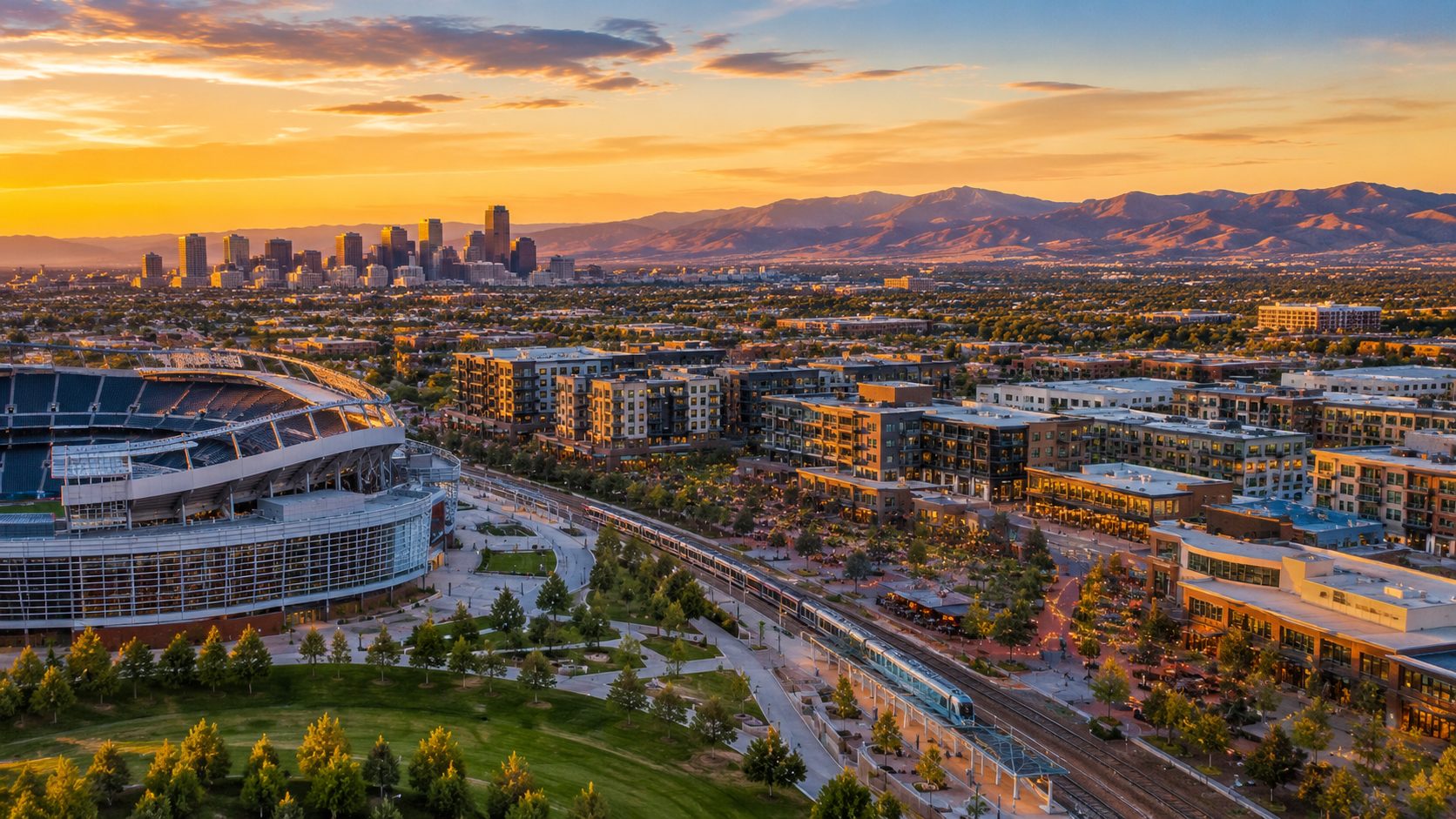
This is not just a new football stadium. The development’s footprint has grown to cover 150 acres, with between 5 and 7 million square feet of mixed-use development planned alongside the stadium itself. Housing, entertainment venues, restaurants, public spaces, and businesses will transform a decommissioned railyard into a year-round destination.
Having worked in Colorado real estate for 30 years, I can tell you that developments of this scale do not come around often. And the ripple effects on housing values, neighborhood desirability, and quality of life across the Denver metro will be felt for decades. Whether you currently own a home in Denver, you are relocating to Colorado, or you are considering your next investment move, you need to understand what is coming.
Where Burnham Yard Sits and Why the Location Changes Everything
You might be wondering where exactly this transformation is happening. The Burnham Yard site sits between 6th and 13th Avenues, bounded by Seminole Road and Osage Street, just east of I-25 and less than two miles from the current Empower Field at Mile High. It borders Denver’s La Alma/Lincoln Park and Baker neighborhoods, two historically rich communities with deep cultural roots.
The Stadium’s Strategic Placement
The initial plans propose locating the stadium on the western edge of Burnham Yard, positioned as far from residential neighborhoods to the east as possible. This thoughtful design detail matters if you are a homeowner or buyer in Baker or La Alma/Lincoln Park. A linear park and mixed-use community featuring restaurants, housing, and amenities would surround the venue, with entertainment uses to the east and residential districts to the north and south.
Planning boards show more than 15 acres of open space, exceeding Denver’s 10% minimum requirement. What I tell my clients is that when a developer exceeds green space requirements, it signals they are building for long-term neighborhood value, not just short-term profit.
One couple I recently worked with had been considering a move from their Castle Rock home to be closer to Denver’s urban core. When they saw the Burnham Yard plans and realized the scale of what is coming to that corridor, it completely changed how they evaluated neighborhoods along the I-25 corridor. They ended up making their decision months earlier than planned because, as they put it, “We want to be settled before prices start reflecting this.”
The $4 Billion Project: What You Need to Know About Funding and Design
Here is the detail that should matter most to you as a Colorado taxpayer and homeowner: the Walton-Penner Family Ownership Group will privately fund the entire investment, meaning there will be no new taxes for residents. The ownership group is covering the stadium, the land, the surrounding development, and all construction costs.
What Public Money Is Going Toward
The city of Denver is investing $140 million in infrastructure upgrades surrounding the area, approved by voters as part of a bond package. These improvements include rearranging and upgrading two road viaducts. The state invested $19.4 million to remove nearby freight tracks and improve site accessibility. The Colorado Economic Development Commission also approved a $5 million grant for infrastructure upgrades.
So your tax dollars are going toward roads, bridges, and transit improvements that benefit the entire corridor, not the stadium itself. That is an important distinction.
The Retractable Roof Factor
The new stadium will feature a retractable roof, making it capable of hosting Super Bowls, NCAA Final Fours, major concerts, conventions, and events year-round. Broncos CEO Greg Penner has emphasized wanting a venue that creates an intense home-field atmosphere while remaining versatile enough to generate economic activity 365 days per year, not just on game Sundays.
For Denver’s housing market, this matters more than you might think. Year-round event programming creates sustained demand for nearby housing, dining, and hospitality, not the seasonal spikes and dead zones you see with outdoor-only venues.
The Timeline Every Denver Homeowner and Buyer Should Bookmark
Real estate markets price in expectations years before ribbon-cuttings. If you are thinking about buying or selling anywhere along the I-25 corridor, from Englewood up through central Denver, here is the sequence of events driving the market:
- September 2025: Burnham Yard announced as the preferred stadium site
- November 2025: The Broncos submitted a 38-page preliminary review plan to Denver’s Community Planning and Development department
- February 2026: Detailed plans revealed, including phasing and transit integration with a spring 2031 opening target
- Late 2026: The small area plan guiding development details is expected to be finalized
- Early 2027: Community benefits agreement targeted for completion
- Mid-2027: Stadium construction anticipated to begin
- January 2027: Building permits projected to be issued
- Spring 2031: Opening day, aligned with the expiration of the Broncos’ lease at Empower Field
What does this timeline mean for your decisions right now? If you are considering selling a home in Douglas County or the Denver South Metro to move closer to Denver’s urban core, the window to position yourself before construction-driven price appreciation kicks in is narrowing. Having closed over 469 transactions in this market, I have seen how major infrastructure projects move values, and the smart money moves early.
How Burnham Yard Connects to Denver’s Transit Future
The Burnham Yard project is not just about football. It is fundamentally reshaping how Denver thinks about transit-connected living. The development is being designed with deep transit integration in mind, connecting to RTD’s light rail system and creating a model for the kind of walkable, transit-oriented community that relocating buyers increasingly demand.
For families considering a move to Colorado, this is a significant quality-of-life factor. You can live in Castle Rock, Castle Pines, Highlands Ranch, or Parker and still access a world-class entertainment and dining district via light rail rather than fighting I-25 traffic on game days and event nights.
A relocation buyer I worked with last year, moving from Texas, had never considered transit accessibility as part of their home search criteria. After learning about the Burnham Yard transit plans and seeing how RTD connects communities across the south metro, they specifically chose a home near a light rail station in Lone Tree. Their reasoning was simple: “We want access to everything Denver is building without the headache of driving into the city every time.”
What This Means for Denver South Metro Home Values
You might be living 20 or 30 miles south of Burnham Yard and wondering, “Does this affect me?” The answer is yes, and here is why.
Major urban developments create concentric rings of value impact. The most immediate neighborhoods, Baker and La Alma/Lincoln Park, will feel it first. But every community connected by I-25 and RTD light rail stands to benefit from the increased economic activity, employment, and livability that a 150-acre mixed-use district generates.
The Current Market Context
The Denver metro housing market is already showing signs of stabilization. The median home price across the metro sits at $600,000 as of April 2026, holding steady year over year. Douglas County’s median listing price is approximately $775,000, with homes spending a median of 41 days on market.
Here is where it gets interesting for sellers: 56.64% of Douglas County listings have experienced price reductions, and the sale-to-list-price ratio sits at 96.22%. What I tell my clients is that this is a recalibration, not a downturn. The market is rewarding correctly priced homes and punishing overpriced ones. With 130 five-star reviews from past clients, I have seen enough market cycles to know: pricing strategy is everything right now, and the Burnham Yard development adds a new variable to the equation.
For relocation buyers, you have more negotiation power today than at any point since 2019. More inventory, fewer bidding wars, and sellers willing to negotiate. This is the window to establish yourself in Colorado before the Burnham Yard effect begins pushing values.
Frequently Asked Questions
How much did the Broncos pay for the Burnham Yard site?
The Broncos agreed to pay $45.8 million to acquire roughly 58 acres from the Colorado Department of Transportation. The deal was finalized in March 2026 and is expected to close this fall, giving the team full control of the property for stadium and mixed-use development.
Will Denver taxpayers fund the new Broncos stadium?
No. The Walton-Penner Family Ownership Group will privately fund the entire stadium investment, meaning no new taxes for residents. The city of Denver is contributing $140 million in surrounding infrastructure upgrades, which were approved by voters as part of a bond package.
When will the new Burnham Yard stadium open?
The Broncos are targeting a spring 2031 opening, which aligns with the expiration of their lease at Empower Field at Mile High. Construction is expected to begin in mid-2027, with building permits projected for January 2027.
How large is the total Burnham Yard development?
The development spans roughly 150 acres with between 5 and 7 million square feet of mixed-use development, not counting the stadium itself. This includes housing, restaurants, entertainment venues, businesses, and more than 15 acres of open space.
Will the new stadium have a retractable roof?
Yes. The new stadium will feature a retractable roof, enabling Denver to host major events year-round, including potential Super Bowls, NCAA Final Fours, major concerts, and conventions regardless of weather conditions.
Which neighborhoods are closest to Burnham Yard?
The site borders Denver’s La Alma/Lincoln Park and Baker neighborhoods, sitting between 6th and 13th Avenues. It is located just east of I-25, less than two miles from the current stadium location.
How will Burnham Yard affect home values in the Denver South Metro?
Major mixed-use developments historically increase property values in connected corridors. Communities along I-25 and RTD light rail lines, from Englewood through Lone Tree, Highlands Ranch, and Castle Rock, stand to benefit from increased economic activity and improved transit connectivity.
Who is designing the Burnham Yard development?
The Broncos have partnered with Sasaki, a global design practice with deep experience working on prominent Denver developments, for the site’s master plan. The firm has shaped some of the city’s most recognizable urban spaces.
What is the current Denver housing market like for buyers?
The Denver metro median home price is $600,000 as of April 2026. Inventory is at its highest level since 2019, with Douglas County showing a 96.22% sale-to-list-price ratio and over 56% of listings experiencing price reductions, giving buyers significant negotiation power.
Is now a good time to relocate to the Denver South Metro area?
For relocation buyers, the current market offers more inventory, fewer bidding wars, and stronger negotiation power than any time in recent memory. Top-performing school districts like Douglas County RE-1, combined with major developments like Burnham Yard, make 2026 a strategic window for establishing yourself in Colorado.
The Bottom Line
The Burnham Yard development is not just Broncos news. It is a $4 billion, privately funded transformation that will reshape how Denver lives, works, and plays for generations. With 150 acres of mixed-use development, a world-class retractable-roof stadium, and deep transit integration, this project will send ripple effects across the entire Denver metro housing market.
Whether you are a Douglas County homeowner weighing your next move, a relocation buyer evaluating Colorado communities, or an investor looking at the long game, the decisions you make in the next 12 to 18 months will position you ahead of the curve, or behind it.
If you want to talk through how Burnham Yard and the evolving Denver market affect your specific real estate plans, I would welcome the conversation. With 30 years of experience in this market, I have helped hundreds of families navigate exactly these kinds of inflection points. You can reach me, David Richins, at 303-882-7706 or through DavidRichins.com.