
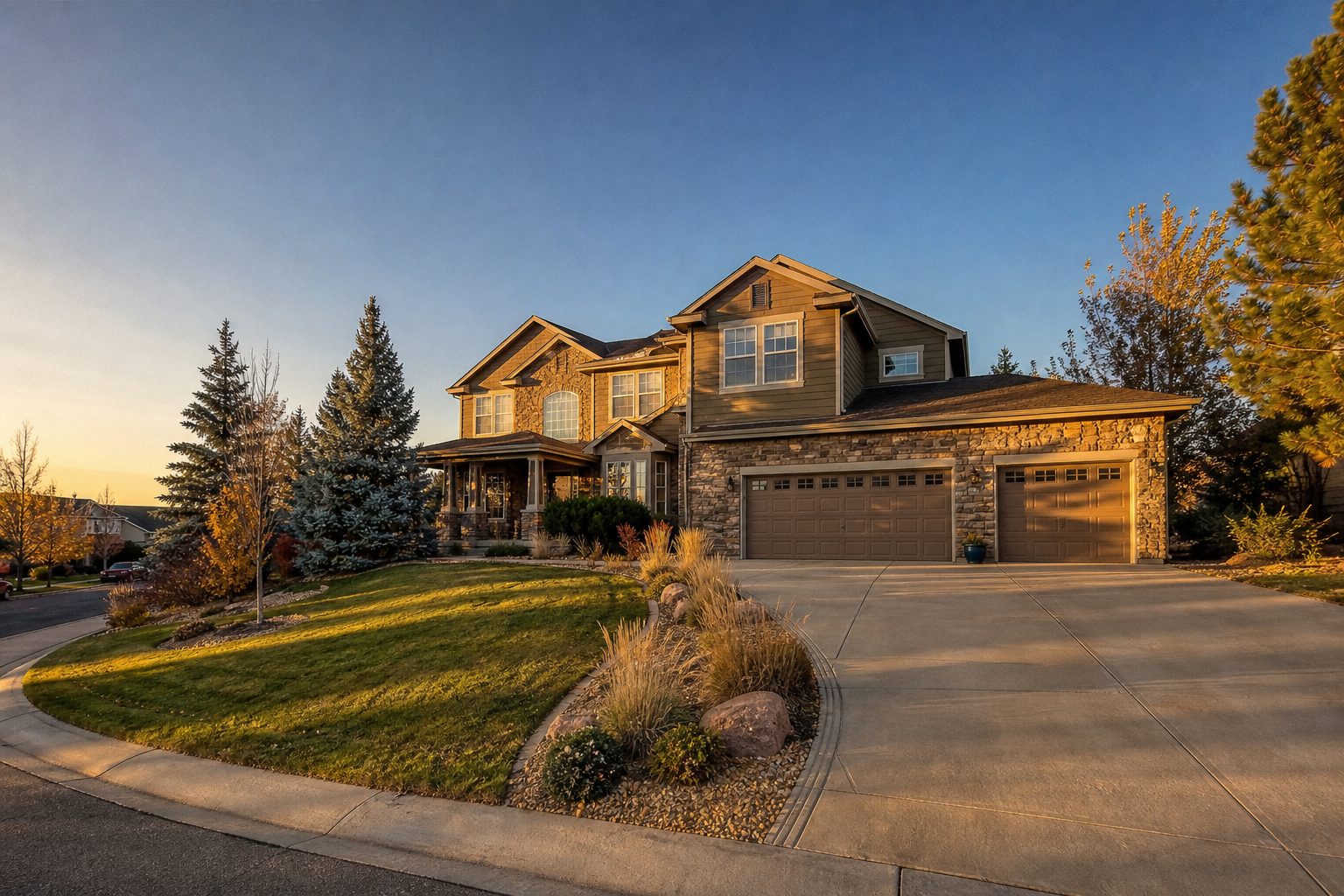
What is my Lone Tree home actually worth in today’s market before I list in 2026?
Your Lone Tree home is likely worth between $675,000 and $1,242,000 depending on your sub-neighborhood, with the median closing price at $869,500 over the past 12 months according to Resideline. But that number means nothing until you understand which price tier your home falls into.
Why This Matters for Lone Tree Sellers Right Now
Here is what most sellers miss: Lone Tree is not one market. It is four distinct price tiers operating under four different sets of rules. A townhome in the Park Meadows corridor and a detached home in Heritage Hills are competing for completely different buyer pools, facing different days-on-market timelines, and requiring different pricing strategies.
The broader Denver Metro has softened. Per REcolorado, September 2026 metro-wide sales fell 18% year over year, and the median closed price slipped 2% to $575,000. But South Denver is a different story. According to South Denver Guide data from Q1 2026, Lone Tree posted 6.9% year-over-year appreciation with a median of $758,000 and just 21 days on market. That outperformance creates a false sense of security if you price your home based on headlines rather than hyperlocal data.
Having closed over 469 transactions across this market over 30 years, I can tell you that the gap between what sellers think their home is worth and what buyers will actually pay has widened in 2026. Let me walk you through how to close that gap.
How Lone Tree’s Four Price Tiers Affect Your Home’s Value
Your Lone Tree home’s worth depends first on which sub-market it sits in. According to selling303.com’s neighborhood breakdown, four distinct tiers exist:
- Tier 1 ($325K to $500K): Park Meadows condos and smaller attached units
- Tier 2 ($500K to $750K): South Lone Tree townhomes and smaller detached homes, including areas like Lyric with a median around $577,515
- Tier 3 ($750K to $1.2M): RidgeGate move-up single-family homes, with RidgeGate West posting a median of $787,250
- Tier 4 ($1.2M and above): Heritage Hills and RidgeGate luxury, where Heritage Hills carries a median around $1,780,000 and Rampart Range sits near $1,090,000
Why does this matter so much? Because homes under $700,000 in Lone Tree and Castle Pines are selling in 15 to 20 days, while homes above $900,000 are sitting for 30 to 45 or more days. If you are in the upper tiers, your pricing strategy needs to be sharper, not more aggressive.
What I tell my clients is simple: the number your neighbor got last spring is not the number you will get this fall. Each tier is moving at a different speed.
The Real Numbers Behind Lone Tree Home Sales in 2026
You need to understand the spread in reported data before you anchor on any single number. Here is what the sources show:
- Resideline (12 months ending September 2026): Median sold price of $869,500 across 224 closed sales. The middle 50% of those sales closed between $675,000 and $1,242,271.
- REcolorado MLS (April 2026): Median close price of $760,000 across 20 transactions, with a median close-price-to-original-list ratio of 98% and 12 median days in MLS.
- Erich Hyatt Real Estate (June 2026): Median sold price about $813,750, with 136 active listings, 38 median days on market, and $294 per square foot.
- Houzeo, citing Redfin data (June 2026): Median sale price of $799,000, with a sale-to-list ratio of 97.91% and 52 days on market including pre-MLS time.
So what does all of that actually tell you? It tells you that the typical Lone Tree seller is getting roughly 97% to 98% of their asking price. That 2% to 3% gap is where overpricing kills deals. On a $850,000 listing, that is $17,000 to $25,500 you leave on the table in negotiations or price reductions if you overshoot from the start.
Across the 224 closings Resideline tracked with usable living area data, the middle half of sales landed between $242 and $331 per square foot. That per-square-foot range gives you a solid baseline to pressure-test any valuation estimate.
What Is Pushing Lone Tree Prices Higher, and What Is Holding Them Back
You cannot evaluate your home’s worth without understanding the forces pulling in opposite directions.
Forces Supporting Values
The Denver Tech Center and I-25 South corridor added an estimated 8,200 net new jobs in 2025, and a significant share of those new employees target Lone Tree, Centennial, and Greenwood Village for schools and lifestyle. That relocation demand is real, and it disproportionately supports your market.
South Denver’s inventory remains constrained. Per South Denver Guide Q1 2026 data, months of supply across South Denver averaged 1.8 months, firmly in seller’s territory. Unlike northern suburbs with greenfield development, Lone Tree has limited new construction outside of infill and luxury custom builds.
Forces Creating Headwinds
Rising insurance premiums are squeezing buyers in every Colorado market, including Lone Tree. According to Denver7 reporting, higher insurance costs are forcing some buyers to lower their price range or reconsider home types. Sellers are also adjusting asking prices to account for higher ownership costs, including insurance, HOA fees, and property taxes.
Douglas County’s effective property tax rate of 0.59% is below the national median of 1.02%, per AppealDesk data. However, with a median home value of approximately $725,700 countywide, the median annual tax bill of $4,516 still sits substantially above the national median of $2,400. For your buyers, that total cost of ownership matters.
Mortgage rates hovering around 6.23%, per Houzeo’s current Lone Tree data, add roughly $345 per month to payments on a typical loan compared with rates from 2021 and 2022. That rate environment narrows your buyer pool, especially in the move-up segment.
Why Overpricing in Lone Tree Costs You More Than a Price Cut
With 130 five-star reviews from past clients and a 5 out of 5 average rating, one pattern I have seen consistently across three decades is this: homes that enter the market 5% to 8% above fair value end up selling for less than homes priced correctly from day one.
Here is why that is especially true in Lone Tree right now. Metro-wide active listings sit at 13,522 as of September 2026 per REcolorado data. Every home competes against dozens or hundreds of comparable properties in its price range. When you overprice a Lone Tree listing, you are not just competing with Lone Tree inventory. You are competing against larger homes in Castle Rock and Parker that fall into the same price bracket but offer more square footage.
The Gazette reported that Douglas County’s median listing price was $757,810 as of February 2026, with only about 15% of county sales being condos or townhomes. That lack of diverse housing stock means if your home is priced in the mid-tier range, you are competing almost exclusively against other single-family homes. Accurate pricing becomes your most important marketing tool.
How to Get an Accurate Valuation Before You List Your Lone Tree Home
Automated estimates are a starting point, not a destination. With a typical Lone Tree home being about 3,863 square feet and built around 2001 per Census ACS data, condition, updates, and lot position can swing value by $50,000 or more within the same neighborhood.
What I recommend to every seller I work with:
- Start with recent comps in your specific sub-neighborhood, not Lone Tree broadly. A Heritage Hills comp does not apply to a Lyric townhome, and vice versa.
- Adjust for condition honestly. The gap between $242 and $331 per square foot in recent sales reflects updated versus original-condition homes.
- Factor in total buyer cost. Your buyer is calculating mortgage payment, taxes, HOA, and insurance together. If your HOA is $400 per month, that reduces what buyers will offer on the home itself.
- Understand seasonal patterns. Lone Tree’s fastest absorption rates in 2026 have been in spring. If you are listing before year end, expect slightly longer timelines.
Lone Tree’s median household income of $123,741, per Census ACS data via State Demographics, tells you something important about your buyer pool: these are high-earning households, but even at that income level, rate sensitivity matters.
Frequently Asked Questions
What is the median home price in Lone Tree in 2026?
It depends on the time period and source. The 12-month median through September 2026 was $869,500 across 224 closed sales, per Resideline. The April 2026 median from REcolorado MLS was $760,000 across 20 transactions. Your specific sub-neighborhood within Lone Tree will determine where you land within that range.
How long does it take to sell a home in Lone Tree right now?
Homes under $700,000 are moving in 15 to 20 days. Homes above $900,000 are taking 30 to 45 or more days. The June 2026 median days on market was 38 per Erich Hyatt Real Estate data, though REcolorado reported just 12 median days in MLS for April 2026 transactions.
Is Lone Tree outperforming the broader Denver Metro market?
Yes, significantly. While metro-wide median prices dipped 2% year over year per REcolorado September 2026 data, Lone Tree posted 6.9% year-over-year appreciation in Q1 2026 according to South Denver Guide.
What percentage of asking price are Lone Tree sellers getting?
Sellers are receiving approximately 97% to 98% of their original list price, based on REcolorado and Houzeo data from 2026.
How do property taxes affect my home’s value in Lone Tree?
Douglas County’s effective property tax rate is 0.59%, below the national median of 1.02%, per AppealDesk. However, the median annual bill of $4,516 exceeds the national median of $2,400 because home values are high. Buyers factor this into their offers.
What is the price per square foot for Lone Tree homes?
The middle 50% of recent sales closed between $242 and $331 per square foot, per Resideline data tracking 224 closings with usable living area.
Should I wait until spring 2027 to list my Lone Tree home?
If you are reading this in late 2026, spring 2027 may offer faster absorption rates. However, with 1.8 months of supply across South Denver in Q1 2026 per South Denver Guide, well-priced homes are still moving in the current market.
How does Lone Tree compare to Highlands Ranch and Centennial?
In Q1 2026 per South Denver Guide, Lone Tree’s median was $758,000 with 21 days on market, Highlands Ranch was $645,000 with 24 days, and Centennial was $672,000 with 19 days. Lone Tree commands a premium but takes slightly longer than Centennial.
Are rising insurance costs affecting Lone Tree home values?
Yes. Per Denver7 reporting, rising homeowners insurance premiums are forcing some buyers to lower their price range. Sellers should be aware that total ownership costs, not just purchase price, are increasingly influencing buyer decisions.
What is the best way to determine my Lone Tree home’s value before listing?
Start with a comparative market analysis focused on your specific sub-neighborhood, not Lone Tree averages. Adjust for condition, lot position, and updates. A valuation that ignores the difference between Lyric, RidgeGate, and Heritage Hills will be off by tens of thousands of dollars.
The Bottom Line
Your Lone Tree home is worth more than the Denver Metro average suggests, but only if you price it based on your specific sub-neighborhood, your home’s condition, and what buyers in your price tier are actually paying. South Denver has outperformed the broader market in 2026, and Lone Tree is one of the strongest performers in the region. That is the good news. The challenge is that overpricing by even 3% to 5% will cost you time and money in a market where buyers are calculating every dollar of their total monthly payment.
If you want a precise, data-driven valuation of your Lone Tree home before you list, call me at 303-882-7706 or visit DavidRichins.com. With 30 years of experience, 469 closed transactions, and recognition as a Top Realtor in Colorado, I will give you the number that matters: the one buyers will actually pay.