
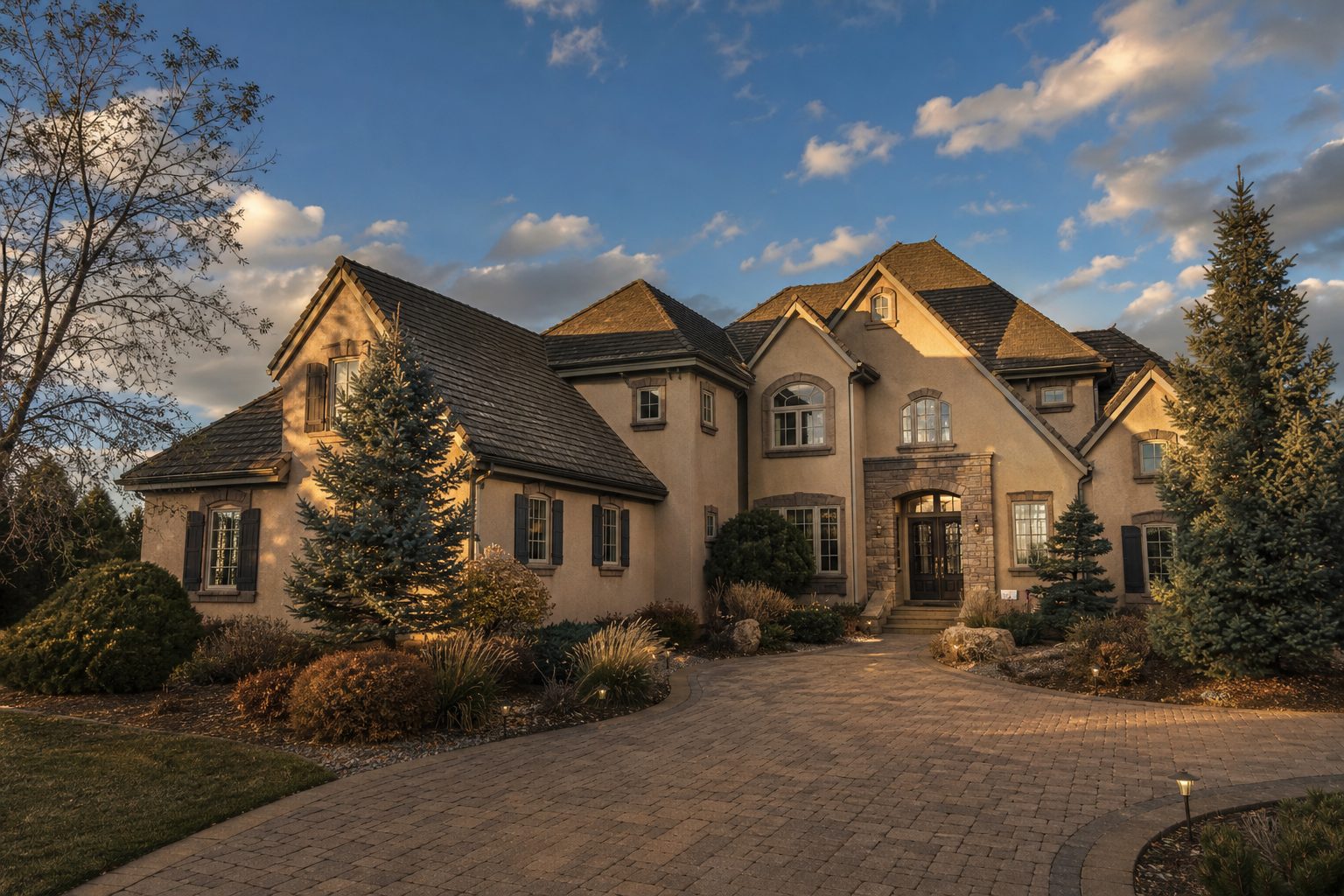
How should you negotiate post-inspection repairs when buying or selling an older luxury home in South Metro Denver?
Focus your negotiation on health, safety, and structural issues rather than cosmetic complaints, and use licensed contractor bids to anchor every repair request in real dollar figures rather than guesswork.
Why Post-Inspection Repair Negotiations Matter in Douglas County Right Now
If you own a luxury home in Castle Pines, Highlands Ranch, Lone Tree, or Castle Rock that was built in the 1990s or early 2000s, your home is now 20 to 30 years old. That means major systems, from roofing to HVAC, are reaching the end of their expected lifespans right as you consider selling. And if you are a relocation buyer moving to Colorado, you are likely eyeing these well-established neighborhoods precisely because of their mature landscaping, larger lots, and proximity to the Denver Tech Center.
Here is the challenge: Douglas County’s market, as of August 2026, sits at roughly 2.9 months of supply with a median sale price of $720,000, according to Local Alpha market data. That is a balanced-to-slight-seller’s-advantage environment. Neither side holds all the cards, which means the inspection negotiation phase is where deals are won, lost, or renegotiated. With 30 years of experience and 469 closed transactions across Douglas County and South Metro Denver, I can tell you that how you handle this phase often matters more than the original offer price.
The Most Common Inspection Issues in South Metro Denver Luxury Homes
Understanding what inspectors typically flag helps you prepare, whether you are the seller bracing for a buyer’s repair request or the buyer trying to figure out which issues are worth fighting for.
Roofing and Hail Damage
Colorado’s altitude and hail exposure shorten roof lifespans significantly. A home built in Highlands Ranch in 1998 almost certainly needs a full roof replacement if it has not already had one. Luxury homes with complex rooflines, multiple dormers, and premium materials can push replacement costs well above what you might expect from a standard home.
HVAC Systems at End of Life
Original furnaces and air conditioning units from the late 1990s and early 2000s are operating on borrowed time. Zoned systems common in larger South Metro homes, particularly in Castle Pines and Lone Tree, can cost $8,000 to $20,000 or more for replacement. If you are selling, proactively servicing your system and keeping maintenance records gives you leverage to push back on vague buyer requests.
Foundation Movement and Expansive Soils
Douglas County sits on expansive clay soils, commonly known as bentonite. Over decades, these soils swell and contract, and older luxury homes can show settlement cracks, sticking doors, or sloped floors. Foundation issues scare buyers more than almost anything else, but not every crack is a catastrophe. A structural engineer’s report, rather than a general inspector’s opinion, is the gold standard here.
Window Seal Failures and Stucco Concerns
Dual-pane windows from the 1990s frequently develop fogging between panes at Colorado’s altitude. Many South Metro luxury homes also feature stucco exteriors, which can hide moisture intrusion problems, especially on north-facing walls. Both are common, both are fixable, and both are negotiable.
How Sellers in Douglas County Should Prepare Before Listing
What I tell my clients who are preparing to list an older luxury home is this: do not wait for the buyer’s inspector to deliver surprises. You want to control the narrative.
Get a Pre-Listing Inspection
A pre-listing inspection costs a few hundred dollars and gives you the chance to address issues before they become negotiation ammunition. You can choose which items to repair, which to disclose with documentation, and which to price into your listing strategy. In a market where Douglas County’s sale-to-list ratio sits at 99.2% according to Local Alpha data as of August 2026, precision pricing that accounts for known condition issues keeps you from leaving money on the table.
Gather Documentation and Receipts
If you replaced the water heater in 2021, had the HVAC serviced annually, or re-graded drainage around the foundation, pull those records together. Documentation transforms a buyer’s concern into a non-issue. Having closed over 469 transactions, I have seen well-documented maintenance histories cut repair negotiations in half because buyers feel confident the home has been cared for.
Know What You Are Willing to Concede
Before a single repair request comes in, decide your boundaries. Are you willing to offer a credit rather than make repairs yourself? Will you replace the roof or adjust the price? Having this framework ready prevents emotional reactions when the buyer’s inspection objection lands in your inbox.
How Relocation Buyers Should Approach Repair Negotiations in South Metro Denver
If you are relocating to Colorado and purchasing an older luxury home in Douglas County, the inspection phase is your most powerful window for negotiation. But how you use it determines whether you strengthen your position or blow up the deal.
Prioritize Safety and Structural Over Cosmetic
Focus your repair request on items that affect health, safety, and structural integrity. A cracked heat exchanger in the furnace? That is a legitimate safety concern. A scratched hardwood floor? That is cosmetic. Experienced listing agents, and the sellers they represent, will push back hard on inflated repair lists that mix the two. Keep your request tight and defensible.
Use Licensed Contractor Bids, Not Inspector Estimates
Inspectors identify problems; they do not provide accurate cost estimates. If the inspection reveals a potential foundation issue, get a licensed structural engineer’s assessment. If the roof needs replacement, get two contractor bids. Real numbers anchored by licensed professionals carry far more weight at the negotiating table than an inspector’s ballpark guess.
Understand the Market Balance
Douglas County had approximately 1,812 homes for sale with a median of 21 days on market as of August 2026, per Local Alpha data. That means well-priced homes in Parker, Castle Rock, and Highlands Ranch are still moving in under three weeks. If you overplay your hand with an aggressive repair request on a desirable property, another buyer may step in. Balance your negotiation with awareness of what the market will bear.
Credit Versus Repairs: Which Strategy Works Better in Douglas County
This is one of the most common questions I get from both sides of the transaction, and the answer depends on your situation.
When a Closing Credit Makes Sense
A closing credit gives you, as the buyer, the flexibility to hire your own contractors and manage repairs after closing. It also removes the risk of the seller completing repairs with the cheapest labor available. For sellers, offering a credit avoids the hassle of coordinating contractors during the listing period. In Douglas County’s current balanced market, credits between $5,000 and $15,000 are common on older luxury homes, depending on the scope of the issues.
When You Should Insist on Completed Repairs
If the issue is a safety hazard, such as a faulty electrical panel or an active gas leak, completed repairs before closing protect you. Lenders may also require certain repairs to be completed before closing before funding the loan, particularly for FHA or VA financing, though most luxury transactions in South Metro Denver are conventional.
Negotiation Tactics That Actually Work in This Market
With 130 five-star reviews and three decades navigating Douglas County real estate, I have seen nearly every negotiation scenario play out. Here is what consistently works.
Lead With Data, Not Emotion
A repair request that says “the roof is old and needs replacement” is weaker than one that says “the roof was installed in 2001, has documented hail damage from the 2023 storm season, and two licensed roofers have estimated replacement at a specific figure.” Data wins negotiations.
Keep Communication Professional and Solution-Oriented
The post-inspection phase is where deals fall apart most often. Sellers feel attacked; buyers feel defensive. Framing your request or response as “here is how we can solve this together” preserves the deal while protecting your interests.
Know When to Walk Away
Sometimes the inspection reveals issues that fundamentally change the value proposition. If a home in Lone Tree or Castle Pines has significant foundation problems and the seller refuses to negotiate, walking away is the right move. Your inspection contingency exists for exactly this reason.
Frequently Asked Questions
What are the most expensive inspection issues in older South Metro Denver homes?
Foundation repairs related to Colorado’s expansive clay soils and full HVAC system replacements on zoned luxury homes tend to carry the highest price tags. Roof replacements on complex rooflines also add up quickly. These are the items worth investing in a licensed specialist evaluation before you negotiate, because accurate numbers are essential to fair resolution.
Should I get a pre-listing inspection before selling my Douglas County home?
Absolutely. A pre-listing inspection gives you control over the narrative. You decide what to repair, what to disclose, and how to price accordingly. In a market where Douglas County’s sale-to-list ratio is 99.2% as of August 2026 per Local Alpha data, accurate pricing that reflects condition helps you sell at or near asking.
How much negotiation leverage do buyers have in Douglas County in 2026?
Buyers have more leverage than during the peak years but less than in a full buyer’s market. With 2.9 months of supply as of August 2026 per Local Alpha data, the market is balanced. Reasonable, well-documented repair requests are likely to get a fair response, but overreaching may cost you the home.
Can a seller refuse all repair requests in Colorado?
Yes, a seller can refuse any or all repair requests. However, in a balanced market, outright refusal often causes buyers to terminate under the inspection contingency. A skilled approach involves prioritizing which requests to address and which to decline with clear reasoning.
Is a closing credit better than having the seller make repairs?
In most older luxury home transactions, a closing credit gives the buyer more control over contractor quality and timing. For sellers, credits avoid the coordination headaches of managing repairs during listing. However, lender-required repairs must be completed before closing regardless.
What foundation issues should concern me in South Metro Denver?
Horizontal cracks, bowing basement walls, and significant differential settlement are red flags. Minor hairline cracks in poured concrete foundations are common and usually cosmetic. Always hire a licensed structural engineer, not just a general inspector, to evaluate foundation concerns in Douglas County’s clay soil environment.
How does Colorado’s altitude affect home inspections?
Higher UV exposure accelerates roofing material degradation, window seal failures occur more frequently at altitude, and exterior wood elements weather faster. These are well-understood issues that experienced South Metro inspectors account for in their evaluations.
Should relocation buyers attend the home inspection in person?
Whenever possible, yes. Being present allows you to ask questions, see issues firsthand, and understand context that a written report cannot fully convey. If distance makes this impossible, request a video walkthrough from your inspector and review the report in detail with your agent.
What is a reasonable repair request on a luxury home in Castle Rock or Parker?
Focus on health, safety, and structural items. A reasonable request typically includes three to seven prioritized items backed by licensed contractor estimates. Avoid laundry lists of minor cosmetic issues, which undermine your credibility and often provoke seller resistance.
How long does the inspection negotiation phase typically take in Douglas County?
Colorado’s standard contract provides specific timelines for the inspection objection, resolution, and termination deadlines. Typically, the full inspection negotiation process takes seven to fourteen days, depending on how the contract is written. Your agent should calendar every deadline to protect your position.
The Bottom Line
Negotiating post-inspection repairs on older luxury homes in South Metro Denver requires strategy, data, and an understanding of where the market stands right now. Douglas County’s balanced conditions as of late 2026 mean neither buyers nor sellers can afford to be reckless. Sellers benefit from pre-listing preparation and documentation. Buyers benefit from focused, professional repair requests supported by licensed contractor assessments.
Whether you are selling a home you have loved for decades in Highlands Ranch or relocating to Colorado and buying your first property in Castle Rock or Lone Tree, the inspection negotiation phase is where expertise matters most. If you want guidance from someone who has navigated 469 transactions and earned 130 five-star reviews across Douglas County, call David at 303-882-7706 or visit DavidRichins.com. Getting this phase right can save you thousands and keep your deal on track.