What should luxury buyers in Douglas County know about wildfire risk and home insurance before purchasing a wooded or foothills property?
Wildfire risk and homeowners insurance should be investigated early when buying a luxury home in Douglas County, especially for wooded, foothills, or acreage properties. Evaluate the individual lot, not just the neighborhood.
Why Wildfire Insurance Matters Right Now in Douglas County
If you are shopping for a luxury home in Castle Pines Village, Larkspur, Perry Park, or rural Franktown, the insurance conversation is no longer something you handle after closing. It needs to happen before your inspection deadline, or you risk a deal-killing surprise.
Colorado’s insurance landscape has shifted dramatically. Multiple major carriers have reduced their footprint in wildfire-prone zones across the state, and Douglas County’s western foothills and timbered communities sit squarely in the Wildland-Urban Interface. With the median listing price in Douglas County sitting at $775,000 as of April 2026 and luxury properties in Castle Pines pushing well past $900,000, the financial exposure from inadequate coverage is enormous. One couple I worked with fell in love with a stunning property on acreage near Sedalia, only to discover during their inspection period that no standard carrier would write a policy at a reasonable premium. We pivoted, requested the seller’s mitigation documentation, and ultimately negotiated a solution, but the lesson was clear: insurance comes first, not last.
Having closed over 469 transactions in the Denver South Metro area across 30 years, I can tell you this is the single biggest shift I have seen in how luxury transactions unfold in Douglas County.
Property-Specific Risk Versus Neighborhood-Wide Labels in Douglas County
So does living in Castle Pines Village or Bell Mountain Ranch automatically mean you cannot get affordable insurance? Absolutely not. The goal is never to label an entire neighborhood safe or unsafe. What matters is the individual property.
What Underwriters Actually Evaluate
When an insurance carrier assesses your specific lot, they look at a detailed list of factors:
- Vegetation and fuel load within 100 feet of the structure
- Roof material and class rating (Class A fire-rated roofing is strongly preferred)
- Exterior siding and building materials (fiber cement and stone outperform wood siding)
- Access roads and emergency vehicle turnaround (single-lane dirt roads raise red flags)
- Distance to the nearest fire station and water source
- Documented mitigation history on the property
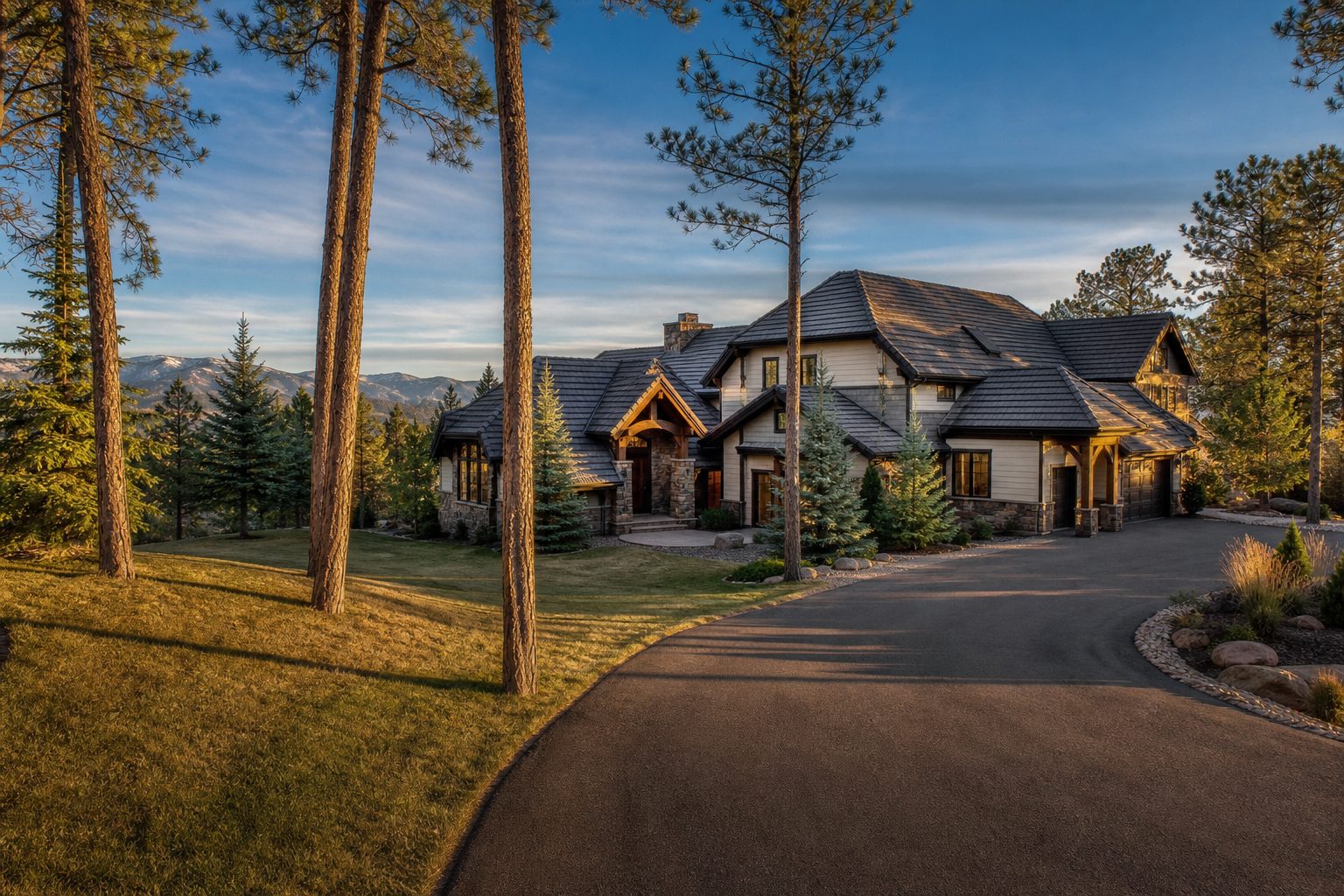
A property in The Timbers with cleared defensible space, a Class A concrete tile roof, and a well-documented mitigation history might receive a competitive quote. A neighboring lot buried in Ponderosa pine with wood shake shingles and a single-lane access road might be declined entirely. Same neighborhood, completely different outcomes.
What I tell my clients is this: do not let a wildfire risk map scare you away from a community you love. Instead, dig into the lot-level details.
Defensible Space and Mitigation: Your Best Insurance Negotiating Tool
You have more control over your insurability than you might think. Douglas County’s GreenWorks program provides local slash-and-yard-waste disposal services and recommends keeping mulch at least five feet from the home as part of a defensible space strategy. This is a practical, county-supported resource that directly impacts your insurance options.
The Three Zones of Defensible Space
- Zone 1 (0 to 15 feet from the home): This is your most critical buffer. Remove dead vegetation, keep grass mowed short, and use non-combustible landscaping materials. No woodpiles, no juniper bushes pressed against the foundation.
- Zone 2 (15 to 100 feet): Thin trees so their canopies do not touch. Remove ladder fuels (low brush that lets ground fire climb into tree canopy). Space deciduous trees at least 10 feet apart.
- Zone 3 (100 to 200 feet, for properties on slopes or larger acreage): Reduce dense stands of trees and heavy brush to slow fire approach.
The Village at Castle Pines has earned official Firewise USA Community Certification, which demonstrates proactive community-wide wildfire mitigation. When you buy in a Firewise-certified community, that designation can work in your favor during the insurance quoting process. It signals to carriers that the entire community takes risk reduction seriously, not just individual homeowners.
Roofing, Exterior Materials, and Replacement Cost: What Douglas County Buyers Overlook
You found the perfect five-acre property near Keene Ranch or rural Parker. The views are breathtaking. The custom home has soaring ceilings and a chef’s kitchen. But what is the roof made of?
Why Your Roof Drives the Insurance Conversation
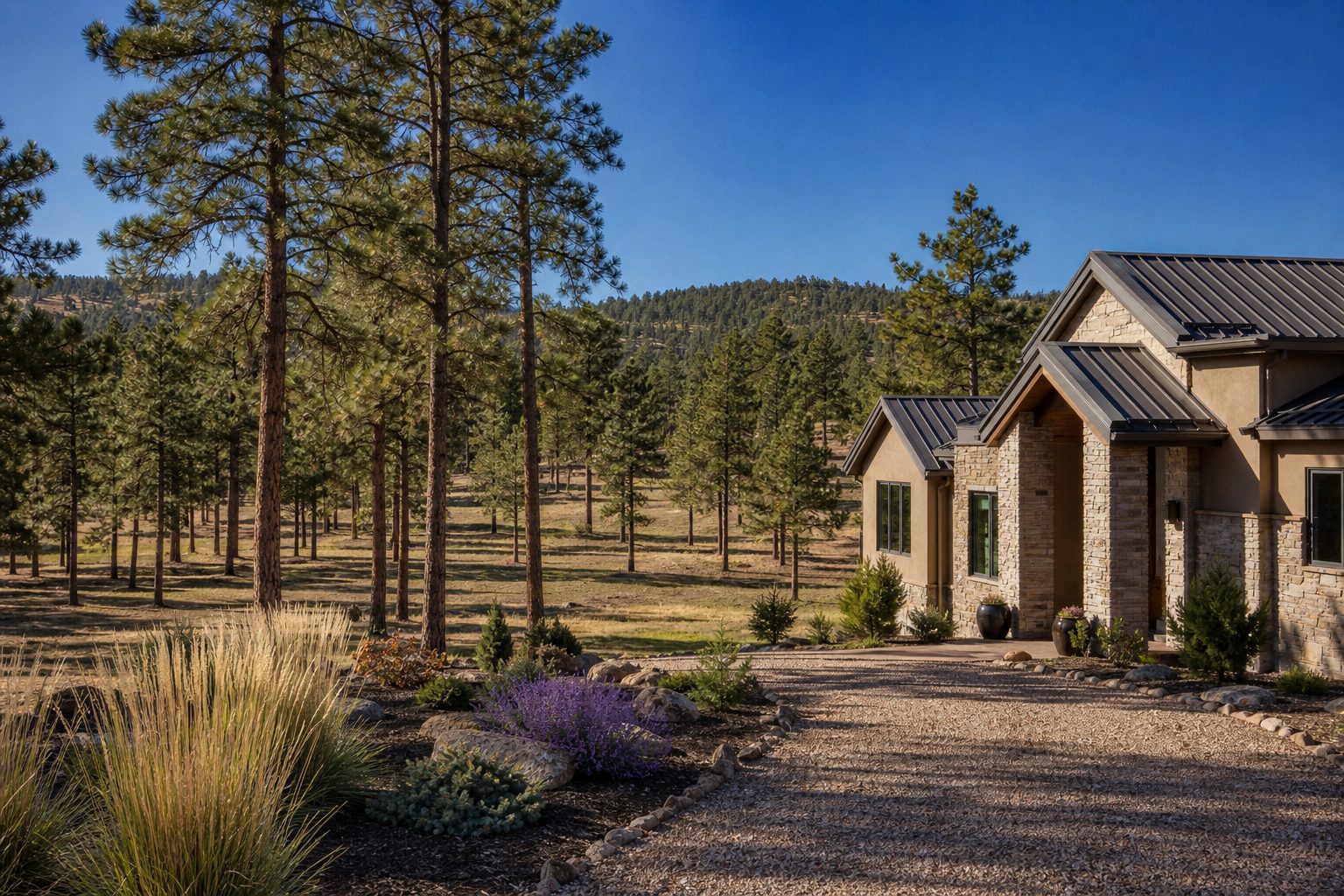
A wood shake roof on a luxury home in a WUI zone can be the single factor that makes a property uninsurable through standard carriers. Replacing a roof with Class A fire-rated materials (concrete tile, metal, or composite) before listing or shortly after purchase changes the insurance equation entirely.
Replacement Cost Calculations
For luxury properties in Douglas County, replacement cost is a critical and often misunderstood number. Your home may be valued at $1.2 million on the market, but the cost to rebuild that same custom home from the ground up, at current construction costs, might be $1.5 million or more. Underinsuring a luxury home is a devastating mistake.
What I always recommend is requesting a replacement cost estimate from a qualified builder or appraiser, independent of your insurance carrier’s estimate. With 130 five-star reviews from past clients, one recurring theme in my feedback is that this kind of proactive guidance protects buyers from expensive oversights.
A recent buyer looking at a property in Perry Park was stunned when the replacement cost estimate came back $400,000 higher than the purchase price. That gap directly affected both the premium and the required coverage limits.
Insurance Availability, Wildfire Deductibles, and Colorado’s FAIR Plan
Let us talk about what happens when standard carriers say no. Because in parts of Larkspur, Sedalia, Franktown, and the more remote stretches of Castle Pines Village, that is a real possibility.
Your Insurance Options in High-Risk Douglas County Zones
- Standard market carriers: Still available for well-mitigated properties with Class A roofs, defensible space, and reasonable emergency access. Shop multiple carriers; quotes vary dramatically.
- Surplus lines carriers: Specialty insurers that cover higher-risk properties. Premiums are higher, but coverage is available. Your insurance broker should be quoting these alongside standard carriers.
- Colorado FAIR Plan: The state’s insurer of last resort. Coverage is typically more expensive and more limited than standard policies, but it provides a backstop when no other option exists.
Wildfire Deductibles: The Hidden Cost
Even when you do secure coverage, read the fine print. Many policies in WUI zones now carry a separate wildfire deductible, often a percentage of the dwelling coverage rather than a flat dollar amount. On a $1.2 million home, a 5% wildfire deductible means you are absorbing $60,000 out of pocket before coverage kicks in. You need to know this number before you close.
How Wildfire Risk Affects Resale Value in Castle Pines, Larkspur, and Franktown
Here is a question I hear constantly: will wildfire risk hurt my resale value? The honest answer is nuanced.
Properties with documented mitigation, fire-resistant construction, and proven insurability actually hold their value exceptionally well. The Douglas County luxury market remains resilient. Castle Pines homes had a median sale price of $950,000 in March 2026, up 13.9% year over year. Luxury properties across the South Metro continue to outperform the broader Denver market.
But an unmitigated property with an uncertain insurance situation? That is a different story. Future buyers will face the same insurance hurdles you did, and if the property cannot be easily insured, the buyer pool shrinks to cash purchasers only, since lenders require proof of coverage.
Investing in mitigation is not just about safety. It is about protecting your equity.
Frequently Asked Questions
Can I get homeowners insurance on a wooded property in Castle Pines Village?
Yes, but you need to start the quoting process early. Castle Pines Village’s Firewise USA certification helps, and properties with defensible space, Class A roofing, and documented mitigation history are routinely insured through standard or surplus lines carriers. Get your quote before the inspection deadline.
What is the biggest wildfire insurance mistake Douglas County luxury buyers make?
Waiting until after going under contract to check insurance availability. A property-specific quote should be obtained before your contractual inspection deadline. Late surprises involving elevated premiums, wildfire deductibles, or outright refusals can collapse a transaction.
How much more expensive is homeowners insurance in Larkspur or Perry Park compared to Castle Rock?
Premiums vary dramatically based on the individual lot rather than the community name. A mitigated property in Perry Park could cost less to insure than an unmitigated one in Crystal Valley Ranch. Always compare lot-level quotes.
What is the Colorado FAIR Plan and when would I need it?
Colorado’s FAIR Plan is the state’s insurer of last resort for properties that no standard or surplus carrier will cover. Policies tend to be more expensive with more limited coverage. It exists as a backstop, not a first choice.
Does a Class A roof actually lower my insurance premium in Douglas County?
Yes, significantly. Class A fire-rated roofing materials (concrete tile, metal, composite) are one of the most impactful upgrades for reducing premiums in WUI zones. Some carriers will not write a policy on a wood shake roof in high-risk areas at all.
What is Douglas County’s GreenWorks program?
GreenWorks provides local slash-and-yard-waste disposal services and wildfire mitigation guidance. The county recommends keeping mulch at least five feet from the home. Participating in the program and documenting your efforts can support your insurance applications.
What is a wildfire deductible and how does it differ from a standard deductible?
A wildfire deductible is a separate, often percentage-based deductible that applies only to wildfire-related claims. On a $1 million home with a 5% wildfire deductible, you would pay $50,000 out of pocket before coverage begins, on top of your standard deductible.
Will wildfire risk reduce my home’s resale value in Franktown or Sedalia?
Not if the property is well mitigated and demonstrably insurable. Documented defensible space, fire-resistant materials, and a clean insurance history actually strengthen resale positioning. Unmitigated properties face a significantly smaller buyer pool.
Should I get a property-specific insurance quote before making an offer in Bell Mountain Ranch?
Absolutely. Contact your insurance broker before or immediately after going under contract. You need to know your premium, deductible structure, and any exclusions well before your inspection objection deadline.
How does emergency road access affect my insurance options on rural Douglas County properties?
Single-lane roads, dead-end driveways longer than a certain distance, and roads without adequate turnaround space for fire trucks all raise red flags for underwriters. Properties with two points of access and well-maintained roads fare better during the quoting process.
The Bottom Line
Buying a luxury home in Douglas County, whether it is a custom estate in Castle Pines Village, a mountain retreat near Larkspur, or acreage in Franktown, is one of the best real estate decisions you can make in Colorado. But wildfire risk and insurance are now inseparable from the buying process. Evaluate the individual lot, secure a property-specific insurance quote before your inspection deadline, invest in defensible space, and document everything.
With 30 years of experience as a Douglas County real estate agent and a top-rated Realtor with RE/Max Professionals, I help luxury buyers navigate exactly these complexities every day. If you are exploring homes in Castle Pines, Larkspur, Perry Park, Franktown, or anywhere across the Denver South Metro, call David Richins at 303-882-7706. Let us find you the right property and make sure you can protect it.