
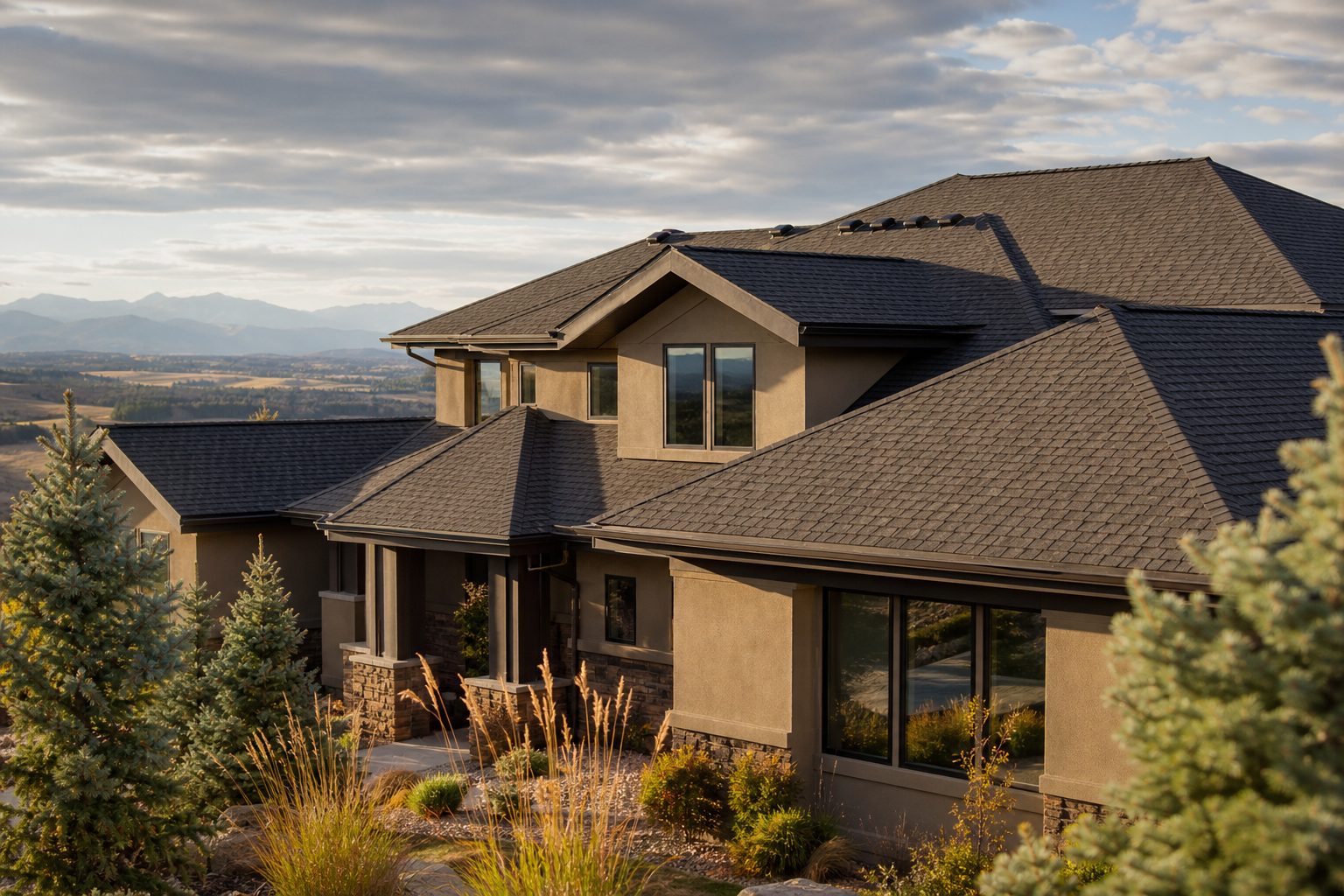
Should a Douglas County seller disclose hail damage and assign the insurance claim to a buyer before listing a luxury home?
You must disclose known hail damage under Colorado law, but you cannot actually assign an insurance claim to the buyer. The claim belongs to the named insured and ends when ownership transfers, so your real decision is whether to complete the repair, close the claim, or offer a credit before you list.
Why This Matters Right Now in Douglas County
If you own a luxury home along the Front Range, you already know the drill. Hail season can leave your roof looking like it lost a fight, and the insurance process that follows is rarely simple. What I see working with sellers in Castle Rock, Castle Pines, Lone Tree, and Parker is that this single issue, how to handle a roof claim before listing, can quietly derail a luxury transaction if the timing and paperwork are not handled correctly.
As of April 2026, the median listing price in Douglas County was $775,000, according to Federal Reserve (FRED) data. Homes in Greenwood Village and Cherry Hills Village push well past that. At these price points, a percentage-based wind and hail deductible alone can run $10,000 to $50,000, depending on your dwelling coverage. That financial reality, combined with Colorado’s updated disclosure requirements, means you cannot afford to be vague about your roof’s condition. So let me walk you through what you actually need to know.
Colorado’s Disclosure Rules Leave No Wiggle Room for Douglas County Sellers
Here is the part that surprises some sellers: you cannot skip the roof questions, even if you plan to sell as-is.
The Colorado Real Estate Commission’s Seller’s Property Disclosure form, the SPD19, became mandatory for use on January 1, 2026. It asks directly about:
- Past hail, wind, fire, or flood damage
- The roof’s age and current condition
- Any property insurance claim, whether paid or not
What I tell my clients is this: selling as-is means you are not agreeing to fix the roof. It does not mean those disclosure questions can stay blank. Known adverse material facts must be disclosed whether there is a specific item on the form or not.
Why does this matter so much in practice? Because your insurer’s claims history (known as a CLUE report) will likely surface when the buyer shops for their own homeowner’s policy. If they discover a claim you did not mention, the trust evaporates, and so does the deal. With 30 years in Colorado real estate and over 469 closed transactions, I can tell you that honesty on the front end saves far more money than it costs.
Why You Cannot Actually “Assign” a Roof Claim in Douglas County
This is the most common misconception I encounter. Sellers assume they can transfer an open insurance claim to the buyer the same way they transfer a home warranty. They cannot.
The claim belongs to you as the named insured on your policy, and it ends when your ownership does. The buyer cannot file for storm damage that predates their policy. Their carrier will deny it because their brand-new policy only covers damage that happens after they take title.
So what happens to any unpaid portion of your claim? It is generally lost at closing. That is why the sequencing matters so much.
The Two-Check System You Need to Understand
Almost every Colorado hail payout arrives in two pieces:
- Actual Cash Value (ACV) check: the first payment, minus depreciation and your deductible
- Replacement Cost Value (RCV) check: released only after the work is completed and you submit a final invoice to your insurer
If you list before completing the repairs, that second check never comes. You leave money on the table.
What the Numbers Look Like on a Luxury Home
Here is where Douglas County luxury sellers really feel the squeeze. Most major carriers in Colorado have moved to percentage-based wind and hail deductibles, typically 1% to 5% of dwelling coverage.
- $800,000 dwelling coverage, 2% deductible: $16,000 out of pocket before the carrier contributes
- $1,000,000 dwelling coverage, 2% deductible: $20,000 out of pocket
- $1,200,000 dwelling coverage, 5% deductible: $60,000 out of pocket
Many sellers still believe they have a flat $1,000 or $2,500 deductible and discover the real number only at claim time. If you are even thinking about selling, pull your declarations page now and check.
Your Three Real Options Before Listing a Luxury Home in Douglas County
Since assigning the claim is off the table, you have three practical paths. Each one works, but the right choice depends on your timeline, your deductible, and the severity of the damage.
Option 1: Complete the Roof Replacement Before Listing
This is usually my recommendation for luxury listings in Castle Rock, Castle Pines, and Lone Tree. A new roof with transferable warranty photographs beautifully, eliminates buyer objections, and lets you recover that second RCV check from your insurer. In a market where Douglas County homes had a median of 40 days in MLS as of April 2026 (per REcolorado data), removing the roof question entirely can shorten your marketing time.
Option 2: Offer a Closing Credit in Lieu of Repairs
If your timeline is tight, you can disclose the damage, provide the insurance documentation, and offer a credit at closing so the buyer can handle the replacement. The risk here is that buyers may negotiate the credit higher than your actual cost would have been.
Option 3: Price the Home Accordingly and Sell As-Is
When the deductible eats most of the insurance estimate, completing the claim may not produce a meaningful payout. In that case, pricing the home to reflect the roof’s condition and disclosing everything transparently can be the cleanest path forward. But remember: as-is does not remove the disclosure obligation.
How This Affects Relocation Buyers Coming to Douglas County
If you are relocating to Colorado and evaluating a luxury property in South Metro Denver, the hail and insurance landscape is probably unlike anything you have dealt with before. Denver’s overall cost of living runs approximately 20% to 38% lower than Los Angeles, according to multiple cost-of-living indices, but the insurance picture has its own learning curve.
Here is what you should know as a buyer:
- You cannot inherit the seller’s open claim. If the roof has unresolved damage, your only leverage is negotiating a credit, a repair, or a price reduction before closing.
- Your new policy starts fresh on closing day. It covers only damage that occurs after you take title.
- Ask about the deductible structure. Percentage-based deductibles are standard on the Front Range, and on a high-value home, a single hailstorm could cost you $20,000 or more out of pocket.
Having guided buyers through this exact scenario many times across my 30-year career, what I always recommend is getting a pre-purchase roof inspection by a certified inspector (not a roofing contractor with a sales incentive) so you understand exactly what you are buying.
Why Contractor Deductible Offers Are a Red Flag in Colorado
One more piece of the puzzle. Colorado law, specifically C.R.S. 6-22-105, bars roofing contractors paid from insurance money from paying, waiving, or rebating any part of your deductible. Any contractor who offers to “cover your deductible” is asking you to participate in insurance fraud.
If a contractor approaches you with that pitch while you are prepping a luxury listing in Douglas County, walk away. With 130 five-star reviews from past clients, I have built my reputation on keeping sellers out of exactly these kinds of traps.
Frequently Asked Questions
Does Colorado law require me to disclose hail damage on a luxury home?
Yes. The SPD19 form, mandatory as of January 1, 2026, specifically asks about hail damage, roof condition, roof age, and any insurance claim filed. Known adverse material facts must be disclosed even if the form does not have a specific line item for them. Selling as-is does not change this obligation.
Can I transfer my open insurance claim to the buyer at closing?
No. The claim belongs to you as the named insured, and it terminates when your ownership ends. The buyer’s new policy only covers damage occurring after their policy start date. Any unpaid portion of your claim is generally lost at closing.
What is the two-check system for Colorado hail claims?
Your insurer issues an Actual Cash Value check first, minus depreciation and your deductible. The second check, the recoverable depreciation, is released only after repairs are completed and you submit the final invoice. If you sell before completing repairs, you forfeit the second payment.
How much is a typical hail deductible on a Douglas County luxury home?
Most Colorado carriers now use percentage-based deductibles of 1% to 5% of dwelling coverage. On a home insured for $1,000,000, a 2% deductible means $20,000 out of pocket before the insurer contributes anything.
Should I replace the roof before listing my Douglas County home?
In most cases, completing the replacement before listing is the strongest strategy. It eliminates buyer concerns, lets you recover the full insurance payout, and presents the property with a new roof and transferable warranty. Your timeline and deductible math should guide the final decision.
Is it legal for a roofer to waive my deductible in Colorado?
No. Under C.R.S. 6-22-105, roofing contractors paid from insurance proceeds cannot pay, waive, or rebate any part of the homeowner’s deductible. Accepting such an offer could expose you to fraud liability.
Will the buyer’s insurer discover my past claims?
Very likely. Insurers pull CLUE reports that show prior claims on the property. If your buyer discovers an undisclosed claim during their insurance shopping, it can jeopardize the transaction and expose you to legal liability.
What if my deductible is larger than the insurance estimate?
When the deductible eats most or all of the estimate, filing a claim may not produce meaningful proceeds. In that situation, pricing the home to reflect the roof condition and disclosing transparently may be the better approach.
How does hail damage affect my listing price in Douglas County?
Unresolved roof damage gives buyers leverage to negotiate below market value. As of April 2026, the median closed price in Douglas County was $715,000 (per REcolorado), down 1.4% year over year. Adding a roof issue on top of a softening trend can compound price pressure unnecessarily.
How long does a roof replacement take before I can list?
A typical residential roof replacement in Douglas County takes one to three days of active work once materials arrive. However, scheduling with a reputable contractor and completing the insurance process can add several weeks. Start early if you are targeting a specific listing window.
The Bottom Line
You are legally required to disclose known hail damage when selling in Douglas County, and you cannot transfer your insurance claim to the buyer. That means the smartest move is usually to file the claim, complete the repairs, recover your full payout, and list with a clean roof and a transferable warranty. If timing or deductible math makes that impractical, a transparent credit or as-is pricing with full disclosure can still get the job done.
This is exactly the kind of decision where local expertise makes the difference. With 30 years of experience selling homes across South Metro Denver and Douglas County, I have helped sellers navigate this scenario more times than I can count. If you are preparing to list a luxury home and have questions about your roof, your claim, or your options, call me at 303-882-7706 or visit DavidRichins.com. Let’s get it right before you go to market.