What do builder rate buydowns in Macanta and Sterling Ranch actually save you, and are they worth it?
Builder rate buydowns in these South Denver Metro communities can reduce your monthly payment by hundreds of dollars and save you tens of thousands over the loan’s life, but only if you understand the math behind the marketing.
Why This Matters Right Now in the South Denver Metro
Here is the reality. With 30-year conventional rates sitting around 6.73% as of mid-August 2026, according to current Colorado lender surveys, every fraction of a point you shave off your rate translates into real money. And builders in communities like Macanta in Castle Rock and Sterling Ranch in Littleton know this.
That is exactly why rate buydowns have become the single most prominent incentive in new construction across Douglas County. Builders are not just throwing in upgraded countertops anymore. They are subsidizing your financing because they know the rate environment is the biggest barrier standing between you and a signed contract.
What I tell my clients is simple: the incentive only matters if you understand what it is actually doing to your total cost of ownership. With 30 years of experience in this market and over 469 closed transactions across the South Denver Metro, I have watched builder incentive strategies evolve through multiple rate cycles. This one is no different. The savings are real, but the fine print matters.
How Builder Rate Buydowns Work in Castle Rock and Sterling Ranch
Before you can evaluate what a buydown saves you, you need to understand the mechanics. A rate buydown is not a discount on the home price. It is an upfront payment the builder makes to the lender to reduce your interest rate.
Temporary vs. Permanent Buydowns
The two most common structures you will see in Macanta and Sterling Ranch are:
- 2-1 Temporary Buydown: Your rate starts 2 points below market in year one, 1 point below in year two, then adjusts to the full rate for the remaining 28 years. So if your base rate is 6.75%, you would pay 4.75% in year one, 5.75% in year two, then 6.75% for the rest.
- Permanent Buydown (1-0): The builder pays to permanently reduce your rate, typically by 0.5% to 1.0%, for the entire life of the loan. This costs the builder more upfront but delivers sustained savings to you.
Why Builders Prefer Buydowns Over Price Cuts
This is where it gets strategic. Builders rarely cut base prices because it devalues every other home in the community, including the ones they already sold. A rate buydown lets them offer you a significant financial benefit without dropping recorded sale prices. It protects their comps. It protects your future resale value. And it moves inventory.
So when you see a builder in Sterling Ranch advertising “$15,000 toward rate buydown,” understand that this is not generosity. It is calculated. That does not make it bad for you. It just means you need to run the numbers yourself, or work with someone who will.
What a Buydown Actually Saves You in Macanta
Macanta sits in Castle Rock, where the median home price hovers around $595,000 according to recent community-level data. New construction in Macanta typically ranges from the mid-$500s to the low $800s, depending on the builder and floorplan.
Let me walk you through a realistic scenario. Say you are purchasing a home at $650,000 with 20% down, giving you a $520,000 loan amount.
- At 6.73% (no buydown): Your principal and interest payment lands around $3,375 per month
- With a 2-1 buydown (year one at 4.73%): Your first-year payment drops to roughly $2,710 per month
- Year one savings: Approximately $665 per month, or nearly $7,980 over those first 12 months
That is real money, especially if you are a move-up seller from Douglas County carrying the stress of two housing payments during a transition period. The 2-1 buydown gives you breathing room in year one, which is typically when moving costs, furniture purchases, and new homeowner expenses hit hardest.
What Sterling Ranch Builders Are Offering and What It Means for Your Budget
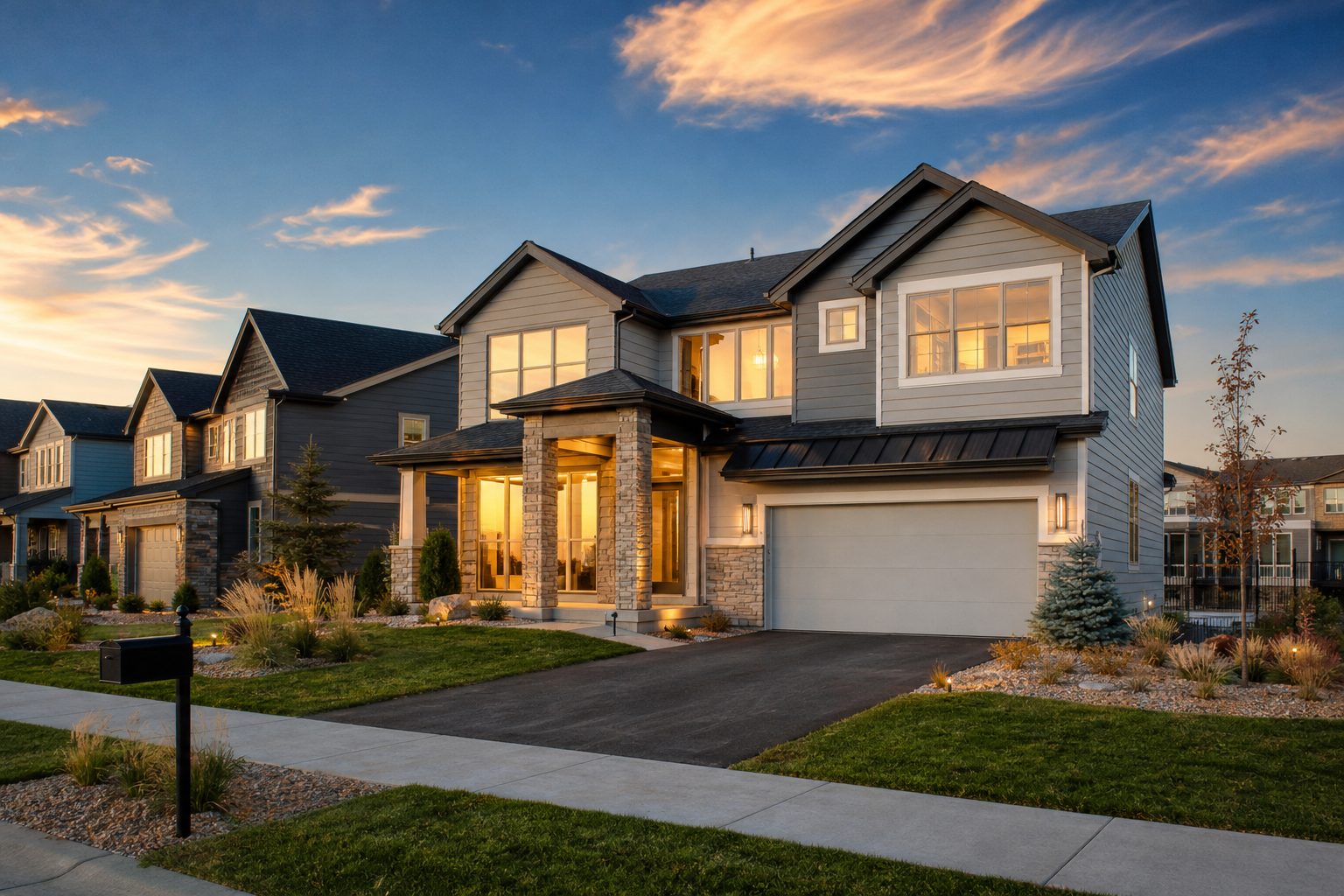
Sterling Ranch is one of the top-selling master-planned communities in the entire country, ranking number one in Colorado for five consecutive years according to community sales data. It is currently only about 20% built out of an approved 16,050 homes, which means builders there are competing aggressively for your contract.
Here is what the current price landscape looks like based on active builder listings as of November 2026:
- Skyline Collection: Starting from $615,900 for 1,868 to 2,929 square feet
- Prelude by Tri Pointe: Starting from $670,900 for 1,864 to 2,564 square feet
- Ascent Village by David Weekley: Starting from $748,990 for 2,272 to 3,499 square feet
- Trumark Duet: Approximately $599,900 to $649,900 for around 2,028 square feet
- Trumark Rhapsody: Approximately $759,900 to $824,900 for 2,161 to 2,563 square feet
- Enclave at Parkvale: Starting from $1,449,900 for 4,859 to 5,270 square feet
With this range, the buydown conversation shifts depending on your price point. On a $750,000 purchase with 20% down (a $600,000 loan), a permanent 1-point rate reduction from 6.73% to 5.73% would save you approximately $385 per month. Over 30 years, that is over $138,000 in total interest savings.
Does that number get your attention? It should. But there is a catch I always flag for my clients.
The Catch: What Builders Do Not Always Tell You About Buydowns
Not every buydown is created equal, and not every one is actually in your best interest.
Watch the Base Price
Some builders inflate the base price of the home to cover the cost of the buydown incentive. If the home is priced $20,000 above comparable inventory and the builder is offering a $15,000 buydown, you are essentially financing your own discount. Having closed over 469 transactions in this market, I have seen this play out dozens of times. Always compare the base price against recent closed sales in the same community and neighborhood.
Preferred Lender Requirements
Most builders tie their buydown incentives to using the builder’s preferred lender. That lender may or may not offer the most competitive terms beyond the buydown itself. You need to compare the full loan estimate, including origination fees, closing costs, and the annual percentage rate, not just the note rate.
Refinance Assumptions
A 2-1 temporary buydown assumes you will either refinance before year three or comfortably absorb the full payment. If rates stay elevated and you cannot refinance, your payment jumps significantly in year three. Make sure your budget accounts for the full rate, not just the teaser.
Why This Decision Is Different for Relocation Buyers Moving to Colorado
If you are relocating to Colorado and looking at Macanta or Sterling Ranch, the buydown calculation carries extra weight. You are likely selling a home in another state, navigating an unfamiliar market, and trying to make apples-to-apples comparisons that do not quite line up.
Here is what you need to know. Colorado’s flat 4.4% income tax and property tax rates around 0.50% are favorable compared to many origin states, according to South Denver cost-of-living data. That means your overall housing cost here may be lower than the sticker price suggests, especially after factoring in a builder buydown.
What I consistently tell relocation clients is this: do not evaluate the buydown in isolation. Look at your total monthly outlay, including property taxes, HOA fees, insurance, and the net difference from your current state’s tax burden. That full picture is what determines whether the buydown makes the home affordable or just makes it look affordable.
With 130 five-star reviews from past clients and recognition as a Top Realtor in Colorado, I have guided hundreds of buyers through exactly this analysis. The numbers always tell the story if you know where to look.
Frequently Asked Questions
What is a builder rate buydown in Sterling Ranch?
A builder rate buydown is when the builder pays an upfront cost to your lender to reduce your mortgage interest rate, either temporarily for the first one to two years or permanently for the full loan term. Builders in Sterling Ranch use this incentive to make monthly payments more attractive without reducing the home’s sale price, which protects property values across the community.
How much can a 2-1 buydown save me on a Macanta home?
On a $650,000 home in Macanta with 20% down, a 2-1 buydown could save you approximately $665 per month in year one and roughly $335 per month in year two compared to the full market rate. Total savings over those two years could approach $12,000, depending on your specific rate and loan terms.
Do I have to use the builder’s preferred lender to get the buydown?
In most cases, yes. Builders in both Macanta and Sterling Ranch typically tie their rate buydown incentives to using their affiliated lender. You should still get a competing loan estimate from an outside lender to verify that the preferred lender’s total costs, including fees and closing costs, are genuinely competitive.
Is a permanent buydown better than a temporary one?
It depends on how long you plan to stay. If you expect to live in the home for seven or more years, a permanent buydown generally delivers more total savings. If you anticipate refinancing or selling within three to five years, a 2-1 temporary buydown preserves more of your upfront capital and still provides meaningful short-term relief.
Can I negotiate a bigger buydown with a Sterling Ranch builder?
You can often negotiate enhanced incentives, especially on inventory homes that have been sitting. Builders with completed or near-complete homes have carrying costs and may be willing to increase the buydown amount or layer it with additional closing cost credits. Working with a buyer’s agent who understands builder negotiation, particularly in a market where Douglas County median days on market have climbed to 21 days according to recent data, gives you leverage.
Do buydowns affect my home’s appraised value?
No. The buydown is a financing incentive, not a price concession, so it does not reduce the appraised value. This is actually one of the reasons builders prefer buydowns over price reductions. The recorded sale price stays intact, which supports comparable sales for the entire community.
What happens if I refinance after a 2-1 buydown?
If you refinance before the buydown period ends, you lose the remaining subsidized rate and move to whatever rate you qualify for at the time. The unused portion of the buydown funds held in escrow is typically forfeited. Make sure this is factored into your refinance decision timeline.
How do builder buydowns compare to buying discount points myself?
Builder buydowns effectively work the same way as buying discount points, but the builder covers the cost. Buying your own points at market rates typically costs about 1% of the loan amount per point. If a builder offers this as an incentive, you are receiving the equivalent value without the out-of-pocket expense.
Are there buydown options for homes over $1 million in Sterling Ranch?
Yes. Builders in Sterling Ranch’s higher-end neighborhoods like the Enclave at Parkvale, with homes starting from $1,449,900, also offer buydown incentives. The dollar value of the savings increases proportionally with the loan amount, making buydowns especially impactful on luxury new construction purchases.
Should move-up sellers from Douglas County prioritize buydowns when purchasing?
Absolutely. If you are selling a home in Highlands Ranch, Castle Pines, or Parker where you locked in a rate between 3% and 4% during 2020 to 2022, a builder buydown is one of the most effective tools to close that rate gap. It will not get you back to 3%, but it can meaningfully reduce the monthly payment shock on your next home.
The Bottom Line
Builder rate buydowns in Macanta and Sterling Ranch are not marketing fluff. They represent genuine savings that can total tens of thousands of dollars over the life of your loan. But the value depends entirely on the specifics: your purchase price, loan amount, how long you plan to stay, and whether the builder has inflated the base price to absorb the incentive cost.
You need someone who will run the actual numbers, compare the builder’s preferred lender against the open market, and make sure the buydown serves your financial goals rather than just the builder’s sales targets. With 30 years in the South Denver Metro market and 469 closed transactions, that is exactly what I do for every client. If you are considering new construction in Macanta or Sterling Ranch, call me at 303-882-7706 or visit DavidRichins.com. Let’s make sure the math works before you sign anything.