Deciding between Highlands Ranch and Parker for your next home in the South Denver Metro?
Both communities sit in Douglas County with top-rated schools, strong home values, and family-focused lifestyles, but they serve different buyers. Highlands Ranch offers a tighter, master-planned experience with faster resale. Parker gives you more square footage and a small-town feel with room to spread out.
Why This Matters Right Now in Douglas County
The Douglas County housing market in 2026 is not the same market it was two years ago. According to the Colorado Association of REALTORS, the median single-family sale price in Douglas County was $735,000 as of September 2026, down 2.0% from the prior year. Homes are sitting longer, with a median of 21 days on market (up 16.7% year over year per FRED and LocalAlpha data), and 56.64% of listed homes have taken a price reduction.
What does that actually mean for you? It means your choice between Highlands Ranch and Parker will shape not only your daily lifestyle but also your equity position, your negotiating power, and your timeline. Whether you are selling a home elsewhere in Douglas County to move up, or you are relocating to Colorado from out of state, the differences between these two communities are real, measurable, and worth understanding before you commit. With 30 years of experience and 469 closed transactions across the South Denver Metro, I can tell you these are two of the most common communities my clients debate. Let me walk you through the specifics.
Home Prices in Highlands Ranch vs. Parker: Where Your Dollar Goes Further
You will hear people say these two communities are “about the same price.” That is only half true.
In Highlands Ranch, the median single-family home price hit $718,500 as of February 2026, up 3.5% year over year, according to DMAR and REcolorado data. The average sale price runs even higher at $912,119, pulled up by luxury neighborhoods like BackCountry and Firelight.
Parker’s median single-family price came in at $717,450 in Q1 2026 per REcolorado MLS data, but by mid-summer, sources showed it softening into the $640,000 to $680,000 range. Year over year, Parker prices have declined modestly: roughly 1.9% to 2.85% depending on the data window and source.
Here is the critical difference. In Parker, the average home exceeds 2,900 square feet, significantly above the national average of 1,933 square feet. You are getting more house per dollar in Parker, especially in neighborhoods like Stonegate ($500K to $800K+), Meridian Village (mid-$500K to $750K), and Bradbury Ranch ($500K to $800K). In Highlands Ranch, the sweet spot for a 3 to 4 bedroom single-family home runs $550K to $800K, but you are typically looking at smaller lots and tighter spacing.
So if raw square footage and elbow room matter to you, Parker stretches your budget further. If walkability and community infrastructure matter more, Highlands Ranch delivers at a similar price point.
Market Speed and Resale Liquidity in Highlands Ranch and Parker
This is where the two communities diverge sharply, and it is something I talk about constantly with my clients.
Highlands Ranch resale behaves like a seller’s market. In Q1 2026, well-priced homes went under contract in a median of just 17 days with only 1.8 months of supply. By late summer, homes were still moving to pending in around 21 days. Over the past 12 months, 1,428 residential properties sold in Highlands Ranch. That is genuine depth and liquidity.
Parker tells a different story. Average days on market range from 36 to 71 days depending on price point and neighborhood, with a sale-to-list price ratio of 98%. You have more negotiating room as a buyer in Parker, but as a seller, you need to be realistic about timing.
What I tell my clients who are selling in one South Denver community and buying in the other: if you are sitting on a Highlands Ranch home, you are likely to sell faster than you can close on a Parker replacement. Plan accordingly. If you are selling a Parker home and moving into Highlands Ranch, budget for a tighter, more competitive buying experience.
Schools, Recreation, and Daily Life: Highlands Ranch and Parker Compared
Both communities fall within the Douglas County School District, consistently rated among Colorado’s top 3 districts. So you are not making a bad school decision either way. But there are differences worth noting.
Highlands Ranch Schools
- Copper Mesa Elementary: 9/10 (GreatSchools)
- Highlands Ranch High School: 9/10
- ThunderRidge High School: 9/10
- STEM School Highlands Ranch earned an “A” from Niche, ranking 43rd out of 1,903 schools nationally and 3rd in Colorado for college-prep public high schools per Niche’s 2027 rankings
Parker Schools
Parker feeds into the same DCSD system (rated A- by Niche), with strong options in neighborhoods like Stonegate and Canterberry Crossing. The district is Colorado’s 3rd largest.
Recreation and Community Feel
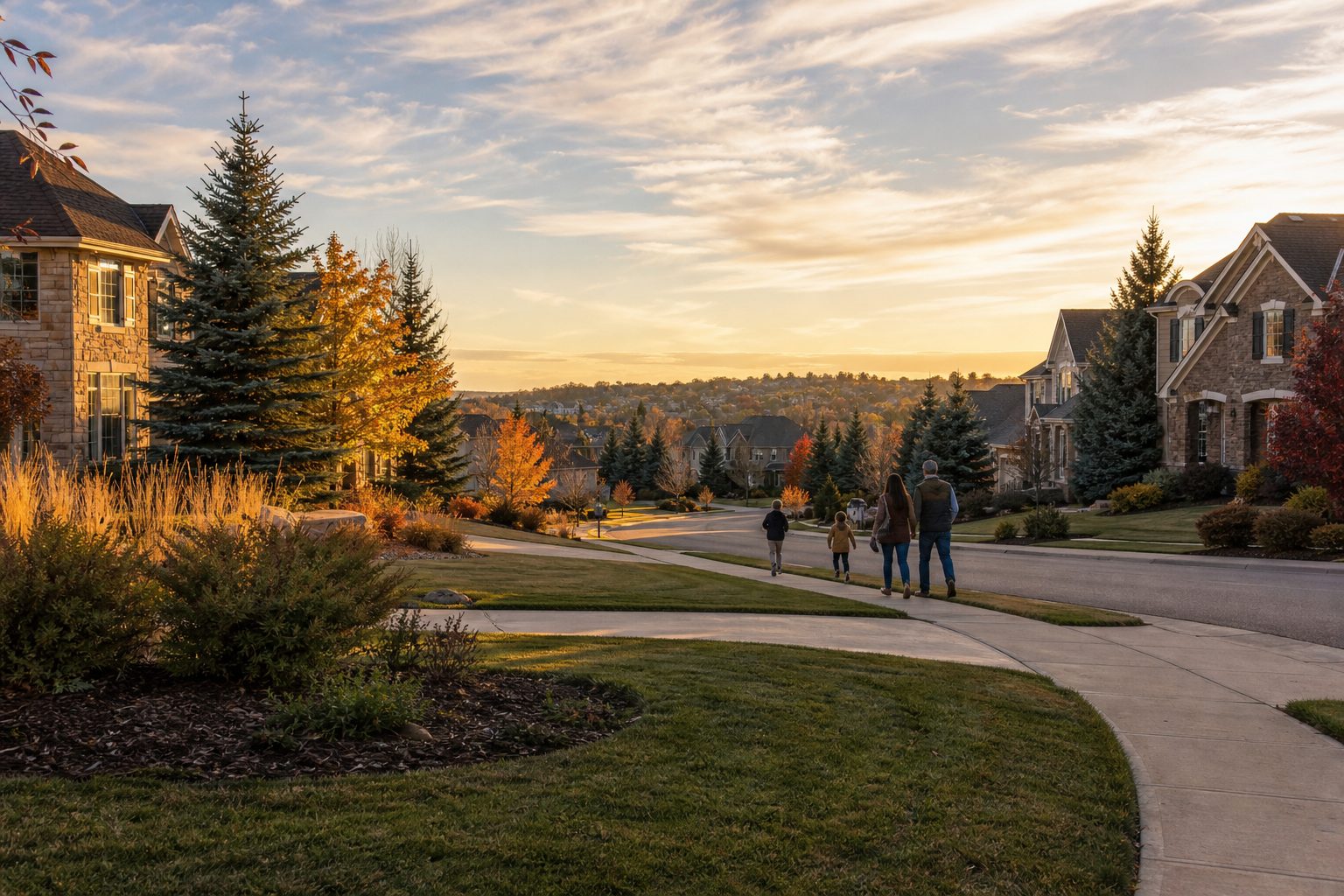
Highlands Ranch is master-planned to its core. The Highlands Ranch Metro District manages 2,644 acres of open space, 70+ miles of trails, 26 public parks, and four dog parks. Every homeowner gets access to four recreation centers through the HRCA, funded by a mandatory $696 annual assessment (billed $174 per quarter as of 2026). You also get the Backcountry Wilderness Area and landmarks like the Highlands Ranch Mansion.
Parker’s recreation is less centralized but no less appealing. You will find a network of parks, regional trails connecting to the Cherry Creek Trail system, and a walkable downtown Mainstreet with local restaurants, shops, and community events. Parker has more of a traditional small-town identity compared to Highlands Ranch’s planned uniformity.
Commute Times and Location Logistics from Highlands Ranch and Parker
Your commute is probably the single biggest lifestyle variable between these two communities.
Highlands Ranch sits closer to metro Denver, with a 25 to 50 minute commute to downtown and a mean commute of approximately 24 to 25 minutes. C-470 connects to I-25 for access to Denver and the Denver Tech Center. The Lincoln Station light rail is nearby if you want a car-free option into downtown.
Parker adds distance. Expect a 30 to 55 minute commute to downtown Denver, and there is no direct light rail access. If you work in the DTC or along the I-25 corridor, Highlands Ranch shaves 10 to 15 minutes off your daily drive. If you work remotely or south along the corridor toward Castle Rock, that gap narrows considerably.
Financing and Affordability in Douglas County: What You Need to Know
Here is a detail that catches relocation buyers off guard. The 2026 conforming loan limit for Douglas County is $862,500. Many homes in both communities, particularly in Parker’s Pinery, Stonegate, and Canterberry Crossing neighborhoods and Highlands Ranch’s BackCountry and Westridge, push into jumbo territory if you are putting less than 20% down.
The median household income in Highlands Ranch is $135,000. Parker’s median household income sits at approximately $130,640. Both communities have price-to-income ratios around 5x, which is elevated but workable for dual-income professional households, especially with rates currently in the 6.6% to 6.8% range per Freddie Mac data as of August 2026.
Parker’s cost of living index is 123.15, meaning you will pay about 23% more than the national average for typical goods and services. Highlands Ranch runs in a similar range. Neither community is a bargain, but both offer strong long-term value relative to other Colorado markets.
Frequently Asked Questions About Highlands Ranch vs. Parker
Is Highlands Ranch more expensive than Parker in 2026?
As of early 2026, the median single-family home prices are comparable, with Highlands Ranch at $718,500 and Parker at $717,450 per REcolorado MLS data. However, Parker’s median softened into the $640,000 to $680,000 range by mid-summer, while Highlands Ranch has held firmer. Your dollar buys more square footage in Parker.
Which community sells faster, Highlands Ranch or Parker?
Highlands Ranch sells significantly faster. The median days on market in Q1 2026 was just 17 days with 1.8 months of supply. Parker homes average 36 to 71 days on market depending on neighborhood and price point.
Are the schools the same in Highlands Ranch and Parker?
Both communities are served by Douglas County School District, one of Colorado’s top 3. Highlands Ranch has specific standouts like STEM School Highlands Ranch (ranked 3rd in Colorado for college-prep by Niche) and ThunderRidge High School (9/10 on GreatSchools).
What is the HRCA assessment in Highlands Ranch?
Every homeowner in Highlands Ranch pays $696 annually (billed $174 per quarter as of 2026) to the Highlands Ranch Community Association. This funds four recreation centers, trails, and open space. Many sub-neighborhoods carry additional HOA dues on top of this.
Does Parker have an HOA?
Most Parker neighborhoods have individual HOAs with varying dues, but there is no community-wide mandatory assessment like the HRCA in Highlands Ranch. Your costs will depend on the specific subdivision.
Which community has a shorter commute to Denver?
Highlands Ranch, with a mean commute of approximately 24 to 25 minutes compared to Parker’s 30 to 55 minutes to downtown Denver. Highlands Ranch also has proximity to Lincoln Station light rail.
Can I use a conforming loan in both communities?
The 2026 conforming loan limit for Douglas County is $862,500. Many homes in both communities fall within this limit, but luxury neighborhoods in Parker (Pradera, Canterberry Crossing) and Highlands Ranch (BackCountry, Westridge) may require jumbo financing.
How much have home values appreciated in Highlands Ranch?
According to market data, Highlands Ranch values increased from approximately $420,000 in 2020 to $620,000 by Q4 2025, a roughly 48% increase over five years. Year-over-year appreciation through mid-2026 was approximately 1.98%.
Is Parker a good fit for families relocating from out of state?
Parker is one of the top relocation destinations in the South Denver Metro. The average home exceeds 2,900 square feet, which is a significant upgrade for families coming from higher-cost markets where that size is unattainable.
Which community has better recreation amenities?
Highlands Ranch offers a more centralized, master-planned recreation system: 2,644 acres of open space, 70+ miles of trails, four rec centers, and 26 public parks. Parker offers a more independent recreation network with strong trail connectivity and a walkable downtown district with local character.
The Bottom Line on Choosing Between Highlands Ranch and Parker
You are making a decision between two of the strongest communities in Douglas County. Moving to Highlands Ranch gives you speed of resale, centralized amenities, slightly better commute access, and a proven master-planned infrastructure. Parker gives you more home for the money, a quieter small-town feel, and more negotiating room in the current market.
Neither is the wrong choice. The right choice depends on your priorities: commute time, lot size, lifestyle preference, and how quickly you need your home to sell if life changes down the road. Having closed 469 transactions and earned 130 five-star reviews from clients making exactly these decisions across the South Denver Metro, I am here to walk you through the numbers that matter to your specific situation. Call me at 303-882-7706 or visit DavidRichins.com and let’s figure out which community fits your next chapter.