
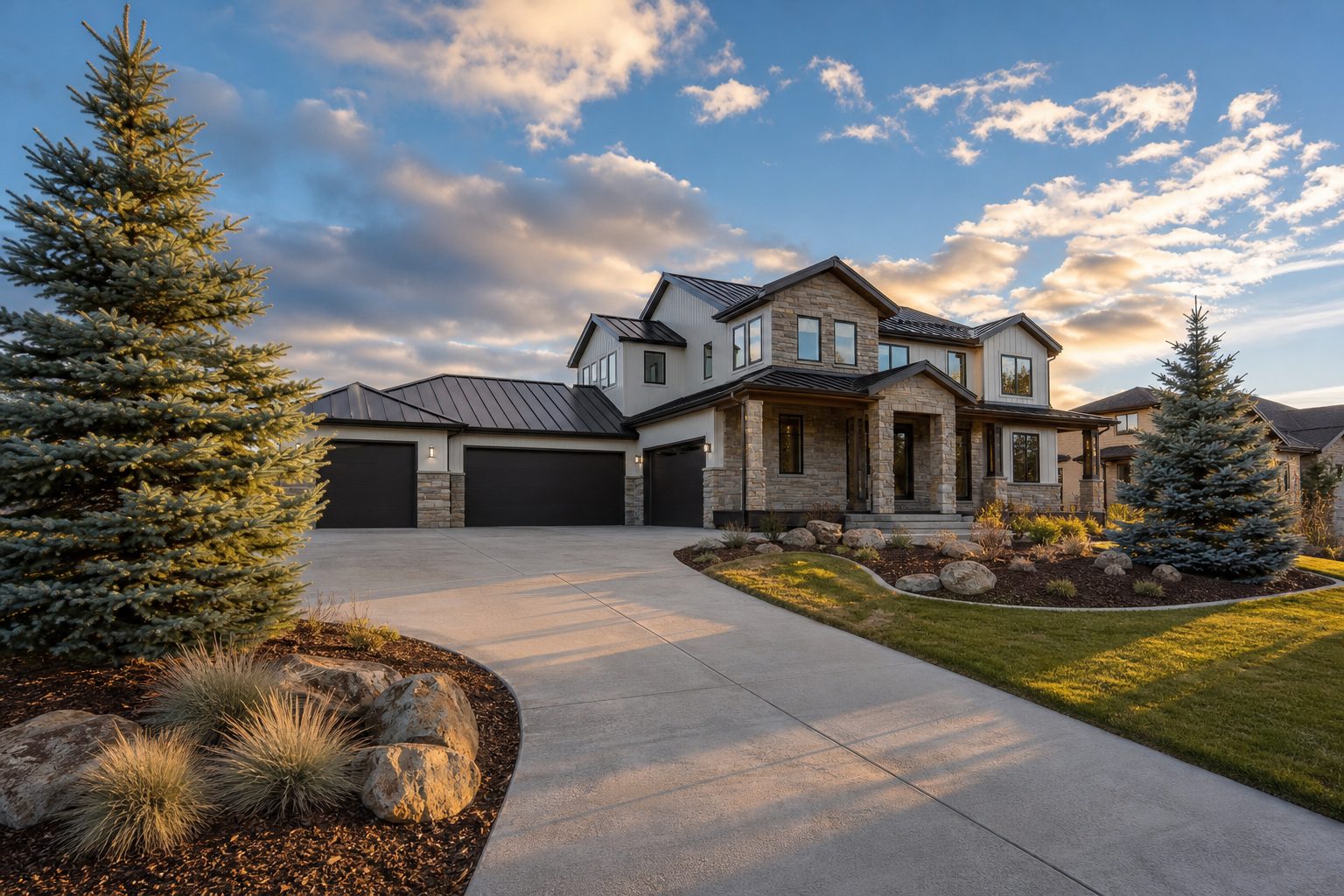
When you receive multiple offers on your Douglas County home, how do you determine which one is truly the best, and why isn’t it always the highest price?
The best offer is the one most likely to close on your terms, on time, and with the fewest financial surprises. That means looking beyond the price tag to evaluate financing strength, appraisal gap coverage, contract terms, and earnest money deposits together.
Why This Matters Right Now in Douglas County
Douglas County’s 2026 market sits in an interesting position. While the broader Denver metro saw home sales fall 18% in September 2026 compared to a year earlier (per REcolorado), Douglas County has stayed considerably tighter. The county carries roughly 2.9 months of supply with a median of 21 days on market, according to LocalAlpha as of August 2026. Well-priced, move-in-ready homes in Parker, Castle Rock, and surrounding areas are still drawing competition inside three weeks.
So if you are pricing your home correctly and presenting it well, you may very well find yourself sitting across the table from two, three, or even more offers. The question then becomes: which one do you actually accept?
Having closed over 469 transactions across 30 years in the Douglas County and South Metro market, I can tell you that the highest offer is not always the best offer. Let me walk you through the framework I use with my clients to evaluate every piece of the puzzle.
How Financing Type Affects Your Risk as a Douglas County Seller
Not all buyer financing is created equal, and in a market where the median sale price is $720,000 (as of August 2026, per FRED/Federal Reserve Economic Data), financing type matters more than you might expect.
Here is how the most common financing types stack up from your perspective as a seller:
- Cash offers carry the lowest risk. There is no lender involved, no appraisal contingency to worry about, and closing timelines can compress significantly. In Douglas County’s luxury neighborhoods like Castle Pines and Lone Tree, cash offers are more common.
- Conventional loans with 20% or more down are the most common in Douglas County and carry low risk. Buyers at this level are strongly qualified and have significant skin in the game.
- Conventional loans with 3% to 5% down are moderate risk. The buyer is qualified, but tighter debt-to-income ratios mean more can go wrong in underwriting.
- FHA loans carry higher risk at Douglas County price points. Stricter appraisal requirements and property condition standards can create unexpected hurdles.
- VA loans are present in the market due to military relocations and carry moderate risk. There is no down payment required, and VA appraisals can be strict on value.
- Jumbo loans are especially relevant here. With the 2026 conforming loan limit at $766,550, many Douglas County transactions exceed that threshold. Jumbo loans require longer underwriting timelines and more extensive documentation from the buyer.
What does this mean for your decision? A $730,000 conventional offer with 25% down may actually be stronger than a $745,000 offer using a jumbo loan from a buyer who has not locked their rate. You need to weigh the certainty of closing against the dollar difference.
Why Appraisal Gap Coverage Matters in South Metro Denver
Here is a scenario that plays out regularly: you receive an offer above asking price, you accept it, and three weeks later the appraisal comes back $20,000 short. Now what?
Appraisal gap coverage is a buyer’s written commitment to pay the difference between the appraised value and the contract price out of pocket. In Douglas County, where price appreciation ranges from roughly 5.2% to 8.4% across different South Metro neighborhoods (per South Denver Guide, Q1 2026 data), appraisals based on slightly older comparable sales can easily lag behind current market values.
When you are comparing offers, look for three levels of protection:
- Full appraisal gap coverage means the buyer will cover any shortfall, no matter the amount. This is the strongest position for you.
- Partial appraisal gap coverage with a stated cap means the buyer commits to covering a gap up to a specific dollar amount, say $15,000 or $25,000. This is common and reasonable.
- No appraisal gap coverage means if the home appraises low, the buyer can renegotiate or walk away.
What I tell my clients is this: in a multiple offer situation, the presence or absence of appraisal gap coverage can be the single most important differentiator between two otherwise similar offers. A $715,000 offer with full gap coverage may net you more at closing than a $735,000 offer with no gap coverage that falls apart after appraisal.
Evaluating Contract Terms Beyond Price in Castle Rock and Beyond
Contract terms are where experienced agents earn their keep, and where you can gain or lose tens of thousands of dollars without the price ever changing.
Closing Timeline
Are you trying to coordinate a simultaneous buy and sell? With 30 years in this market, I know that timing is often a Douglas County seller’s biggest stress point. An offer that gives you a 45-day close with a rent-back option might serve you far better than a 21-day close that forces you into temporary housing.
Inspection Contingencies
Some buyers offer to limit their inspection objection to items exceeding a certain dollar threshold, say $5,000 or more. Others waive inspection entirely, though this is less common in 2026 than it was in 2021. Pay attention to the scope and timeline of inspection contingencies, as they directly affect your exposure.
Contingencies on the Buyer’s Current Home Sale
If a buyer needs to sell their existing home before closing on yours, that introduces significant uncertainty. In a market where Douglas County homes are going under contract in about 15 to 20 days (per recent market tracking), a sale contingency from a buyer whose home is already under contract is very different from one whose home has not yet been listed.
Escalation Clauses
Some buyers include escalation clauses that automatically increase their offer up to a stated ceiling if competing offers come in higher. These can be useful, but read the fine print. An escalation clause is only as strong as the buyer’s financing and appraisal gap coverage behind it.
How Earnest Money Signals Buyer Commitment in Douglas County
Earnest money is the buyer’s good-faith deposit that demonstrates their commitment to following through. In Douglas County’s market, typical earnest money deposits run between 1% and 3% of the purchase price. On a $720,000 home, that translates to $7,200 to $21,600.
Here is why this number matters to you: a larger earnest money deposit means the buyer has more to lose if they walk away without a valid contractual reason. When you are comparing two offers with similar prices, financing, and terms, the one with $20,000 in earnest money is sending a much stronger signal than the one with $7,000.
What should you also look at? When the earnest money goes “hard,” meaning when it becomes nonrefundable. A buyer who makes their earnest money nonrefundable after inspection, rather than keeping it refundable through closing, is demonstrating a higher level of confidence and commitment to the transaction.
With 130 five-star reviews from past clients, rated 5 out of 5, I have helped hundreds of sellers in this exact market navigate these decisions. The earnest money conversation is one where I see sellers consistently underweight its importance during offer comparison.
How to Build Your Offer Comparison Scorecard
So how do you actually sit down and make a decision when you have three or four offers on the table? You need a systematic approach. Here is what I recommend:
Score Each Offer on Five Dimensions
- Net proceeds after all concessions, not just the headline price
- Financing certainty, ranked from cash down through progressively riskier loan types
- Appraisal gap coverage, with full coverage getting the highest marks
- Timeline compatibility with your own moving plans
- Earnest money strength, both the amount and when it goes nonrefundable
Watch for Red Flags
- A buyer whose pre-approval letter comes from an out-of-state lender unfamiliar with Colorado’s market
- An offer price that seems too good to be true with no appraisal gap coverage to back it up
- Vague or open-ended contingency language that gives the buyer multiple exit ramps
- A very short inspection period paired with broad inspection objection rights
Lean on Local Expertise
Douglas County’s market behaves differently from Denver proper. The county’s Alpha Score of 42 out of 100 (as of August 2026, per LocalAlpha) classifies it as balanced, but neighborhood-level dynamics in Lone Tree, Highlands Ranch, Castle Rock, and Parker each tell a different story. The right agent understands these micro-markets and can advise you on which buyer profiles tend to perform best in your specific neighborhood.
Frequently Asked Questions
Is the highest offer always the best offer in Douglas County?
No. The best offer is the one most likely to close successfully on terms that work for you. A slightly lower offer with cash financing, full appraisal gap coverage, and a flexible timeline can net you more money with less stress than a higher offer with shaky financing and no gap coverage.
What is appraisal gap coverage and why does it matter in Colorado?
Appraisal gap coverage is a buyer’s commitment to pay the difference between the appraised value and the contract price from their own funds. It matters in Douglas County because price appreciation varies significantly across neighborhoods, and appraisals sometimes lag behind actual market values.
How much earnest money should I expect from buyers in Douglas County?
Typical earnest money deposits in Douglas County range from 1% to 3% of the purchase price. On the county’s median sale price of $720,000 (as of August 2026 per FRED data), that means roughly $7,200 to $21,600. Stronger offers tend to fall at the higher end of that range.
Should I accept a cash offer over a financed offer at a higher price?
It depends on the price difference and your priorities. Cash offers eliminate appraisal and financing contingencies, but if a financed buyer is offering significantly more with strong appraisal gap coverage and solid pre-approval, the financed offer may be the better choice.
What financing types are most common in Douglas County’s price range?
Conventional loans are most common. Because the median sale price of $720,000 approaches the conforming loan limit of $766,550, some transactions require jumbo loans. Cash purchases are more prevalent in luxury neighborhoods like Castle Pines and Lone Tree.
How long do homes typically stay on the market in Douglas County?
As of August 2026, the median days on market in Douglas County is 21 days, according to LocalAlpha. Well-priced homes in desirable neighborhoods are going under contract in roughly 15 to 20 days.
What is an escalation clause and should I pay attention to it?
An escalation clause automatically increases a buyer’s offer by a set increment above competing bids, up to a maximum price. You should evaluate the ceiling price, the buyer’s financing capacity, and whether appraisal gap coverage supports the escalated amount.
Can I counter one offer while holding others in Douglas County?
Yes. Colorado contracts allow you to counter individual offers. Your agent can help you structure counters strategically to improve terms on your preferred offer while keeping backup offers engaged.
What contingencies should concern me most as a seller?
Sale contingencies on the buyer’s existing home and open-ended inspection objection rights are the two contingencies that most frequently derail transactions. Financing contingencies from well-qualified buyers with reputable local lenders are generally lower risk.
How does Douglas County’s market compare to the broader Denver metro for sellers?
Douglas County is tighter than the overall metro. While Denver Metro’s supply of homes for sale grew to 20 weeks in September 2026 (per REcolorado), Douglas County maintained roughly 2.9 months of supply. This means well-priced Douglas County homes are more likely to attract competitive offers.
The Bottom Line
When multiple offers land on your Douglas County home, your job is to evaluate each one as a complete package, not just a price tag. Financing type, appraisal gap coverage, contract terms, and earnest money all work together to determine which offer will actually get you to closing with the most money and the least hassle. In a market where homes are still moving in 21 days and inventory remains tight relative to the broader Denver metro, you have leverage, but only if you use it wisely. If you are preparing to sell in Castle Rock, Parker, Highlands Ranch, or anywhere in Douglas County, call David at 303-882-7706 or visit DavidRichins.com to put 30 years of local expertise and 469 closed transactions to work evaluating your offers.