Can you actually get reliable fiber internet in Franktown, Sedalia, or eastern Parker for full-time remote work?
Fiber availability in these rural Douglas County communities remains limited in 2026, but fixed wireless, satellite, and emerging cooperative broadband initiatives are closing the gap for remote-work luxury buyers who want acreage without sacrificing connectivity.
Why Rural Internet Availability Matters for Douglas County Buyers Right Now
If you are a remote-work professional looking at luxury acreage in Franktown, Sedalia, or eastern Parker, internet connectivity is not a nice-to-have. It is the single factor that determines whether a property works for your life or not.
Douglas County’s appeal to location-flexible professionals continues to grow. According to the Douglas County Q2 2026 Economic Development Report, unemployment in the county declined to 3.4% in the second quarter of 2026, the lowest among Metro Denver counties. Demand for acreage and horse properties remains strong, driven by buyers seeking space and rural living while maintaining professional careers that require reliable broadband for video calls, cloud applications, and large file transfers.
What I tell my clients who are relocating from coastal markets is straightforward: you can find a stunning 10-acre property in Franktown for what a modest townhome costs in the Bay Area, but you need to verify internet service before you fall in love with the view. Having closed over 469 transactions in the Denver South Metro area over 30 years, I have seen deals fall apart when a buyer discovers too late that their dream property cannot support their work requirements.
Understanding the Current Internet Landscape in Franktown
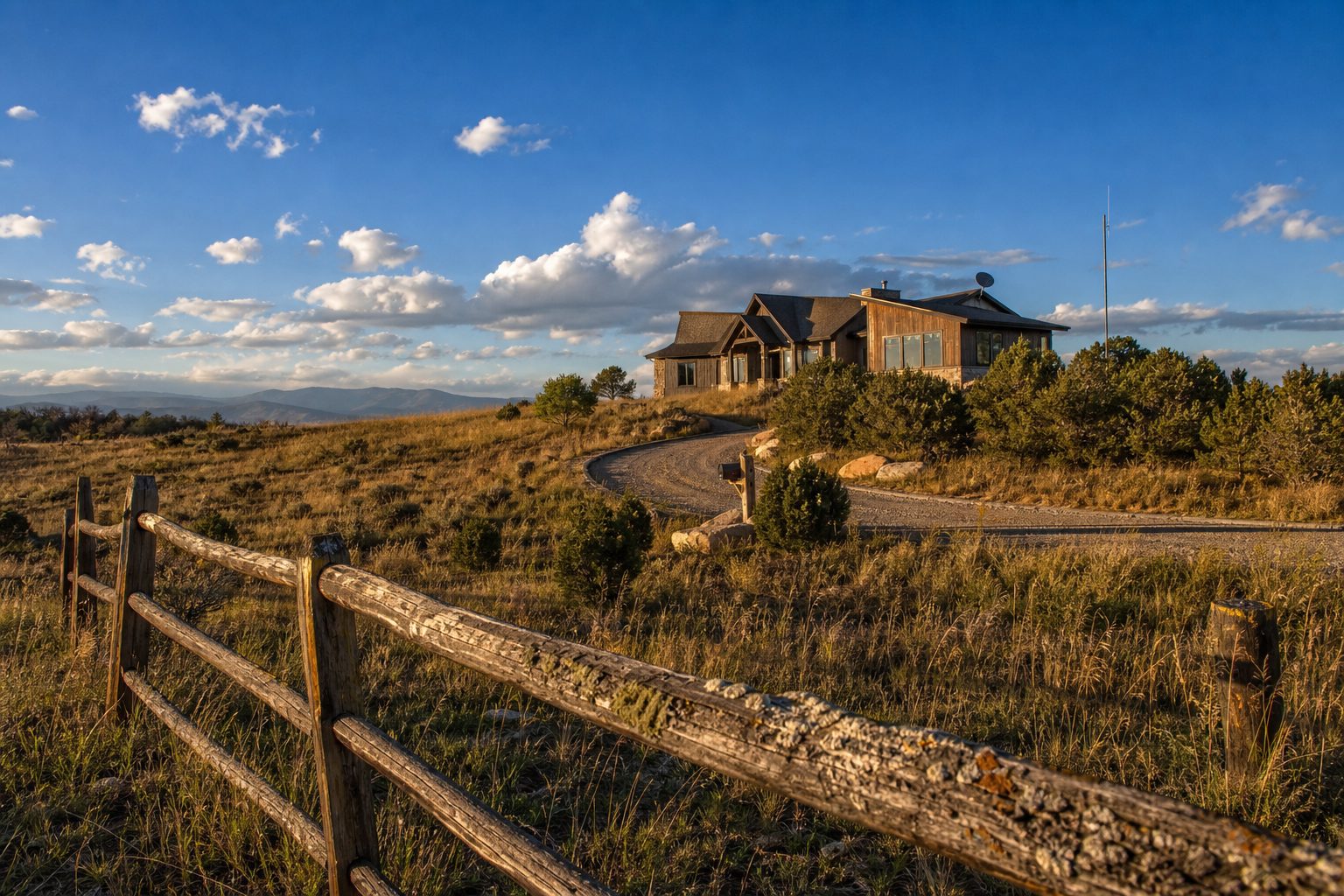
Franktown, an unincorporated community in eastern Douglas County with properties typically ranging from 2.5 to 35-plus acres, has historically been underserved by traditional cable and fiber providers. The 80116 zip code sits outside the dense suburban infrastructure corridors that serve Castle Rock, Parker, and Highlands Ranch.
So what are your actual options here?
DSL and Legacy Copper
Legacy DSL service from providers like CenturyLink (now Lumen) reaches some Franktown addresses, but speeds are often limited to roughly 10 to 25 Mbps. For a household running simultaneous video conferences, that bandwidth can be inadequate. If you are evaluating a Franktown property and the listing mentions “high-speed internet available,” you need to verify what that actually means at the specific address, not just the zip code.
Fixed Wireless and 5G Home Internet
T-Mobile and Verizon 5G Home Internet options have been expanding coverage across eastern Douglas County through 2025 and 2026. These services can deliver speeds that rival entry-level fiber in areas with strong tower coverage. The catch is that performance varies significantly by property location, terrain, and tree cover.
Satellite Internet
Starlink has become widely adopted across rural Douglas County, and for many Franktown property owners, it has been transformative. While latency is higher than fiber, the download speeds are generally sufficient for video conferencing and most professional applications.
Cooperative Broadband Initiatives
CORE Electric Cooperative, which serves parts of eastern Douglas County including areas around Franktown, has been exploring broadband infrastructure initiatives for its service territory. This is a space worth watching closely, because cooperative-led fiber projects in other Colorado communities have dramatically changed rural connectivity.
What Sedalia Buyers Need to Know About Broadband Access
Sedalia, located along Highway 85 in unincorporated Douglas County, shares a similar rural connectivity profile with Franktown. The community’s combination of acreage properties, proximity to the south metro, and rural character has driven significant buyer interest.
Your internet options in Sedalia largely mirror Franktown’s: legacy DSL with limited speeds, expanding fixed wireless coverage, and satellite service. The Highway 85 corridor does give some Sedalia properties slightly better access to infrastructure compared to more remote locations farther east.
Here is what matters practically: before you submit an offer on a Sedalia property, test internet service at the physical address. Do not rely on coverage maps alone. With 130 five-star reviews from past clients, one consistent piece of feedback I receive is that buyers appreciate being warned about connectivity verification upfront rather than discovering limitations during the inspection period.
The luxury price points in Sedalia make this due diligence even more critical. Properties in this area have seen exceptional appreciation, and at these investment levels, you deserve full confidence that the home supports your professional requirements.
Eastern Parker Connectivity: Where Suburban Infrastructure Meets Rural Living
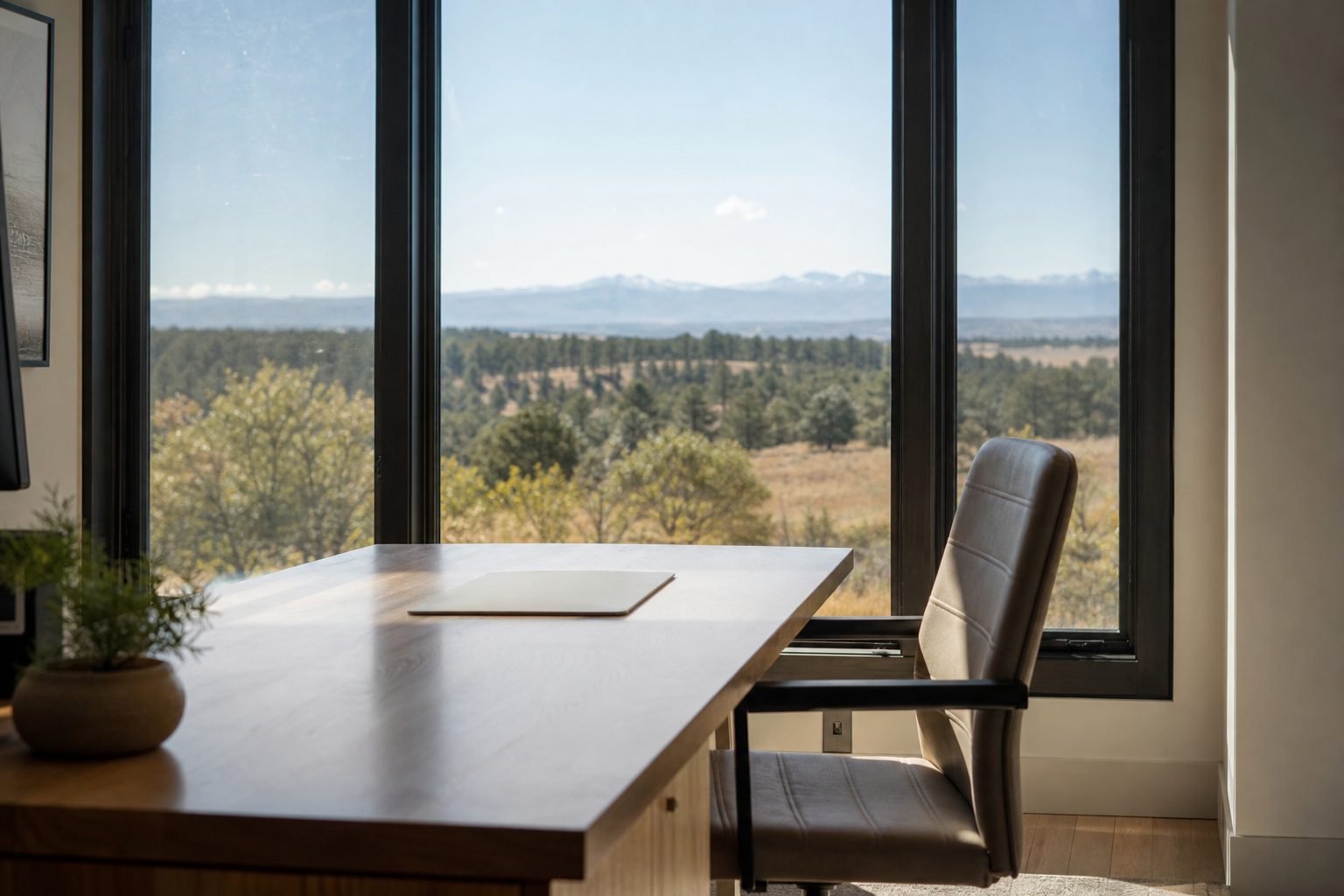
Eastern Parker occupies an interesting middle ground. The closer you are to Parker’s municipal boundaries and established subdivisions, the more likely you are to find cable or fiber service. But as you move east toward the more rural parcels and larger lots, coverage drops off in ways that can surprise buyers accustomed to suburban infrastructure.
According to the Douglas County Q2 2026 Economic Development Report, the average sale price for single-family detached homes in Parker was $833,684 in Q2 2026, per the Douglas County Economic Development report. That price point puts eastern Parker squarely in the move-up and luxury category, and buyers at this level overwhelmingly work remotely at least part of the week.
What should you actually do during your home search in eastern Parker? Request that the listing agent provide a current internet speed test from the property. If the home is vacant, ask the seller to disclose which providers served the address and at what speeds. A property that sits just half a mile outside a fiber service area can have dramatically different connectivity than its neighbor.
How to Evaluate Internet Service Before You Make an Offer in Douglas County
After 30 years helping buyers navigate the Denver South Metro market, I have developed a practical checklist for clients evaluating rural properties where connectivity is essential.
Step One: Test at the Property
Never assume. Coverage maps from providers show theoretical availability, not actual performance. If possible, bring a laptop and a mobile hotspot to the property and test during a weekday when towers and networks are under typical business-hour load.
Step Two: Talk to the Neighbors
In rural communities like Franktown and Sedalia, neighbors are your best source of real-world internet performance data. They can tell you which provider actually works, whether speeds drop during peak hours, and whether any new infrastructure is being installed in the area.
Step Three: Check for Planned Infrastructure
Contact CORE Electric Cooperative to ask about broadband expansion plans for the specific area you are considering. Cooperative broadband projects can take years to reach individual properties, but knowing the timeline helps you plan.
Step Four: Budget for a Solution
Some luxury buyers in rural Douglas County invest in redundant internet setups, pairing a fixed wireless connection with a satellite backup. The cost is modest relative to property values in Castle Pines (average $1,239,295 in Q2 2026, per the Douglas County Economic Development Report) or Larkspur (average $1,019,790 in Q2 2026, per the same report), and the reliability gains are substantial.
Step Five: Include Internet Verification in Your Due Diligence Period
Your purchase contract should give you adequate time to confirm that internet service meets your professional requirements. This is as important as the home inspection for remote-work buyers.
What Relocation Buyers from Out of State Should Understand About Rural Colorado Connectivity
If you are relocating to Colorado from a coastal market, the value proposition in Douglas County is compelling. Denver’s overall cost of living runs approximately 20% to 38% lower than Los Angeles, with the biggest gap in housing, according to comparative cost-of-living data. You may be trading a $1 million condo for a property with acreage, mountain views, and room for horses.
But you may also be trading gigabit fiber for a connectivity patchwork that requires research and planning.
Here is the good news: the situation is improving steadily. Fixed wireless speeds continue to climb. Satellite latency continues to decrease. And cooperative broadband initiatives represent real long-term infrastructure investment in rural communities across Douglas County.
The key is going in with realistic expectations and a willingness to verify service at every property you seriously consider. The buyers I work with who approach this proactively end up thrilled with their decision. The ones who assume connectivity will be the same as their suburban experience sometimes face frustrating surprises.
Frequently Asked Questions
Is fiber internet available in Franktown, Colorado, as of 2026?
Traditional fiber-to-the-home service remains limited in Franktown’s 80116 zip code. Most properties rely on a combination of DSL, fixed wireless (including 5G home internet from major carriers), and satellite services like Starlink. CORE Electric Cooperative has been exploring broadband initiatives for its eastern Douglas County service territory, which could change this landscape in coming years.
Can I work remotely full-time from a rural property in Sedalia?
Many professionals do work remotely from Sedalia using fixed wireless and satellite internet. Your experience will depend on your specific property’s location, the nature of your work (video-heavy versus text-based), and whether you invest in redundant connections. Testing at the property before purchasing is essential.
What internet speeds do I need for remote work?
Most remote-work professionals need a minimum of 25 Mbps download and 5 Mbps upload for reliable video conferencing. If your household has multiple people working or streaming simultaneously, aim for 50 Mbps or higher. Some Franktown and Sedalia properties can achieve these speeds through fixed wireless or satellite, but verification at the specific address is critical.
How does Starlink perform in eastern Douglas County?
Starlink has been widely adopted across rural Douglas County. Download speeds are generally sufficient for video conferencing and professional applications. Latency is higher than fiber or cable, which can affect real-time applications. Performance can vary with weather conditions and network congestion as subscriber counts grow.
Are there any fiber expansion projects planned for Franktown or Sedalia?
CORE Electric Cooperative has been exploring broadband infrastructure for its service territory, which includes parts of eastern Douglas County. Timelines for individual communities have not been publicly confirmed for all areas. Contacting the cooperative directly for the most current information about your target area is your best approach.
What is 5G Home Internet and does it work in rural Douglas County?
T-Mobile and Verizon offer fixed wireless home internet using 5G and 4G LTE towers. Coverage in eastern Douglas County has been expanding through 2025 and 2026. Performance depends heavily on your property’s proximity to towers and terrain. It works well for some rural addresses and poorly for others, making on-site testing essential.
Should I avoid buying in Franktown if I need reliable internet?
Not necessarily. Many remote professionals live and work successfully from Franktown properties. The key is doing your connectivity homework before you commit. Verify service at the specific property, consider redundant setups (fixed wireless plus satellite), and build internet verification into your due diligence timeline.
How do I test internet service at a property I am considering buying?
Bring a laptop and test during business hours if possible. Ask the listing agent for a current speed test. Talk to immediate neighbors about their service and provider. Check coverage maps from multiple providers, but treat them as starting points rather than guarantees. Your real estate agent should help coordinate this testing during your due diligence period.
Does poor internet affect property values in rural Douglas County?
In a market where remote-work buyers represent a significant portion of the luxury buyer pool, limited connectivity can narrow the potential buyer audience for a property. Conversely, properties with verified high-speed internet in rural settings can command a premium because they are relatively rare.
What should a move-up seller in Douglas County know about marketing rural properties with good internet?
If you are selling a rural property that has reliable broadband, highlight it prominently in your marketing. Include actual speed test results in your listing materials. In a market where the Douglas County median listing price was $775,000 as of April 2026 per Federal Reserve Economic Data, and where over 63% of detached home sales included concessions averaging $11,352 in Q2 2026 (per the Douglas County Economic Development Report), strong internet service is a genuine competitive advantage that can differentiate your listing.
The Bottom Line
Buying luxury acreage in Franktown, Sedalia, or eastern Parker for remote work is absolutely achievable in 2026, but it requires internet-specific due diligence that most suburban buyers never think about. Verify service at the property, talk to neighbors, explore redundant connection setups, and build connectivity confirmation into your purchase timeline.
If you are a remote-work professional looking at rural Douglas County properties, or a move-up seller wondering how to position your acreage listing’s connectivity as an asset, I would welcome the conversation. With 30 years of experience and 469 closed transactions across the Denver South Metro, Castle Rock, Castle Pines, Franktown, and Parker markets, I can help you navigate both the real estate and the practical livability questions that matter. Reach out to David at 303-882-7706 or visit DavidRichins.com to get started.