What HOA restrictions apply to private pools, tennis courts, and pickleball courts in South Metro Denver luxury communities?
Most HOA communities across Castle Rock, Castle Pines, Highlands Ranch, and the broader South Metro Denver area allow in-ground pool installations but heavily regulate above-ground pools, sport court placement, noise levels, and lighting through their architectural review process.
Why This Matters Right Now in Douglas County
If you are buying or selling a luxury home in Douglas County in 2026, HOA covenants on private amenities are not just fine print. They directly shape your property value, your lifestyle, and your negotiating position.
With the average detached home sale price in Castle Pines reaching $1,239,295 in Q2 2026 (up 8.8% year over year, per the Douglas County Q2 2026 Economic Development Report), buyers at this price point expect to build the backyard of their dreams. Yet many discover after closing that their CC&Rs restrict or outright prohibit the pool, pickleball court, or tennis facility they envisioned.
For sellers, understanding how your community’s HOA stance on private amenities affects buyer demand is critical, especially as 63.3% of single-family detached closings across the Denver metro included seller concessions averaging $11,352 in Q2 2026, according to market data compiled by local brokerages. You need every competitive advantage, and clarity on what your buyer can (or cannot) build is one of them.
Having closed over 469 transactions across 30 years in this market, what I consistently tell my clients is: read the CC&Rs before you fall in love with a property, not after.
How Colorado HOA Law Governs Your Private Improvements in Castle Rock and Beyond
Before diving into specific restrictions, you need to understand the legal framework. The Colorado Common Interest Ownership Act (CCIOA) is the primary law governing HOAs in the state, per the Division of Real Estate, which has records of nearly 11,700 registered common interest communities statewide.
The Three Documents That Control Your Backyard
Your HOA is generally governed by three main documents, according to property management industry sources:
- The Declaration (CC&Rs) establishes the HOA’s authority, obligations, and restrictions on your property
- The Bylaws outline governance procedures and board responsibilities
- The Rules and Regulations contain more detailed community standards, including architectural guidelines and amenity use policies
What does this mean for you practically? If you want to install an in-ground pool in your Castle Rock backyard or pour a pickleball court on your Parker property, your first stop is the Declaration. The rules and regulations can change with a board vote, but the Declaration typically requires a membership supermajority to amend. That distinction matters enormously.
No state agency directly oversees HOAs in Colorado, so disputes over denied improvements are resolved through civil court. Under Colorado law (38-33.3-302.5), an HOA must protect unit owners’ ability to make full use of shared areas and amenities under its control, but private improvement restrictions are a different matter entirely.
Private Pool Restrictions Across South Metro Denver HOA Communities
So can you build that pool? The answer is almost always “it depends on the type.”
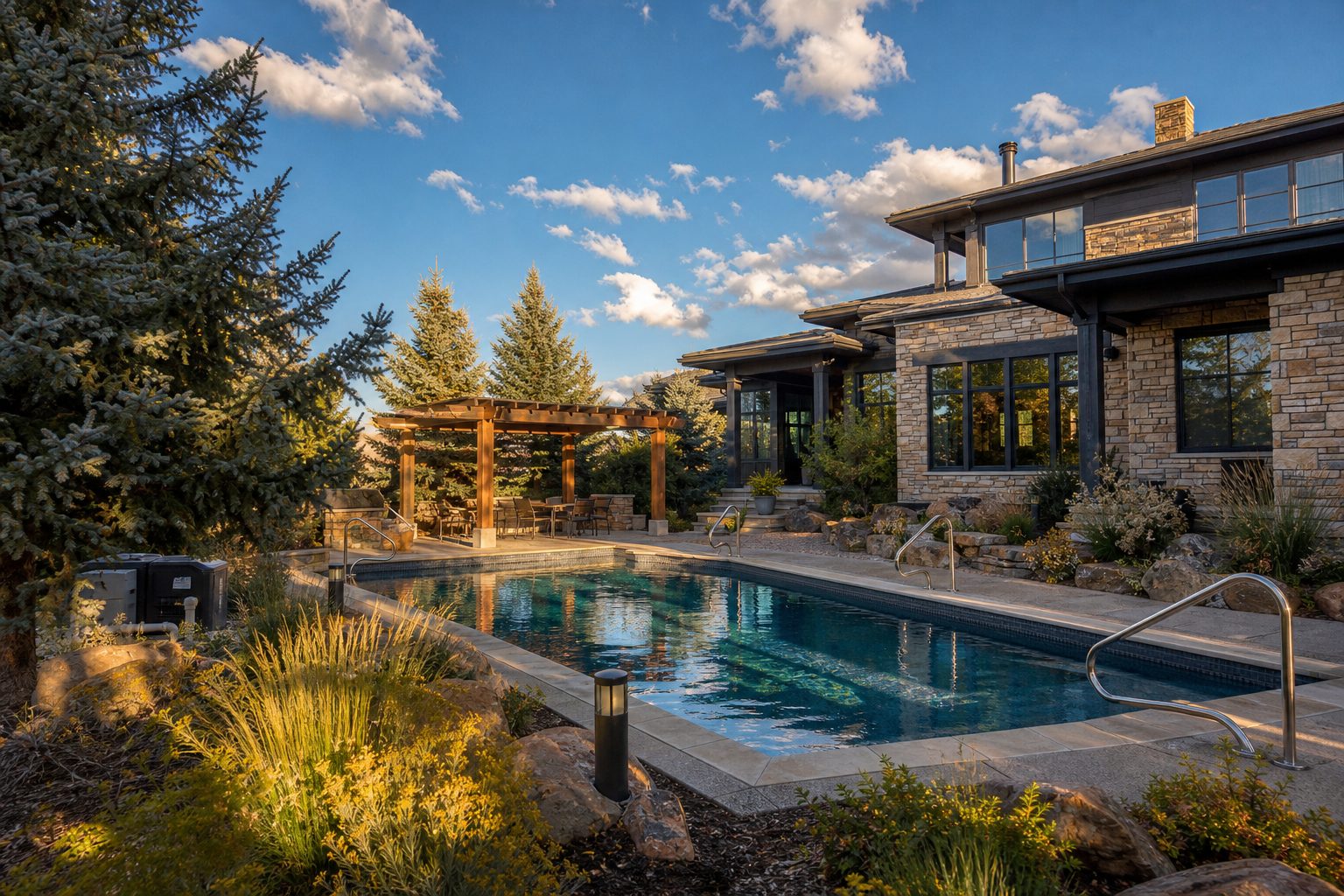
In-Ground Pools: Usually Approvable
According to industry research on Colorado HOA policies, it is not common for HOAs to completely deny pool installations, but most will restrict what you can and cannot install. Fully in-ground pools are the most commonly approved option, provided they pass architectural review for setbacks, fencing, drainage, and aesthetic consistency.
Above-Ground Pools: Frequently Restricted or Banned
Here is where many buyers from out of state get surprised. Above-ground pools are often restricted because HOAs view them as cheap, low quality, and temporary. They are sometimes classified as temporary structures, which many HOA rules prohibit outright. The concern extends to structural integrity risks; a failure could cause flooding damage to neighboring properties.
Beyond the pool itself, HOAs can restrict and ban structures like pool houses, sheds, storage containers, and external pool products like water slides and waterfalls.
Hot Tubs and Swim Spas: A Common Workaround
If your community restricts above-ground pools, you will most likely still be allowed to install spas or swim spas. These are viewed differently because they are compact, portable, and considered therapeutic rather than recreational eyesores.
What I tell my clients relocating to Colorado from states like California or Texas is this: your expectation of what you can build in your backyard needs to be recalibrated for Colorado HOA culture. With 130 five-star reviews from past clients, many of whom navigated exactly this learning curve, I have seen firsthand how critical this early education is.
Tennis and Pickleball Court Restrictions You Need to Know in Highlands Ranch and Parker
Private sport courts face an even more complex approval process than pools, and pickleball has become the single most contentious amenity topic in luxury HOA communities across Douglas County.
Architectural Review for Sport Courts
Any private tennis or pickleball court installation is subject to the same rigorous architectural review as pools. HOAs scrutinize plans for size, style, and placement restrictions within the CC&Rs. Common restriction categories include:
- Setback requirements from property lines and neighboring structures
- Noise mitigation standards (especially critical for pickleball)
- Lighting restrictions to prevent light pollution for neighbors
- Surface materials and colors that must match community aesthetics
- Fencing height, material, and style consistent with community guidelines
- Lot coverage ratios that may eliminate enough buildable area to make a court impossible
The Pickleball Noise Problem
Pickleball’s distinctive “pop” sound has created an entirely new category of HOA disputes. The sport’s rapid popularity means that communities from Castle Pines to Lone Tree are actively writing new rules to address private court construction. Many communities now require specific noise-mitigation features, such as sound barriers or restricted play hours, before they will even consider approving a private court.
If you are moving to Highlands Ranch or Parker with plans for a private pickleball court, verify the current rules before making an offer. Some communities that allowed courts two years ago have since amended their regulations.
What Relocation Buyers Moving to Colorado Must Understand About HOA Culture
Colorado’s HOA landscape is often more restrictive than what buyers from other states expect, particularly regarding exterior modifications. If you are relocating from a market where you had a pool, a sport court, and full backyard autonomy, the adjustment can be jarring.
Key Differences From Other Markets
Denver continues to attract steady in-migration from coastal markets, according to regional economic analysts, with lifestyle, outdoor access, and relatively reasonable cost of living supporting housing demand. But here is the catch: Douglas County’s median listing price reached $775,000 as of April 2026 (per FRED data), and its average detached price sits at $895,018 per the Douglas County Q2 2026 Economic Development Report. At these price points, buyers rightfully expect a degree of customization freedom, but HOA restrictions may not match those expectations.
Recent Colorado legislation has added homeowner protections. HB22-1137 caps HOA fines at $500 per violation and requires written notice plus 30 days to remedy before enforcement. HB24-1337 caps recoverable attorney fees in disputes. These are meaningful safeguards, but they do not override your community’s CC&Rs regarding what you can build.
How to Protect Yourself Before Buying
What I always recommend to relocation buyers is a three-step process: request the full CC&Rs and architectural guidelines before going under contract, have your agent review them with you specifically regarding outdoor improvements, and if possible, speak with the community’s architectural review committee before closing.
How HOA Restrictions Affect Your Home’s Value When Selling in Castle Rock
If you are a move-up seller in Douglas County, your community’s HOA stance on private amenities directly impacts your buyer pool. Home sales in the county decreased by 5.8% between Q2 2025 and Q2 2026, per the Douglas County Economic Development Report. In a market with declining volume, every differentiator matters.
Luxury communities with amenity-rich common areas (pools, fitness centers, sport courts) and higher HOA dues can offset the lack of private improvement flexibility. Suburban HOAs with lower monthly fees tend to focus on landscaping standards and pocket parks, according to property management data, while luxury communities can see fees exceeding $1,000 monthly.
Douglas County posted the highest average dollar concession among metro counties in Q2 2026. If your home sits in a community where buyers cannot build their ideal backyard, that could contribute to concession pressure. Conversely, if your community permits private pools and courts, marketing that flexibility can be a powerful selling point.
Frequently Asked Questions
Can I build a private pool in my Castle Rock HOA community?
Most Castle Rock HOA communities allow in-ground pool installations following architectural review. Above-ground pools are frequently restricted or banned because they are considered temporary structures. You will need to submit plans that comply with setback, fencing, drainage, and aesthetic requirements outlined in your specific community’s CC&Rs before receiving approval.
Are pickleball courts allowed on private property in Highlands Ranch?
Private pickleball court approval in Highlands Ranch depends entirely on your specific community’s CC&Rs and architectural review process. Noise is the primary concern, as the sport produces distinctive sound that affects neighbors. Many communities now require noise-mitigation measures or have restricted private court construction altogether. Always verify current rules before purchasing.
What Colorado laws protect homeowners from unfair HOA restrictions?
Colorado’s CCIOA governs HOAs statewide. Recent legislation includes HB22-1137, which caps fines at $500 per violation and requires written notice plus 30 days to cure. HB24-1337 caps recoverable attorney fees. HB25-1043, effective October 2025, allows courts to delay HOA foreclosure sales up to nine months. These laws protect you but do not override valid CC&R restrictions on improvements.
How much do HOA fees cost in South Metro Denver luxury communities?
HOA fees vary widely. Suburban communities in areas like parts of Highlands Ranch often have lower fees focused on landscaping and community features. Luxury communities with extensive amenities like staffed fitness centers, pools, and controlled access can see fees exceeding $1,000 monthly, according to property management industry data.
Can my HOA deny my pool or court without explanation?
Your HOA’s architectural review committee must evaluate your plans against the community’s CC&Rs and published guidelines. While they can deny plans that violate established restrictions, Colorado law requires associations to provide written notice of violations and allow 30 days to remedy. If you believe a denial was arbitrary, dispute resolution through civil court is your recourse.
What happens if I build a pool without HOA approval in Douglas County?
Building without approval can result in fines (capped at $500 per violation under Colorado law), mandatory removal at your expense, and legal action. It can also create title complications when you sell. The cost of removal alone, especially for an in-ground pool, can be catastrophic. Always get written approval first.
Do HOA restrictions affect home resale value in Castle Pines?
Yes. In Castle Pines, where average detached home prices reached $1,239,295 in Q2 2026 per the Douglas County Economic Development Report, buyers at this level expect clarity on what they can build. Communities that permit private amenities may attract a wider buyer pool, while overly restrictive communities may face more concession pressure.
Can I install a hot tub in an HOA community that bans pools?
In most HOA communities that restrict above-ground pools, spas and swim spas are still permitted. These are viewed as compact, portable, and therapeutic rather than recreational structures. However, you should still verify with your specific community’s architectural review committee before purchasing or installing.
What should relocation buyers look for in HOA documents before buying?
Focus on the Declaration (CC&Rs) for structural restrictions on outdoor improvements, the architectural review guidelines for approval processes, any recent amendments addressing sport courts or pools, and the community’s history of approving or denying similar requests. With 30 years in this market, I recommend reviewing these documents before writing your offer.
Are there South Metro Denver communities with no HOA restrictions on pools or courts?
Unincorporated areas of Douglas County, including parts of Franktown, Elizabeth, and Larkspur, may have properties without HOA governance. Larkspur’s average detached sale price was $1,019,790 in Q2 2026, per the Douglas County Economic Development Report. These areas offer more autonomy but fewer shared amenities and community services.
The Bottom Line
Whether you are selling a luxury home in Castle Rock, buying in Castle Pines, or relocating to Highlands Ranch from out of state, HOA restrictions on pools, tennis courts, and pickleball courts will directly shape your experience and your investment. Do not assume. Read the CC&Rs before you commit, understand the architectural review process, and know your rights under Colorado law.
If you are navigating these decisions anywhere in Douglas County or the South Metro Denver area, I would welcome the chance to walk you through it. With 469 closed transactions and 30 years of experience as a top-rated Colorado real estate professional, I can help you find the right community that matches not just your price point but your lifestyle. Call me, David, at 303-882-7706 or visit DavidRichins.com to start the conversation.